
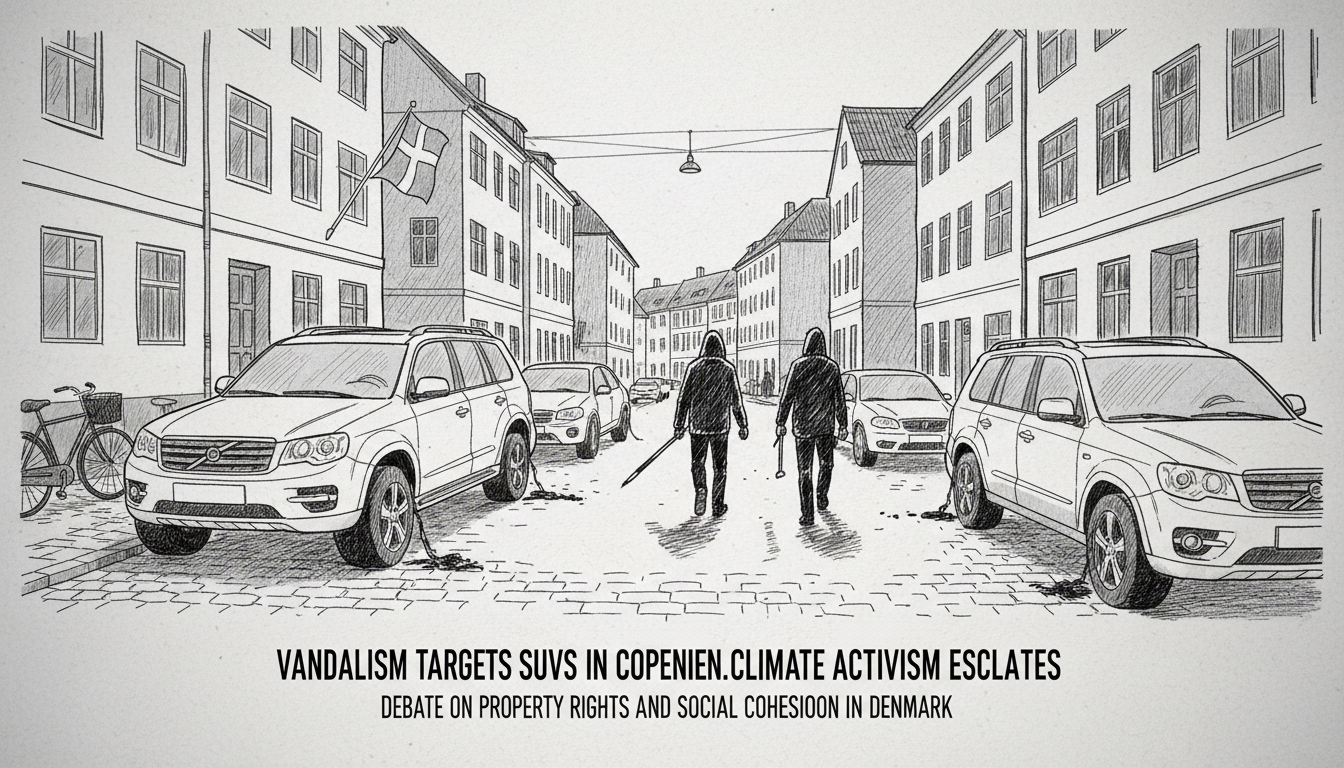
Residents of Kastrup, a suburb near Copenhagen Airport, woke to find their vehicles disabled. Approximately twelve cars had one or more tires slashed on a local parking lot overnight. Police are now investigating a potential connection to a larger, similar incident in the affluent Frederiksberg borough last month. That earlier event generated forty-two police reports in Copenhagen alone, with additional cases reported in North Zealand. Officials note a clear pattern. The targets were predominantly SUVs, the larger, higher-emission vehicles often criticized by environmental groups.
An activist group calling itself 'The People's Movement Against Luxury Emissions' claimed responsibility for the November vandalism. On its website, the group stated it aimed to deflate tires on 'several hundred SUVs' in a coordinated action. This direct action marks a sharp escalation from traditional protests. It raises immediate questions about public safety and the boundaries of civil disobedience in Denmark's consensus-driven society.
This is not merely isolated vandalism. It reflects a growing, tangible tension within Danish society news concerning climate action, personal property, and social cohesion. The incidents occur in a nation proud of its orderly welfare system and its progressive environmental policies. Yet, they highlight a fracture. Some citizens feel state-led measures are insufficient, pushing them toward direct, confrontational tactics. The choice of SUVs as targets is symbolic. These vehicles are often seen as symbols of excess in a culture that values 'Janteloven' and collective responsibility.
Community leaders in Copenhagen integration circles express concern. While many share climate goals, they worry such acts breed resentment and divert energy from constructive policy solutions. 'It creates fear and division, not dialogue,' one local social center coordinator noted, requesting anonymity due to the sensitivity of the topic. This sentiment touches a core principle of the Danish welfare system. It is built on trust, rule of law, and collective agreement, not coercion or property damage.
The police investigation will focus on criminal liability. The broader societal investigation is already underway. How does a society balance urgent climate demands with the fundamental right to security? Denmark's immigration policy and social policy frameworks are often debated for their strictness and integration requirements. Now, a new internal challenge emerges. It pits environmental urgency against social peace, testing the very fabric of Danish communal trust. The coming weeks will show if this is a fleeting trend or a new, destabilizing front in the climate debate. The response from both authorities and the public will be telling for the future of Danish social policy.