
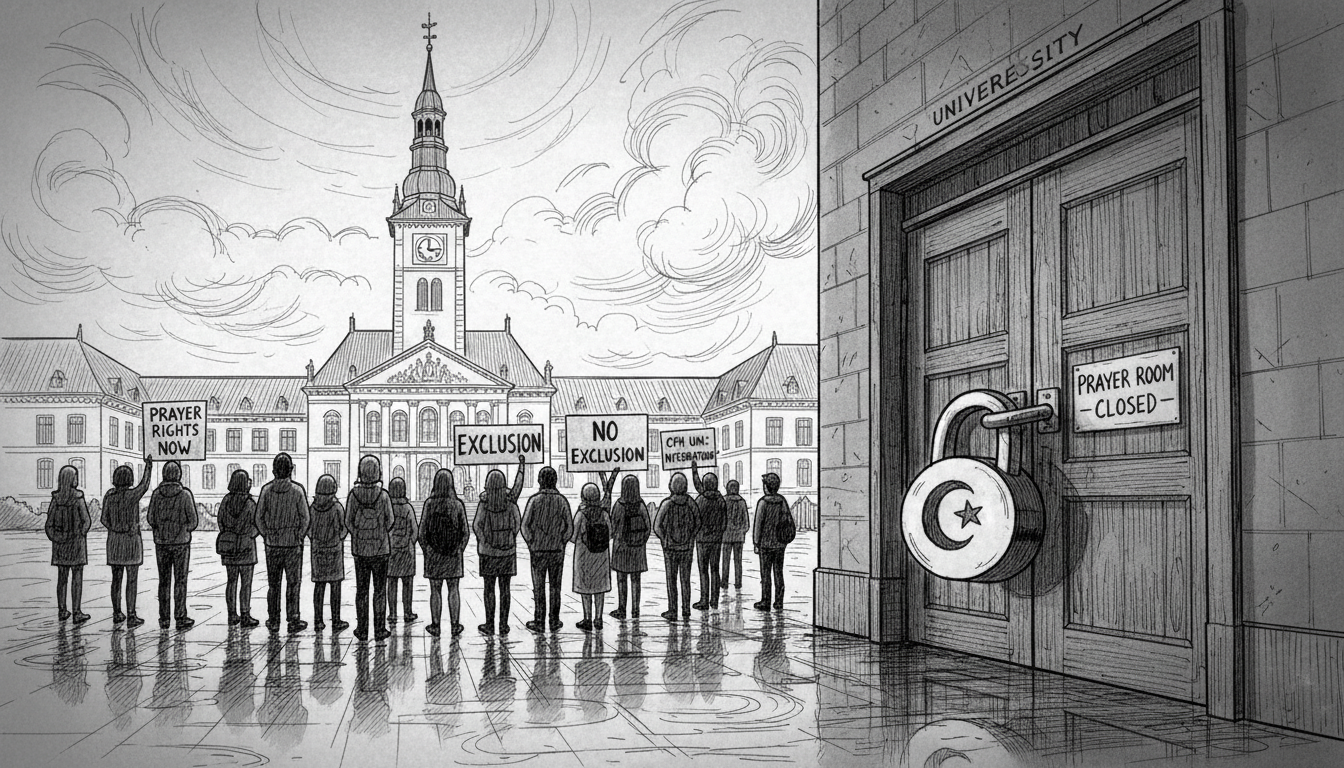
A decision by Copenhagen University to close its prayer rooms has triggered a planned student demonstration. The move follows extended internal discussions and will take effect immediately. A student group, primarily from Muslim backgrounds, announced the protest for tomorrow. They argue the closure removes a vital space for religious practice and community on campus.
This situation touches on core questions in Danish society news about integration and accommodation. Universities in Denmark often serve as microcosms for broader national debates. The welfare system traditionally supports student wellbeing, but this clashes with evolving interpretations of secularism. The decision reflects a tension within Copenhagen integration policies, where public institutions navigate religious expression.
Student organizers say the prayer rooms provided more than just a place for ritual. They were social hubs and quiet spaces for reflection amid academic pressure. Removing them, students argue, signals a lack of consideration for diverse student needs. It makes daily life more difficult for those observing prayer times. The university has not yet provided a detailed public rationale for the closure beyond concluding its discussions.
Community leaders in Copenhagen have watched this development closely. One local imam, speaking on background, noted that such spaces are often the first point of contact for new students seeking community. He said their removal can feel like a rejection of their identity within the academic environment. This sentiment is critical in Denmark social policy, which aims to foster inclusion through education and participation.
Municipal social centers in cities like Copenhagen sometimes fill gaps left by institutional changes. It is unclear if students will seek alternative spaces there. The protest tomorrow will test the university's response and highlight student mobilization. Similar debates have occurred in other Nordic countries, balancing secular principles with growing religious diversity on campus.
From a policy perspective, this is a practical test of Denmark immigration policy integration goals. Successful integration relies on educational attainment and a sense of belonging. If students feel marginalized, it can impact their academic performance and future engagement with Danish society. The Danish welfare system invests heavily in education as an engine for integration, making this campus issue nationally significant.
What happens next will be telling. Will the university reconsider or offer a compromise? The protest could draw attention from political figures concerned with social cohesion. The outcome may influence how other Danish municipalities and institutions handle similar requests for religious accommodation. It is a small event with large symbolic weight in the ongoing conversation about identity and space in modern Denmark.