
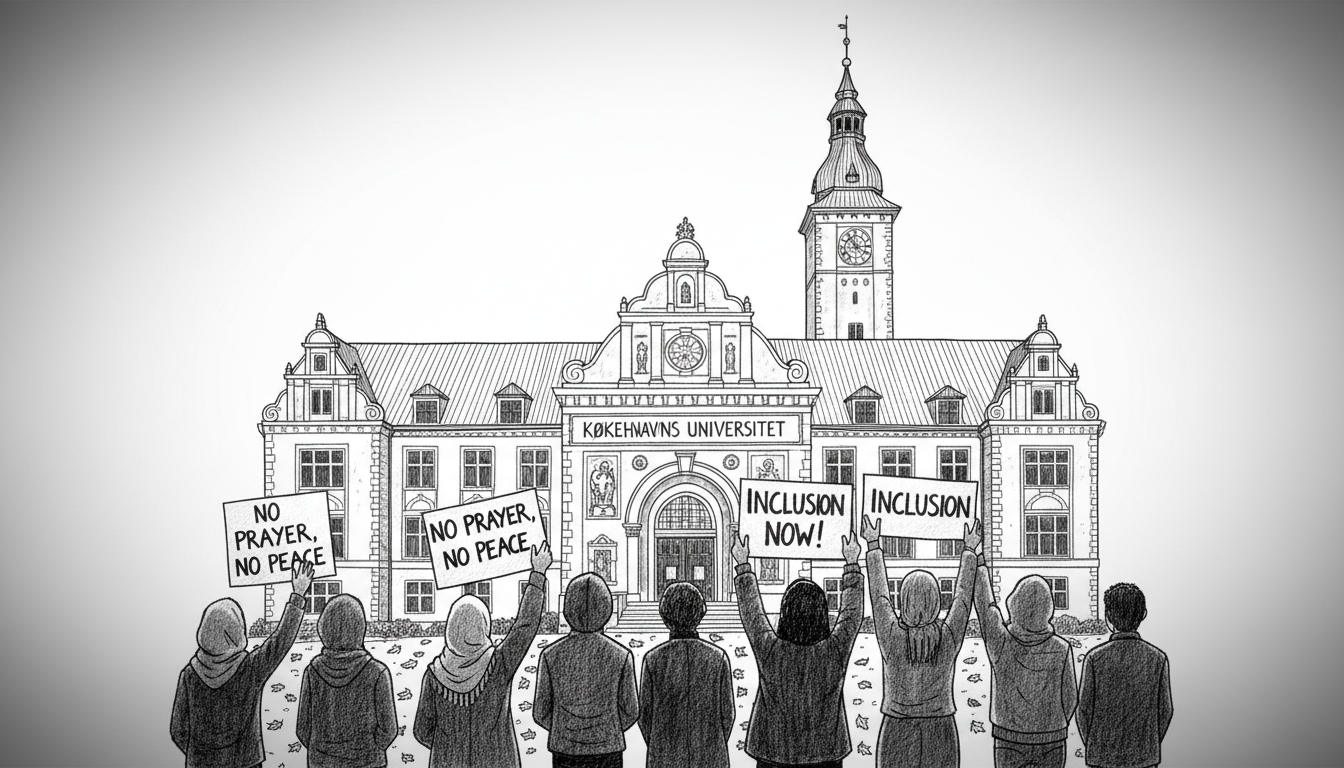
The keys are turning in the locks of some of Copenhagen University's most debated rooms. University leadership has decided to close so-called prayer rooms in their current form from next week. This decision has prompted protests from Muslim students who connect it to wider pressures on religious practice in Danish society.
University officials say the move aims to create more flexible, multi-purpose study spaces for all students. They argue the current dedicated rooms do not serve the entire student body effectively. The decision follows internal reviews of space usage across campus facilities.
Muslim student representatives see a different story. They describe the closure as another restriction on religious freedom in public institutions. One student leader said the prayer rooms provided a vital space for daily religious observance between lectures. Losing them creates practical and symbolic problems for Muslim students.
This conflict sits within a larger Danish debate about integration and secularism. Denmark maintains an active social policy aimed at creating a cohesive society. The welfare system traditionally emphasizes shared public spaces over separate facilities. Recent years have seen several municipalities reassess accommodations for religious minorities in public buildings.
Copenhagen, as Denmark's capital and most diverse city, often becomes the focal point for these integration discussions. Social centers and community organizations in the city frequently navigate between national policy and local needs. The university's decision reflects this ongoing tension between uniform rules and individual accommodation.
Statistics show about 5-6% of Denmark's population identifies as Muslim, with higher concentrations in urban areas like Copenhagen. Among university students, this percentage is somewhat lower but growing. Education remains a key pathway for integration, making campus policies particularly significant.
Community leaders point to a pattern they find concerning. They note reduced accommodations in various public sectors over recent years. A local imam involved with student groups said the message young Muslims receive is increasingly clear. He argued that public institutions should accommodate diverse needs within a shared framework.
University administrators counter that their responsibility is to all students equally. They emphasize creating inclusive environments that do not privilege any single group. The planned multi-purpose rooms will be available for prayer, meditation, quiet study, or group work by any student. This approach aligns with broader Danish social policy favoring universalism over particularism.
The practical impact is immediate for hundreds of Muslim students. They must now find alternative spaces for daily prayers, which are time-sensitive religious obligations. The main university campus in central Copenhagen has limited private spaces, especially during busy academic hours.
Student protests are being organized for next week. Organizers plan a peaceful demonstration to present their case to university leadership. They seek a compromise, perhaps designated multi-faith prayer spaces rather than complete closure.
This situation highlights a core challenge in Danish integration policy. How does a society balance its secular foundations with the religious needs of a changing population? The answer plays out in classrooms, municipal meetings, and now university hallways. The outcome at Copenhagen University may influence similar decisions at other educational institutions across Denmark.
For international observers, this story offers a window into Denmark's unique approach to diversity. The Danish model prioritizes social cohesion sometimes at the expense of group-specific accommodations. This creates friction but also defines the nation's distinctive path toward integration. The coming weeks will show whether students and administrators can find a workable solution for shared campus life.