
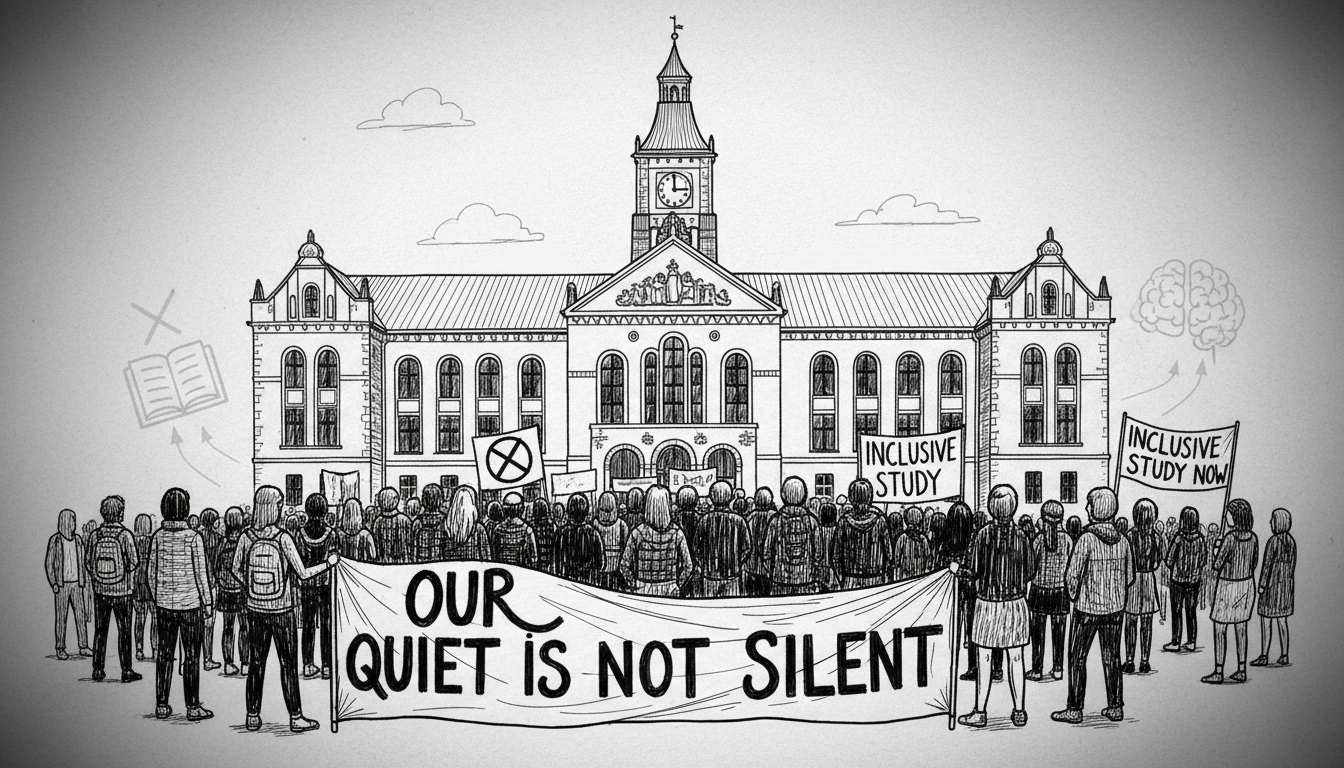
A heated debate over inclusion and secularism has erupted at Copenhagen University. The university administration has closed all designated quiet rooms across its campuses. Officials argue the rooms served only a narrow segment of the student body. This decision has prompted a student-led demonstration planned for outside the rector's office.
Jesper Gür, representing the University Student Council, is leading the protest. He sees the closure as a massive failure to support a good study environment. Many different student groups need a place to be during long school days. This includes space for faith but also for neurodivergent individuals who need to decompress. Neurodivergence refers to people with thought patterns, sensory perceptions, or behaviors that diverge from the average.
Rector Kristian Cedervall Lauta acknowledges the students' right to demonstrate. He stated the decision will not change despite the protest. The university tried for several years to make the rooms general and accessible to all. These attempts did not succeed. The rooms were primarily used by Muslim students for prayer. The administration is now drawing a consequence and closing them. The closure does not mean prayer is banned on campus. It happens because a large group of students struggling with various needs do not use these quiet rooms. A new solution is needed to create spaces for deep focus for all students.
Lauta emphasized the desire for an inclusive campus where all students feel they belong. This includes Muslim students. Prayer is legal at a university. The institution will not create new rooms where prayer is the main purpose. Jesper Gür and his fellow students plan to fight the decision regardless. They aim to be a voice for the many students who feel unheard. They want a university steadfast in its principles of freedom that stands behind its students. They oppose a university buckling under political pressure from the right wing.
This political pressure may stem from statements by the Prime Minister. The government has expressed it does not want prayer rooms in educational institutions. There have also been documented instances of misuse of some quiet rooms. Reports identified complaints about gender-segregated rooms at the health sciences faculty. University publications found pamphlets from the organization Hizb ut-Tahrir. A book by a preacher listed by immigration authorities as a hate preacher was also found. Jesper Gür argues these are exceptions, not the rule. Misuse should not penalize all those who use the facilities properly. The way forward is clearer guidelines and better supervision of room use.
Rector Lauta expressed full confidence that such examples can be avoided in a future model. He noted the cited examples are historical. All Danish universities made a decision in the spring to tighten rules and purposes for these rooms. Similar incidents have not been seen since. When asked about separating religion and education entirely, Lauta provided a nuanced view. The university's core mission is the pursuit of truth and science. All students must also be allowed to be humans with political views or religion. The campus should sometimes be a place where they can express this. A university must be a place that can contain these aspects of student life.
This conflict reflects a broader tension in Danish society news between integration policies and personal freedoms. The Copenhagen integration model often emphasizes assimilation over accommodation. Denmark social policy in the welfare system traditionally provides universal services, not targeted ones. This case tests those boundaries. It asks if public institutions should provide space for specific religious practices. The answer has implications for Denmark immigration policy and the sense of belonging for minority students. The outcome will signal how Danish universities balance secular principles with the diverse needs of a modern student population.