
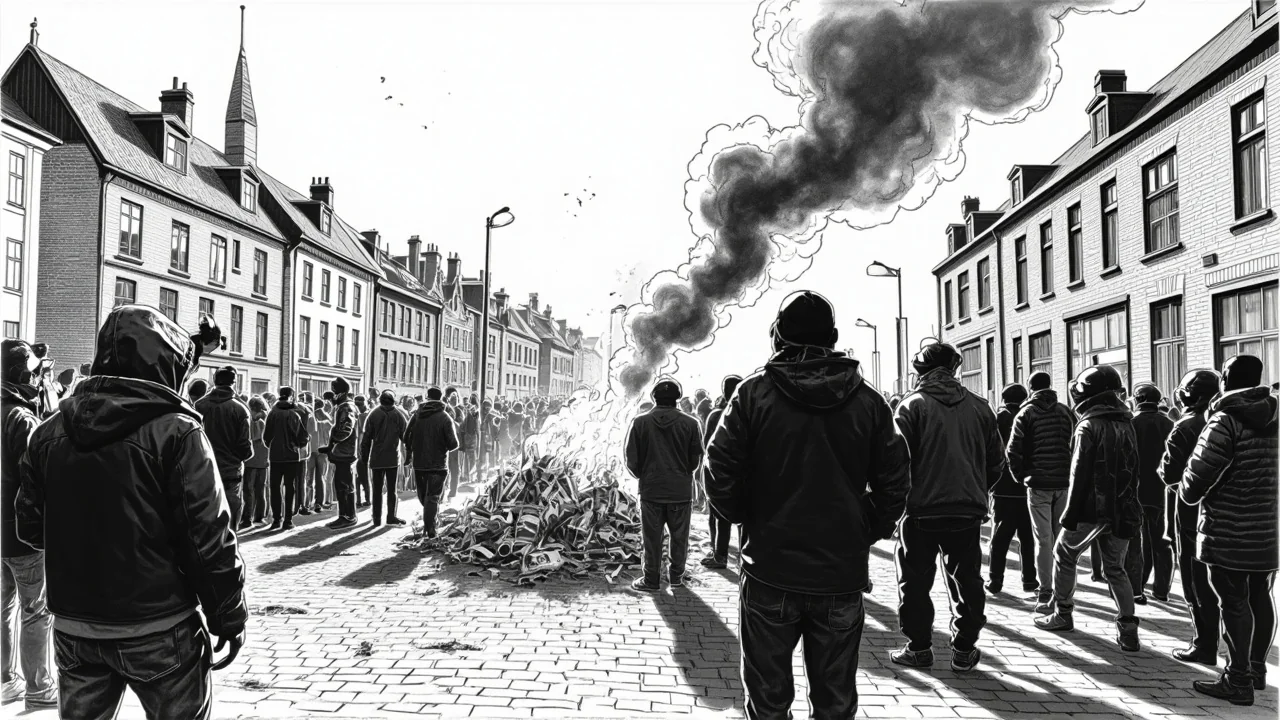
Denmark witnessed familiar tensions Sunday evening as demonstrators marking the 19th anniversary of Ungdomshuset's eviction clashed with police near the former youth center's Copenhagen location. The confrontation at Jagtvej 69 in Nørrebro followed a pattern of annual commemorations that have repeatedly tested the boundaries between civic expression and public order. Source: Statistics Denmark.
Demonstrators moved from Den Røde Plads to Nørrebros Runddel before the situation escalated around 9 PM. They blocked traffic, tore down election posters from lamp posts, and set fire to trash bins and campaign materials in the middle of the street. Copenhagen Police reported the disturbances subsided by 9:30 PM with no injuries or arrests.
Denmark's unresolved cultural memory
The annual demonstrations reflect deeper questions about cultural space and state authority that Denmark never fully resolved. Ungdomshuset operated as a self-managed social center from 1982 to 2007, serving left-wing activists and alternative culture communities for 25 years before state-ordered eviction and demolition.
What makes this particularly Danish is how the conflict crystallized competing visions of urban development. The youth center represented autonomous cultural space in a country more focused on integration and social cohesion. When authorities demolished the building, they eliminated a physical symbol but not the underlying tension about who controls public space in Danish cities.
The site remains contentious. A community garden was established there in 2014, but the original Ungdomshuset community relocated to Dortheavej 61 in Bispebjerg. Rising property values have forced alternative communities to relocate from central Copenhagen to outer districts.
Police containment strategy shows lessons learned
Sunday's restrained police response contrasts sharply with earlier confrontations. The December 2006 Copenhagen riots in Nørrebro and March 2007 demonstrations involved extensive property damage and mass arrests. Copenhagen Police now appear to follow a containment strategy, allowing symbolic protests while preventing escalation.
This shift reflects Danish policing's evolution toward de-escalation, particularly in Nørrebro where immigrant communities and police relations remain sensitive. The timing during election season adds complexity, as burning campaign posters sends a message about democratic participation that extends beyond the original Ungdomshuset grievance.
The police decision to avoid arrests suggests they view these anniversary demonstrations as ritualized dissent rather than genuine threats to public order. This calculation works as long as property damage remains minimal and no one gets hurt.
The real test comes if Copenhagen's Borgerrepræsentation (city council) finally approves development plans for the vacant lot. When that happens, expect these annual protests to either disappear or explode into something much bigger.
Read more: Social Democrats Launch TikTok Despite Youth Protection Push.