
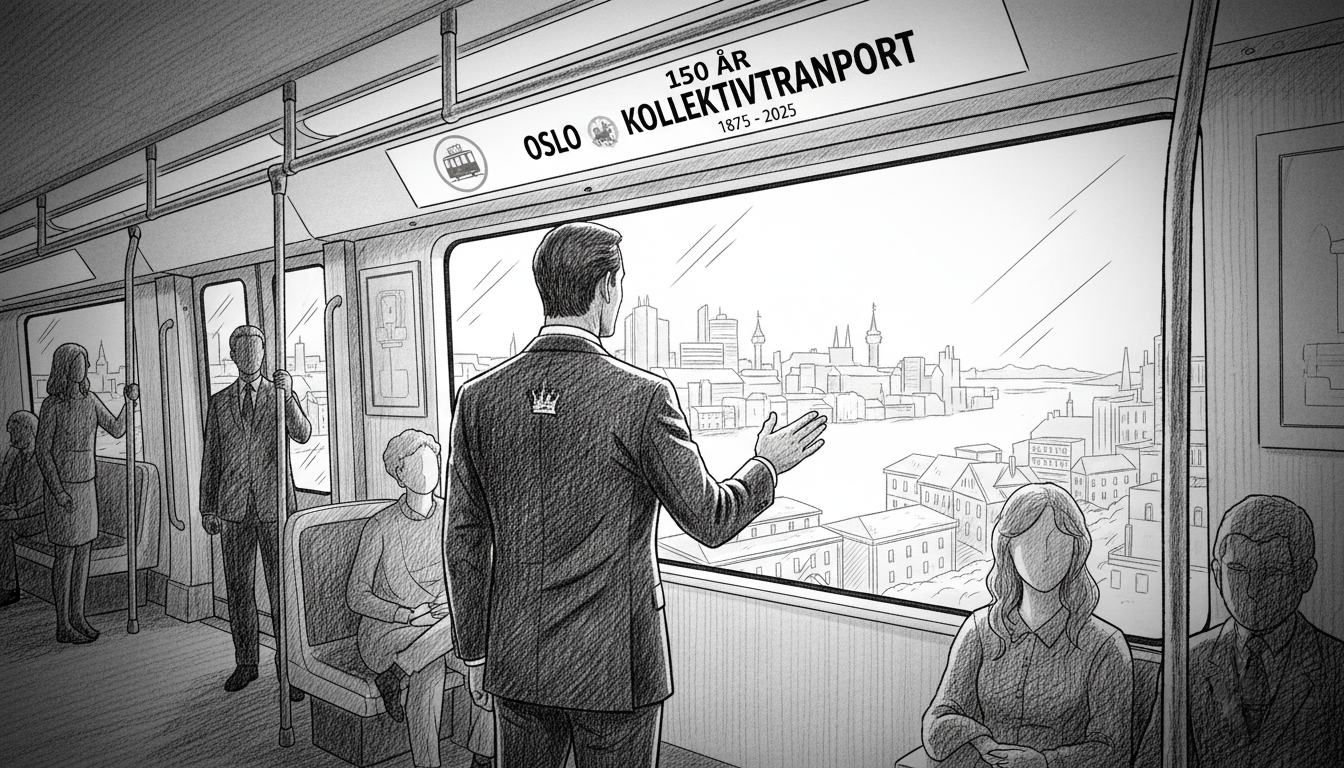
Crown Prince Haakon of Norway joined commuters on the Oslo T-bane subway this week. He rode the line from Ryen to Majorstuen to mark 150 years of public transport in the capital. The event celebrated a system that began with horse-drawn trams and now moves millions annually.
The royal visit started at the Ryen station in a cold drizzle. The Crown Prince first met staff at the T-bane maintenance workshop. These technicians keep the wheels turning for the city's transport operator. He then boarded a regular service train with the public and Marina Heyerdahl, named this year's 'Spirit of the Year' by the operator.
Transport officials stated the system has shaped how people live and move since Oslo's first horse tram in 1875. They said public transport has brought together people from different social classes and parts of the city for a century and a half. It has broken down barriers for where people can travel, work, and live.
The historical journey began on October 6, 1875. The first horse-drawn tram departed from the Homansbyen stable in what was then called Kristiania. Electric trams, later known as 'Trikken', replaced horses by March 3, 1894. The first line ran from Majorstuen to Jernbanetorget.
The T-bane subway itself opened in 1898. The initial Holmenkolbanen line connected Majorstuen to Slemdal. Early attempts to expand the underground network in 1912 faced major problems. The ground collapsed at Valkyrie plass, damaging nearby buildings. Work eventually resumed, leading to a tunnel to the National Theatre station.
A major expansion came in May 1966 with the Lambertseterbanen. This was the first line in a large-scale push for subway service in Oslo's eastern districts. Connecting east and west by subway laid the foundation for a more unified capital city.
The operator now emphasizes accessibility, inclusion, and community as core values. They state they have built a system where there is room for everyone. The anniversary also coincides with a major milestone for a new signaling system. This upgrade is a prerequisite for future projects like the planned Fornebubanen line.
The parent company, Sporveien, is Norway's largest public transport provider by number of journeys. Its subsidiaries, which include the subway, tram, and bus services, reported 264 million single journeys last year. This figure underscores the system's critical role in daily Norwegian life.
This celebration is more than a historical footnote. It highlights a sustained national commitment to public infrastructure. Norway's wealth from oil and gas has often funded such long-term civic projects. The development of the T-bane network, particularly the east-west connection, directly influenced Oslo's urban planning and housing policy. It enabled the city's expansion into surrounding fjord-side communities while maintaining a strong central core.
The event also comes amid ongoing debates about Norway's green transition. As a major oil producer, the country faces pressure to reduce domestic emissions. A reliable, electric-powered public transport system is a key component of that strategy. The Crown Prince's symbolic ride reinforces the state's role in providing collective solutions over individual car use. It is a quiet but firm statement of policy priority.
Looking ahead, the system's growth continues. The new signaling project and the Fornebubanen line represent significant future investments. They indicate that even with high car ownership rates, Norwegian policy in Oslo remains firmly behind mass transit. For international observers, this is a case study in how resource-rich nations can invest fossil fuel revenues into permanent, low-carbon urban infrastructure.