
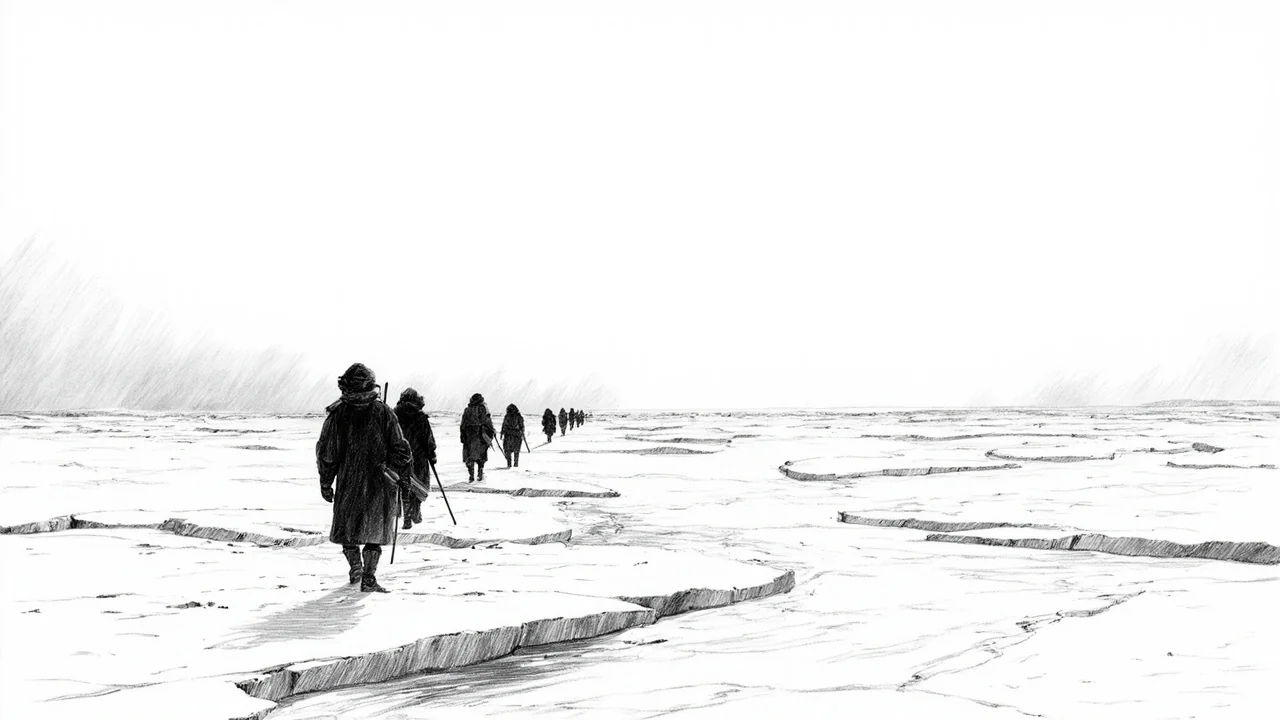
Ancient hunters crossed frozen seas to reach empty island
Danish archaeologists have uncovered evidence that fundamentally changes our understanding of how humans first reached Greenland. The discovery, led by soil chemist Henning Matthiesen from the National Museum of Denmark, places the first human activity on the world's largest island at approximately 4,500 years ago.
The research reveals that hardy, fur-clad hunters likely walked across sea ice from what is now Canada's Ellesmere Island to reach Northwest Greenland. This finding emerges from painstaking fieldwork on remote, barren rocky islands more than 50 kilometers from Greenland's northern coast, according to the National Museum of Denmark.
What strikes me about this discovery is how it underscores the incredible determination of these early Arctic peoples. Walking across unstable sea ice to reach an unknown landmass takes a level of courage that's hard to fathom today.
Denmark's Arctic research dominance faces new questions
The discovery comes through Denmark's extensive Arctic research infrastructure, coordinated by the National Museum's SILA Arctic Centre. This institution has long maintained Denmark's scientific authority over Greenlandic prehistory, working alongside Greenland's National Museum and Archive (Grønlands Nationalmuseum og Arkiv).
Matthiesen's team of six scientists focused their work at Kangeq, a small uninhabited settlement, examining how humans utilized natural resources across 4,500 years in the Melville Bay region. The research specifically tracks environmental changes and resource crises that shaped early Greenlandic society, according to Archaeology Magazine.
But here's what the Danish media isn't emphasizing: this research reinforces Denmark's scientific claims over Greenlandic history at a time when Greenland's independence movement grows stronger. Every archaeological discovery that flows through Danish institutions subtly reinforces the colonial knowledge structure.
Read more: Danish Webshop Byflou Collapses Despite 80-Strong Workforce.
Read more: Aalborg Sues Danish State for Billion-Kroner Water Bill.