
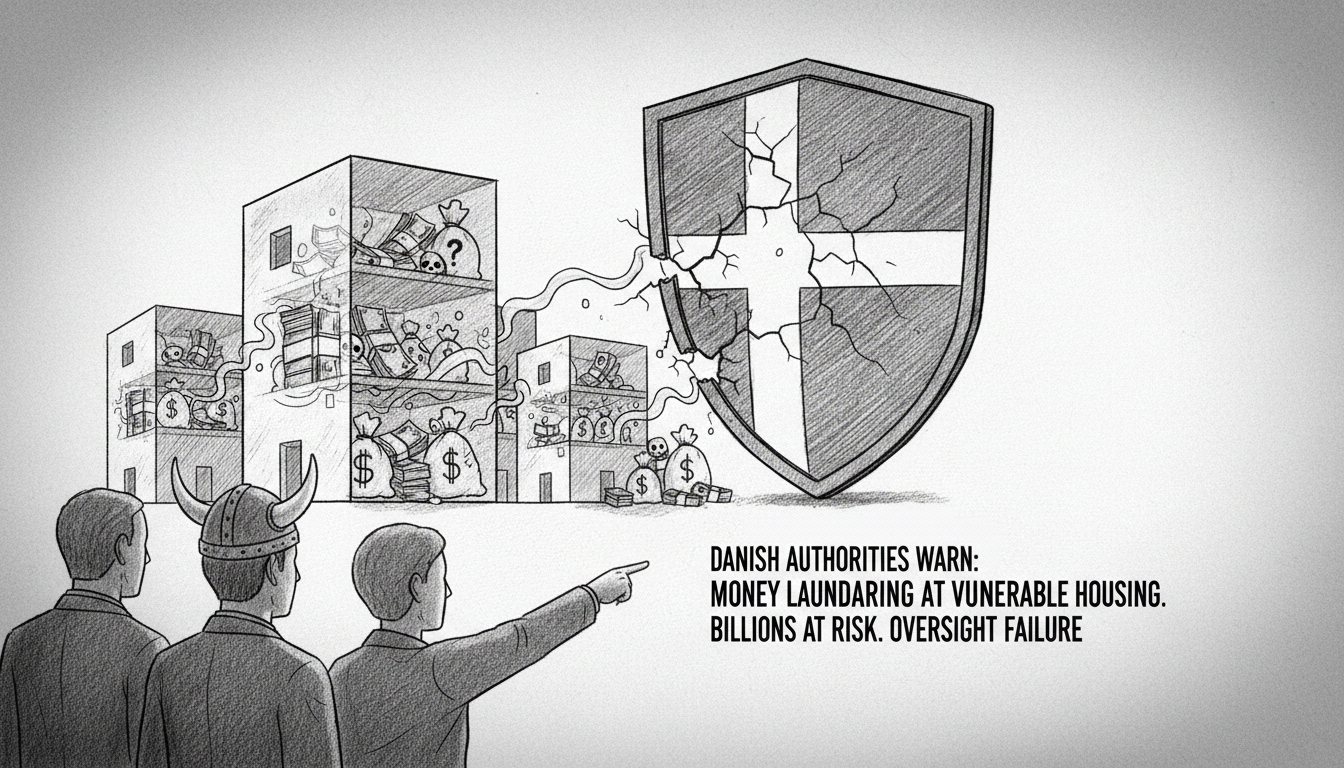
Danish authorities have issued a serious warning about criminal exploitation of housing facilities for society's most vulnerable residents. The Money Laundering Secretariat published its first major investigation into residential care services this week. Their findings reveal billions in taxpayer funds risk falling into criminal hands through money laundering schemes targeting these facilities.
This alarming report represents the first comprehensive examination of financial crime within Denmark's supported housing sector. The investigation uncovered systematic vulnerabilities that organized crime groups appear to be exploiting. These housing centers serve citizens with disabilities, mental health challenges, and other support needs who depend on public funding for their care and accommodation.
Copenhagen integration experts express deep concern about these developments. The potential misuse of welfare funds threatens the integrity of Denmark's entire social support system. One community leader working with vulnerable populations described the situation as deeply troubling for both residents and taxpayers.
Danish social policy has long emphasized protecting society's most marginalized members. This money laundering risk exposes critical weaknesses in oversight mechanisms. Municipal authorities responsible for monitoring these facilities now face urgent calls for improved supervision and financial controls.
The welfare system's complexity creates challenges for effective monitoring. Different municipalities manage various aspects of residential care funding and administration. This fragmented structure can enable financial crimes to go undetected for extended periods.
Integration statistics show Denmark has struggled with similar challenges in other sectors previously. The country's immigration policy framework includes measures to prevent exploitation of vulnerable groups. Yet this latest report suggests existing safeguards have proven insufficient for residential care facilities.
Social centers across multiple Danish municipalities have received the warning. Officials emphasize the need for immediate action to protect both vulnerable residents and public funds. The investigation recommends stronger financial transparency requirements and improved inter-agency cooperation.
What does this mean for Denmark's international reputation? The country frequently ranks highly on transparency and anti-corruption indexes. This case tests Denmark's ability to maintain that standing while addressing systemic vulnerabilities in its social welfare architecture.
The situation raises fundamental questions about balancing compassion with financial accountability. Denmark's welfare model depends on public trust that tax revenues serve their intended purposes. This trust now faces a serious challenge that requires both immediate action and long-term structural improvements.
Community organizations report increased anxiety among residents of affected facilities. Many vulnerable individuals already face daily challenges without additional concerns about criminal exploitation. The psychological impact of this revelation cannot be overlooked in policy responses.
Danish authorities must now demonstrate they can protect both the physical safety and financial integrity of support systems for society's most vulnerable members. The coming months will reveal whether current systems can adapt quickly enough to address these identified risks effectively.