
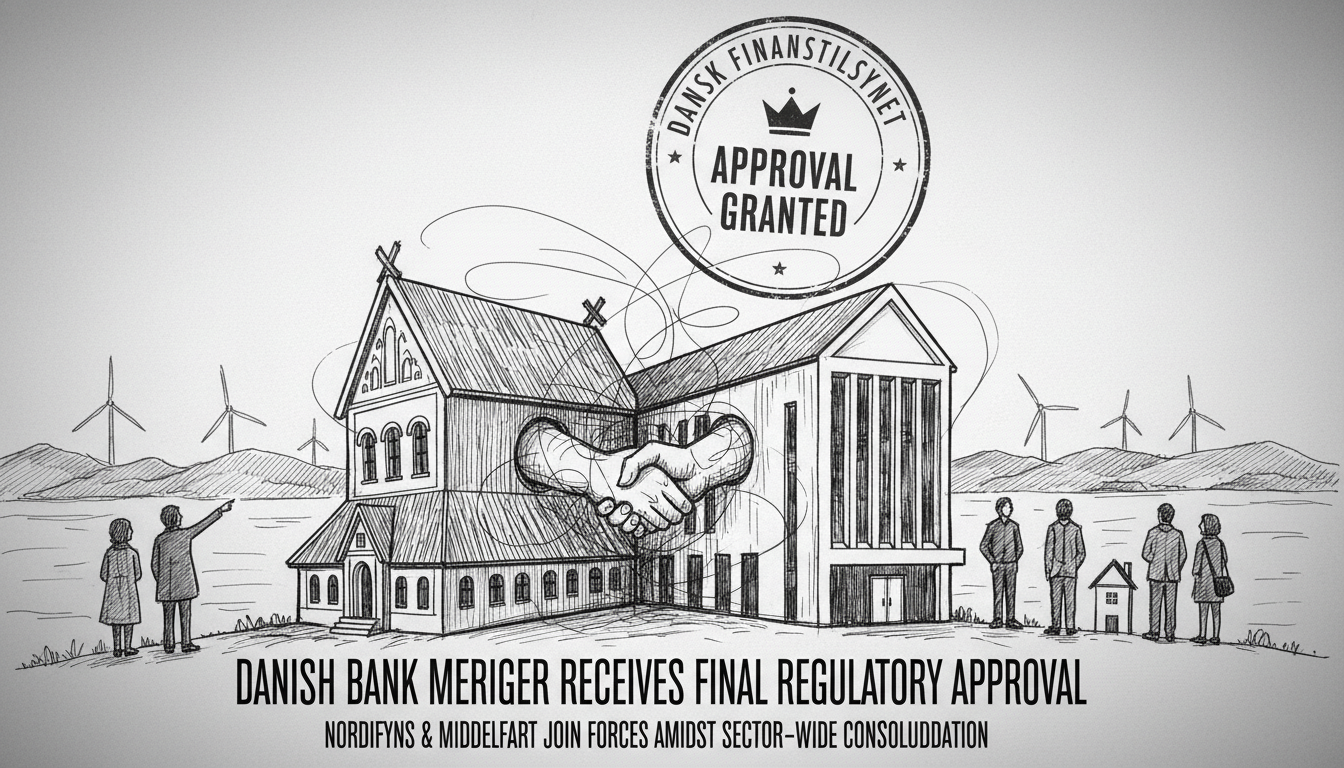
Danish financial regulators have given their final approval to a merger between Nordfyns Bank and Middelfart Sparekasse. This decision concludes a lengthy and complex corporate battle on the island of Funen. The approval from the Financial Supervisory Authority was the last required step. It allows Middelfart Sparekasse to become the continuing entity. The merger reflects a broader consolidation trend within Denmark's financial sector. Several other regional bank mergers have received preliminary approvals recently. This wave of consolidation raises questions about competition and consumer choice in local markets.
The path to this merger was not straightforward. It involved a failed earlier agreement between Nordfyns Bank and a different partner, Fynske Bank. That deal, announced earlier in the year, aimed to create what was called "Funen's strongest bank." It required a two-thirds majority vote from shareholders of both institutions. That majority proved difficult to secure. A key obstacle was SJF Bank, which owned nearly 25 percent of Nordfyns Bank shares. SJF Bank considered the offer price too low. Middelfart Sparekasse then purchased SJF Bank's stake in Nordfyns Bank. This strategic move gave the savings bank over one-third of the shares and the power to block the original deal.
Middelfart Sparekasse consistently stated its stake was not for sale. Its acquisition of the blocking shareholding ultimately redirected the merger process in its own favor. This corporate maneuvering shows how local banking dynamics in Denmark can shift rapidly. The final approval means trading of Nordfyns Bank shares on the stock exchange has now ceased. For customers, the immediate changes may be minimal, but the long-term implications are significant. Fewer, larger banks can mean reduced local decision-making power. It can also lead to branch closures in smaller communities as operations are streamlined.
This merger is part of a clear national pattern. Just this week, the Competition and Consumer Authority approved a separate three-way merger between Sydbank, Arbejdernes Landsbank, and Vestjysk Bank. That deal still awaits the Financial Supervisory Authority's final sign-off. Earlier in the year, Nykredit received the green light to acquire Spar Nord. This consolidation is driven by several factors. Low interest rates for an extended period have compressed traditional banking profits. Increased regulatory costs and the need for digital investment also pressure smaller institutions. Merging is often seen as a path to greater financial resilience and scale.
The trend has direct consequences for Danish society and the welfare system's framework. Local banks have historically played a crucial role in community development and lending to small businesses. As they merge into larger entities, the connection to local economies can weaken. This impacts integration efforts in cities like Copenhagen and Aarhus, where access to tailored financial services for new residents and small entrepreneurs is vital. Municipalities often partner with local banks on social initiatives. A more centralized banking landscape could alter these partnerships. The social policy dimension of financial access, especially for vulnerable groups, becomes more challenging when decision-makers are farther away. The full social impact of this banking consolidation will unfold over the coming years.