
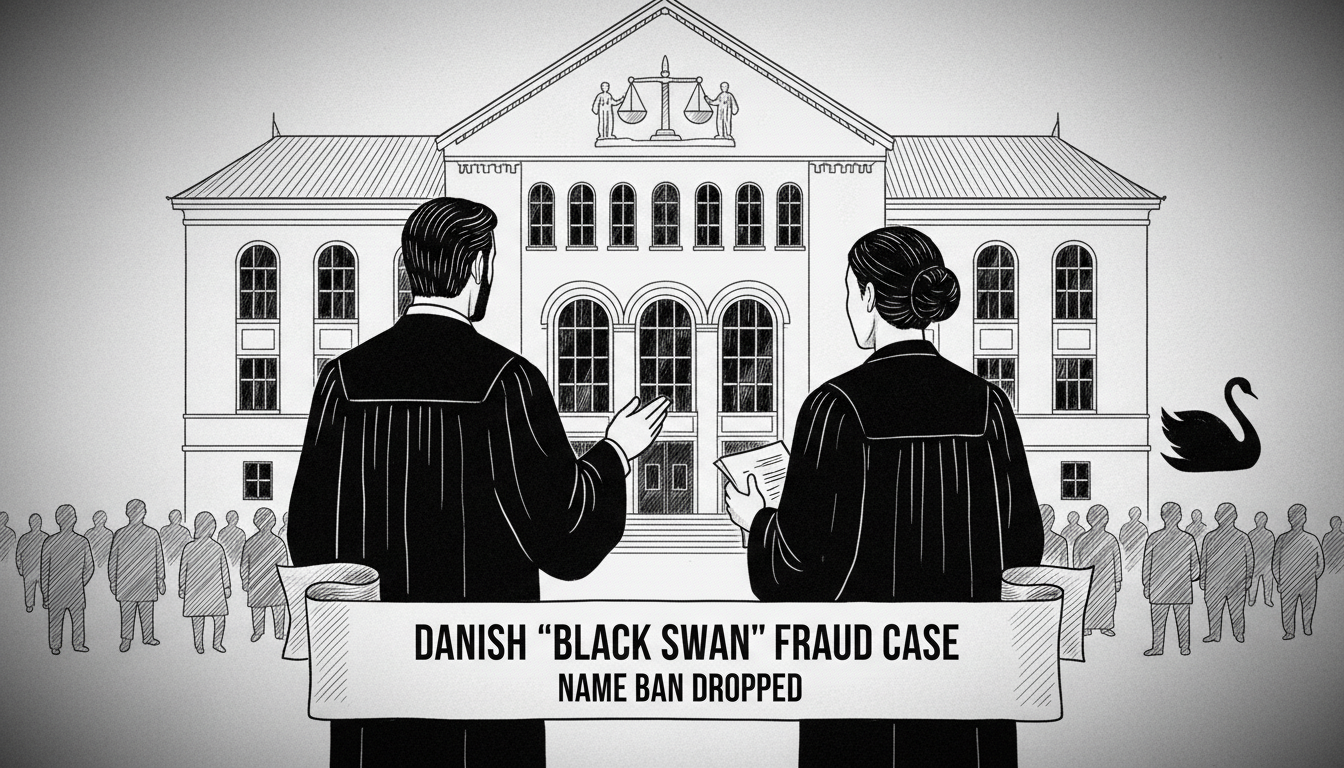
A prominent figure in a major Danish fraud case has withdrawn her request for a court-ordered name ban. Amira Smajic, also known as Mia Sørensen, and her co-defendant, lawyer Julie Bernholdt Moosmand, have both abandoned their legal attempts to shield their identities from the public ahead of their trial. The case, set for a jury trial in Odense next year, involves allegations of fraud and attempted fraud against the Danish Wage Earners' Guarantee Fund for approximately three million kroner. The defendants are accused of creating false documents to claim salary coverage from the fund for employees of companies where Moosmand served as a trustee.
This development offers a window into Denmark's legal transparency and its intersection with high-profile cases involving identity and integration. The defendant, Smajic, first gained public notoriety as the 'Black Swan' after her role as a whistleblower in a major television documentary. Her journey from a whistleblower to a defendant in a fraud case touches on complex themes of trust and credibility within Danish society. The case is being closely watched by legal observers and communities interested in the integrity of Denmark's welfare and legal systems.
Denmark maintains a strong principle of open justice, where court proceedings and the identities of those involved are typically public. Requests for name bans are serious and granted only under specific circumstances, often to protect vulnerable individuals. The withdrawal of these requests suggests the defendants' legal teams assessed the likelihood of success as low. This transparency is a cornerstone of the Danish welfare model, which relies on public accountability to maintain trust. The case will proceed with the full scrutiny that Danish society expects for matters of significant public interest.
Julie Bernholdt Moosmand has pleaded not guilty to the fraud charges. Amira Smajic's defense lawyer has declined to comment on her client's stance regarding the accusations. The court in Odense confirmed the withdrawal of the name ban applications to attending media. The trial is scheduled to begin in the third quarter of next year. The outcome could have implications for how similar fraud cases against public funds are prosecuted and perceived. The Danish Wage Earners' Guarantee Fund is a critical part of the social safety net, designed to protect employees if an employer goes bankrupt.
From an integration and social policy perspective, cases like this test the resilience of Danish institutions. They also highlight the challenges individuals can face when navigating complex legal and social landscapes. The Danish integration model emphasizes self-sufficiency and adherence to the rule of law. High-profile legal troubles can sometimes fuel broader, unproductive debates about immigration and trust. It is crucial to view this as a specific legal case concerning specific allegations, not as a representation of any community. The Danish legal system will now run its course, determining guilt or innocence based on the evidence presented in an open court.