
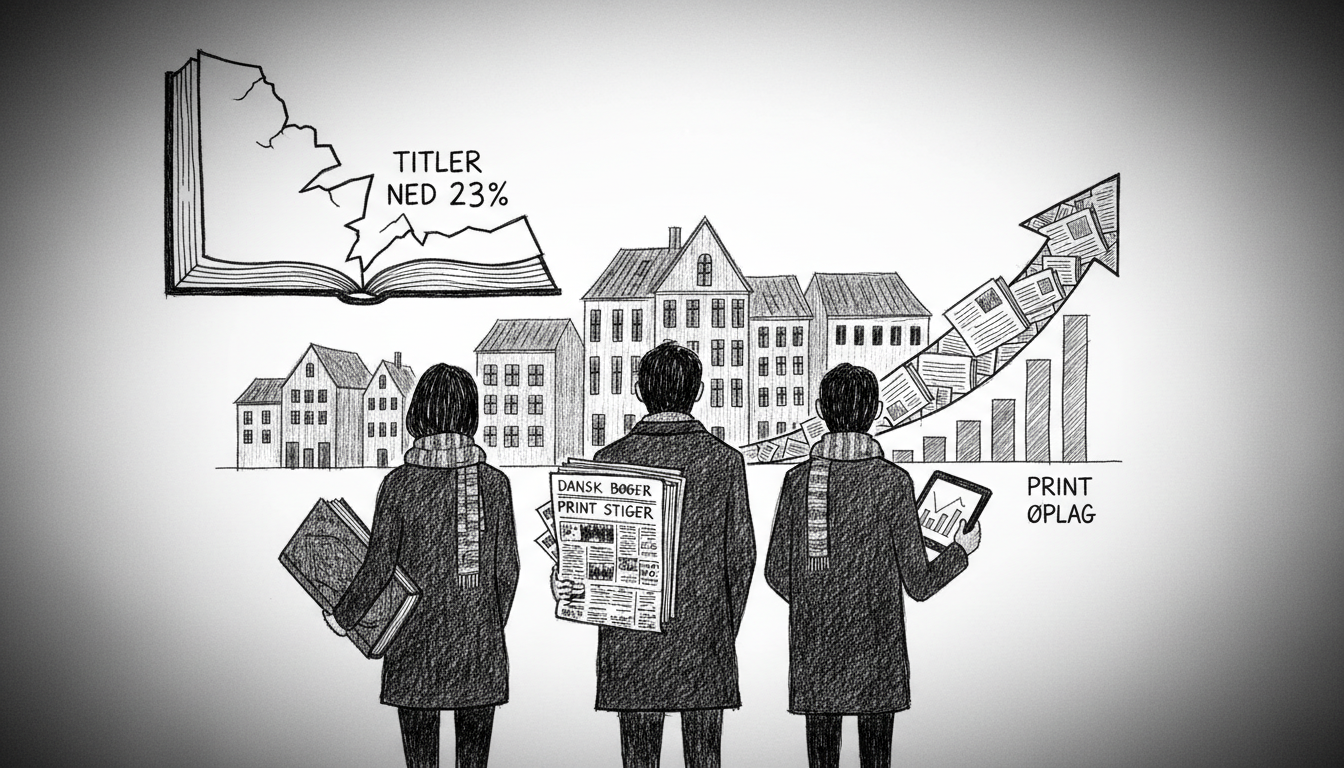
Denmark's literary landscape reveals a significant paradox in the latest data from the Ministry of Culture's Book Panel. While sales of physical books are growing, the production of new Danish titles has sharply declined. This trend highlights deep challenges for authors and publishers within the nation's celebrated cultural ecosystem. The figures point to a market consolidating around fewer, often bigger, names at the expense of diverse new voices.
A Market in Contraction
The core finding is stark. The number of new book titles published in the Danish language fell by approximately 23% over the past five years, according to the Book Panel's analysis. This contraction is not merely a statistical blip but a sustained trend affecting fiction, non-fiction, and children's literature. Industry experts link this decline to significant economic pressures. Smaller publishing houses, crucial for discovering debut authors, are facing unsustainable risks in a competitive retail environment. Rising production costs and squeezed profit margins make investing in unproven literary talent a difficult financial calculation.
Lars Bukdahl, a noted literary critic, describes the situation as a 'cultural bottleneck.' He argues that the economic model is increasingly risk-averse. 'Publishers are compelled to focus on guaranteed sellers, which often means established authors or translated bestsellers,' Bukdahl said. This creates a cycle where breaking through as a new Danish writer becomes exceptionally hard. The pipeline for future literary stars is under threat, potentially impoverishing the long-term diversity of Denmark's cultural output. This trend contradicts the traditional strength of the Danish welfare model in supporting arts and culture.
The Unexpected Resilience of Print
Amid this challenging publishing climate, a counter-trend offers a glimmer of hope. The physical book is experiencing a modest but meaningful resurgence in Denmark. After years of predictions about its demise at the hands of e-readers and tablets, print has reclaimed market share. Industry data suggests physical books now account for over 70% of the general book market's value in Denmark. Audiobooks have captured a growing segment, primarily for fiction, while dedicated e-book sales have stagnated. This preference for paper is not merely nostalgic; it is a conscious consumer choice.
Readers cite the tactile experience, the lack of screen fatigue, and the aesthetic value of books as key reasons. Mette, a regular patron at the independent bookshop Politikens Boghal in Copenhagen, explained her preference. 'I spend all day on screens for work. A physical book represents a clear break, a tangible object that belongs wholly to the story,' she said. Bookstores have also adapted, becoming community hubs with events and curated selections that online algorithms cannot replicate. This revival supports bookshops and the visible, physical infrastructure of reading, which is vital for casual discovery and literary culture.
Policy at a Crossroads
The Danish state has a long history of intervening in the book market to promote culture and accessibility. Key mechanisms include the fixed book price agreement, which prevents deep discounting and protects smaller bookshops, and the 'lending rights' system that compensates authors when their books are borrowed from public libraries. The current trends, however, present new policy dilemmas. How does the government support a healthy volume of new Danish literature when market forces are reducing it? Should subsidies shift more directly towards supporting debut authors and niche publishers?
Marie Rørbye Rønn, Director of Literature at the Danish Arts Foundation, acknowledges the complexity. 'Our support systems were designed for a different market. We are now evaluating how to best ensure breadth and innovation in Danish literature for the future,' Rønn said in a statement. Proposals being discussed include enhanced grants for first-time authors, direct production support for small publishers, and increased funding for literary festivals that platform emerging talent. The goal is to recalibrate the balance between market dynamics and cultural policy objectives.
What the Future Holds
The duality of the Danish book market—fewer new titles but stronger print sales—defines the current moment. It suggests a mature market where consumers value the physical object of the book yet are increasingly cautious in their choices, often favoring known quantities. For the Danish language and literary culture, the decline in new titles is a serious concern. Literature is not just a product; it is a fundamental part of societal reflection and identity. A sustained reduction in new Danish works could narrow the stories told and the perspectives shared.
The challenge for Denmark is to harness the renewed love for the physical book to foster a more vibrant and risk-taking publishing environment. The solution may lie in targeted policy interventions that de-risk innovation for publishers. It also requires continued public engagement with libraries, book clubs, and literary events. The health of a nation's book market is a key indicator of its cultural vitality. Denmark now faces a critical test: can it adapt its renowned support systems to ensure its bookshelves of the future are filled with both beautiful objects and groundbreaking new stories?