
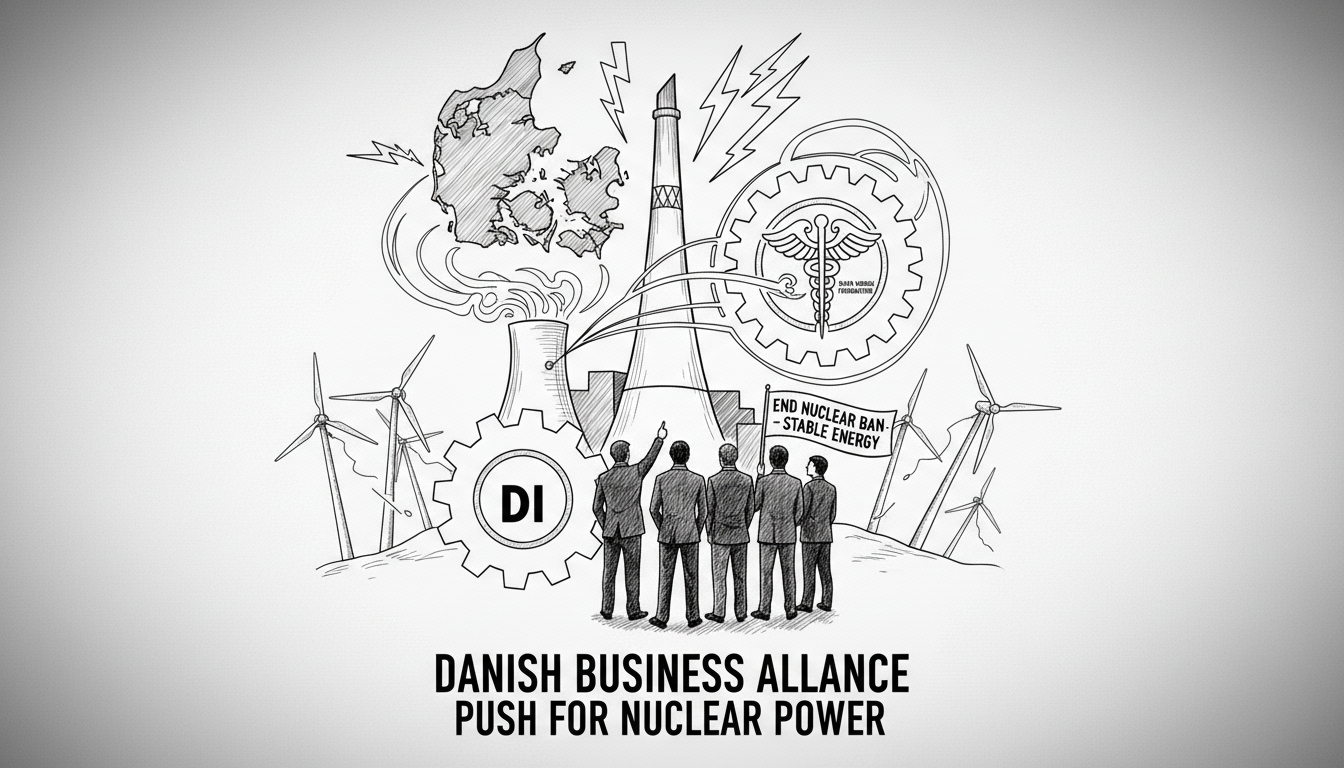
A powerful new coalition of Danish industry leaders is pushing to overturn the country's decades-long ban on nuclear energy. The alliance, named the Nuclear Power Alliance, includes heavyweights like the Confederation of Danish Industry (DI), the Danish Metalworkers' Union, and the Novo Nordisk Foundation. Their goal is to spark a fact-based debate on whether nuclear power should be part of Denmark's future energy mix. This marks a significant shift in the national conversation about energy security and industrial competitiveness.
The current law explicitly prohibits the construction of nuclear power plants on Danish soil. This ban was enacted by parliament in 1985. The new alliance argues this stance is outdated and limits Denmark's options for achieving a stable, green, and affordable energy supply. The group also includes major players like Landbrug & Fødevarer (Agriculture & Food), the technology company Topsoe, Schneider Electric Denmark, and the Department of Physics and Astronomy at Aarhus University.
Emil Drevsfeldt Nielsen, head of business policy at Danish Metal, stated the union believes Denmark should build nuclear power plants at some point. He said this move is crucial for securing the long-term energy needs of the nation's manufacturing and industrial base, particularly in the Øresund region. Troels Ranis, deputy director of DI, offered a more measured perspective. He said DI 'will not rule it out' but noted studies show investing in solar and wind is currently cheaper. 'The great thing about nuclear power is that once we cover the capital costs, it becomes very cheap,' Ranis explained. 'That is what we are looking for in industry: access to competitive, stable, and secure energy.'
This push comes directly from concerns over Denmark's economic future. Business districts in Copenhagen and major export hubs rely on predictable energy costs. The debate centers on whether nuclear can provide the baseload power needed to complement intermittent renewables like wind, which Denmark famously champions. The discussion is not merely theoretical. Several other European nations, including France, Sweden, and Finland, operate large nuclear fleets, creating a different energy landscape for their industries.
Not all business voices are convinced. Danish Chamber of Commerce remains critical. In a written comment, its deputy director, Ulrich Bang, acknowledged the value of lifting the ban to assess technologies equally. 'But it does not change our assessment,' Bang stated. 'Nuclear power is neither competitive nor meaningful in a Danish context within a foreseeable future.' He pointed to the Flamanville plant in France, where a new reactor has far exceeded its budget and timeline. 'The Danish people and businesses need safe, cheap, and green energy, and it is urgent,' Bang argued. 'It is about our competitiveness, our security, and the fight against climate change, and here we cannot wait until 2040 or later for concrete changes.'
The political winds are shifting. In recent years, right-leaning parties like Liberal Alliance, the Conservatives, and the Danish People's Party have opened the door to legalizing nuclear power. Most notably, Prime Minister Mette Frederiksen stated in May that she is open to easing the Danish ban. This indicates the issue is moving from a fringe debate to a mainstream political consideration. The core question is whether nuclear energy can be a viable tool for Denmark to maintain its industrial edge and meet ambitious climate targets. The alliance's formation ensures this question will be a central feature of Denmark's energy and economic policy discussions for the foreseeable future. The outcome will have direct implications for trade, export-oriented companies, and investment in the Copenhagen stock exchange and beyond.