
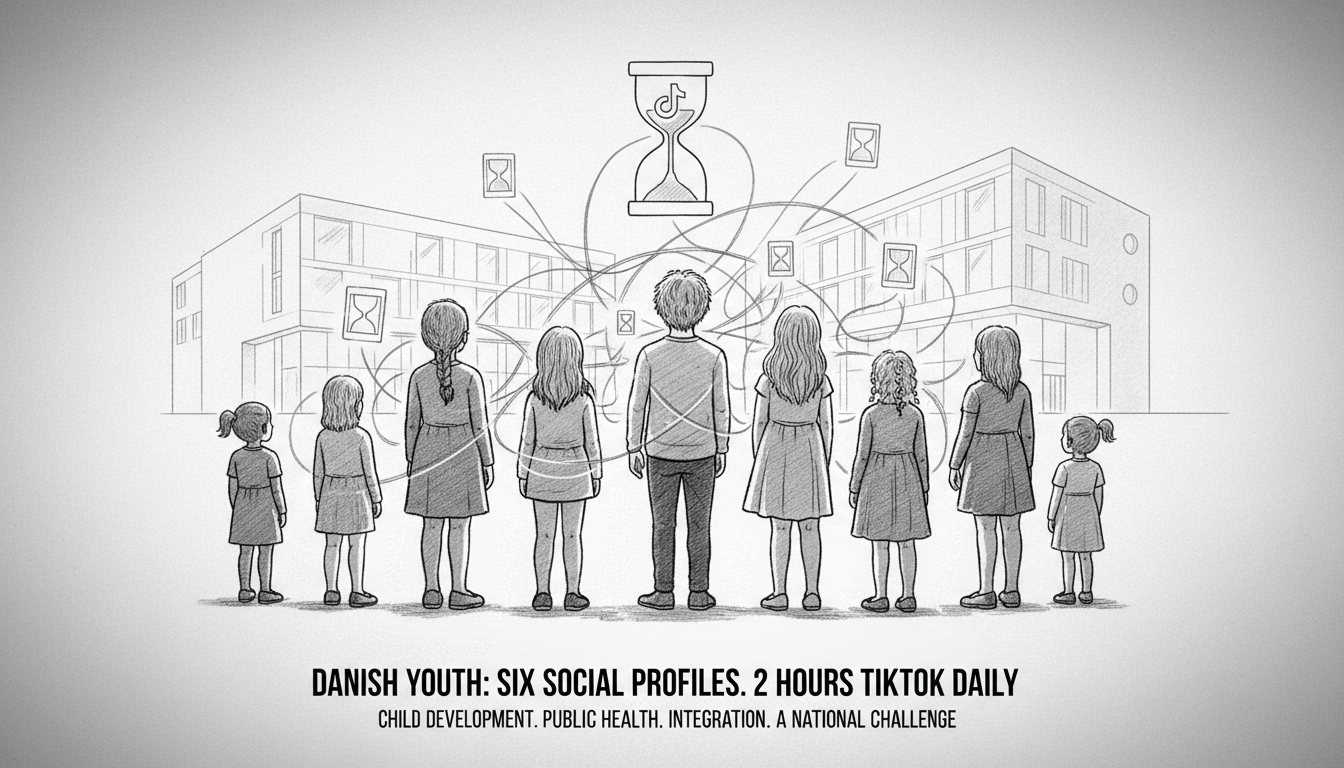
A new study reveals the pervasive digital landscape for Denmark's youngest generations. Nearly all children and young people aged 8 to 25 are present on at least one social media platform. The vast majority, however, maintain profiles on more than one. On average, they have active accounts on six different platforms. This data comes from a recent investigation by the Danish Competition and Consumer Authority. It shows that over 98 percent of children and youth use social media. The depth of their engagement, however, varies significantly with age. The oldest users are present on the widest array of platforms. The youngest users occupy the other end of the spectrum. Children between 8 and 12 years old have profiles on an average of two social media sites. Teenagers aged 13 to 17 average six profiles. Young adults from 18 to 25 lead the way with an average of eight profiles each. The study also pinpointed which platform commands the most attention. TikTok is the social media site that consumes the most of young people's time. On this platform alone, children and youth spend nearly two hours daily on average.
This digital saturation presents a complex challenge for Danish social policy and the welfare system. The findings have immediate implications for parents, educators, and municipal integration programs across cities like Copenhagen and Aarhus. How does constant connectivity affect childhood development and social integration? Community centers and schools, often the frontline for youth engagement, must now navigate a reality where a teenager's social world is fragmented across half a dozen digital spaces. The time spent on platforms like TikTok represents a substantial portion of a young person's waking hours. This time is often diverted from offline activities, family interaction, or homework. For children from immigrant backgrounds, these platforms can be a double-edged sword. They offer connection to global communities but can also create barriers to local language acquisition and cultural immersion.
The Danish approach to digital literacy and online safety is now being tested. The welfare state traditionally intervenes in areas affecting citizen well-being. Regulating the digital environment, however, proves far more difficult than providing physical infrastructure. Municipal social services and youth clubs increasingly report concerns about mental health linked to social media use. Officials note rising anxiety and issues with self-image among teens. They point to the curated perfection often displayed online. The data suggests a need for updated public health strategies. These strategies must address digital consumption as a core component of modern childhood. Some community leaders advocate for more robust digital education programs in schools. They argue these should start in the early grades. The goal is to build critical thinking before usage habits become entrenched. The conversation in Denmark is shifting from mere access to technology toward managing its profound impact on young minds.
This is not just a private family matter but a public health and integration concern. The two hours daily on TikTok are two hours not spent on other formative activities. For a society that prides itself on equality and social cohesion, these digital divides warrant close attention. The next steps likely involve collaboration between national authorities, municipalities, and parents. The challenge is to foster a healthy relationship with technology. Denmark must balance its innovative digital society with the protection of its youngest citizens. The average of six profiles is more than a statistic. It is a snapshot of a generation growing up in a profoundly interconnected, and potentially fragmented, world.