
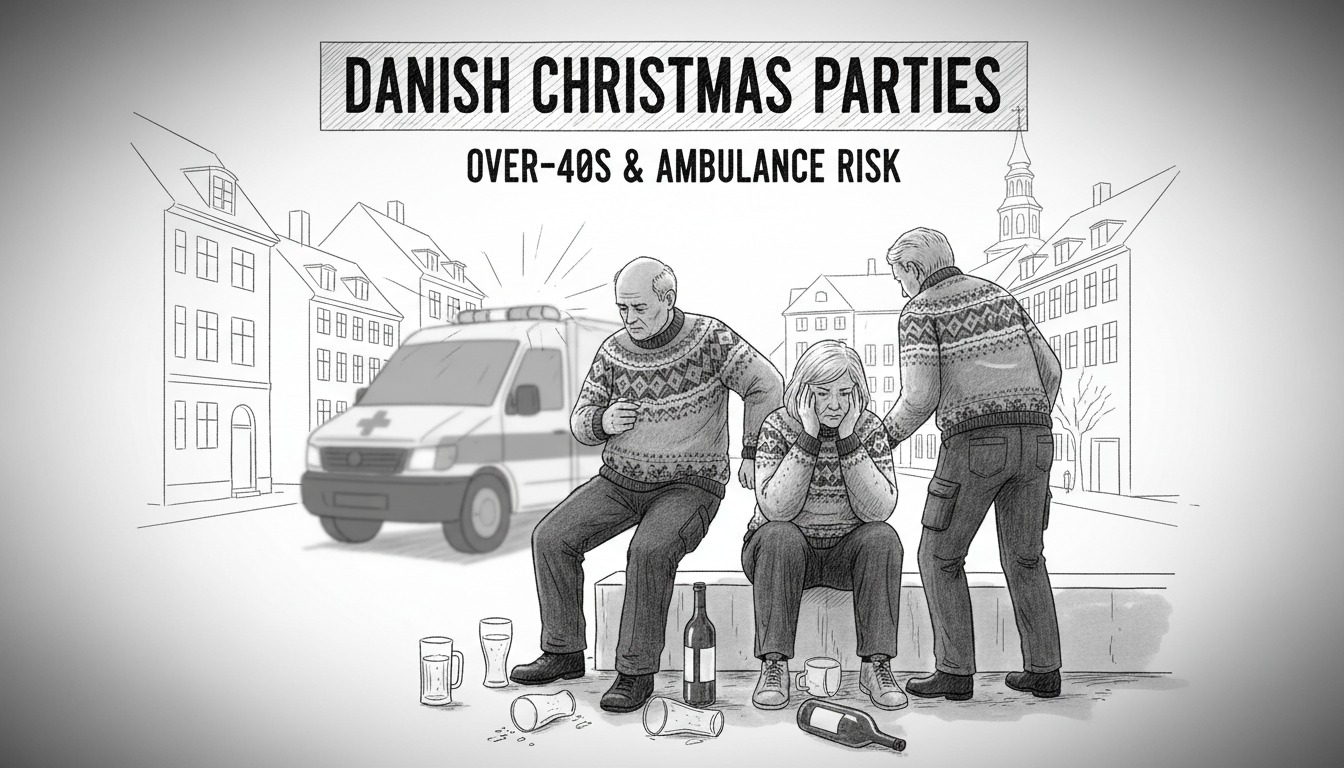
The festive Danish Christmas lunch, or 'julefrokost', is a cherished tradition filled with herring, fish fillets, and clinking glasses of snaps. This season of celebration has begun, but new data reveals a sobering public health trend. A recent report from the National Institute of Public Health shows that mature adults, not just youth, are driving a significant number of alcohol-related ambulance calls in the capital region. This finding challenges common perceptions about drinking culture and places new pressure on the Danish welfare system.
The study, conducted for the organization Alcohol & Society, analyzed over 87,000 pre-hospital patient records from the Capital Region. It found that 6.2 percent of all ambulance contacts were alcohol-related. While young people aged 15-24 accounted for one-fifth of these calls, the data presents a striking contrast. Adults aged 55-69 had the highest number of ambulance dispatches for intoxication, with 1,365 calls. They were closely followed by the 40-54 age group. Together, these two mature segments accounted for nearly half of all alcohol-related ambulance journeys. Men were involved in 66 percent of these cases.
Professor Janne Tolstrup, who led the research, explains the trend. Our older generations have a fairly high consumption of alcohol, she notes. With age, motor skills may not be fantastic anymore, so mixing alcohol into the equation is not a good idea. Alcohol impairs motor function, balance, and judgment, making people both more daring and less cautious. This combination significantly increases the risk of accidents, which were the most common cause for calls, followed by alcohol poisoning.
Anders Damm-Hejmdal, chief physician for the Emergency Services in the Capital Region, recognizes the pattern, especially during the Christmas party season. We handle more people in the mature segment, he said. Typical incidents include falls down stairs, bicycle accidents, head trauma, and broken ankles or wrists. He describes a perfect storm during this season, with festive gatherings coinciding with icy roads, guaranteeing extra busy shifts for emergency services.
The concentration of calls on Fridays and Saturdays highlights the social nature of the problem. This has direct implications for Copenhagen integration and social policy, as strained emergency resources cannot be in two places at once. Every ambulance sent to an alcohol-related incident is unavailable for other critical calls, Professor Tolstrup states bluntly. This reality is symbolized by the temporary mobile medical unit set up on Copenhagen's City Hall Square during the festive period, a clear indicator of the season's specific pressures on urban services.
From a Danish social policy perspective, this data prompts questions about public health messaging. We talk a lot about young people drinking, which is also true, Tolstrup observes. But we forget that they are not the only age groups. The findings suggest a need for broader, age-inclusive awareness campaigns about responsible consumption, particularly targeting established adults who may underestimate their vulnerability.
The professor offers practical advice for the season, emphasizing harm reduction. Drink more slowly and have something other than alcohol in between, she recommends. One drink should be followed by a glass of soda or water. She warns against drinking large amounts quickly on an empty stomach, noting the 20-30 minute delay before alcohol hits the bloodstream can lead people to misjudge their intake during a long lunch. This human impact, followed by policy context, shows how individual choices during a cultural tradition ripple through the Danish welfare system, affecting municipal health resources and community safety.