
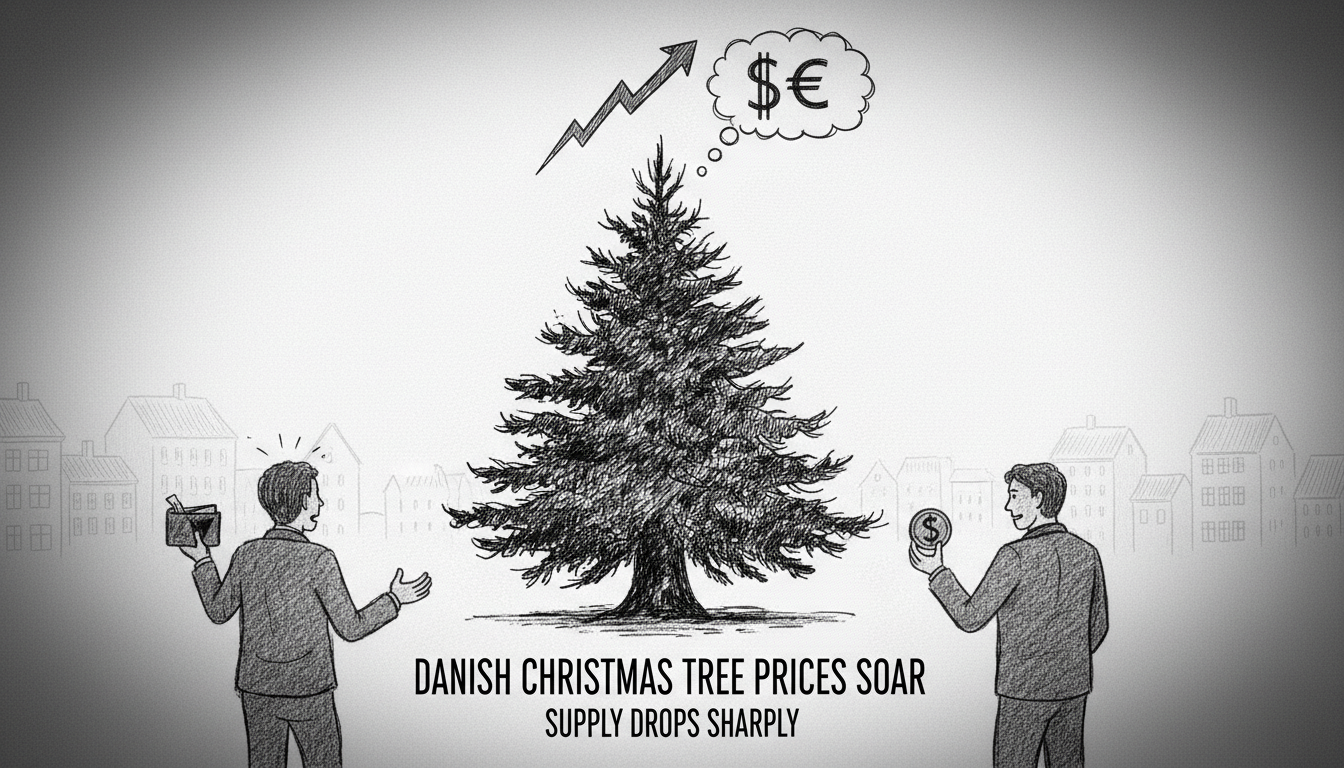
Danish Christmas tree producers are experiencing a rare boom. A sharp drop in supply has sent prices skyrocketing, creating a profitable season for growers but higher costs for consumers. This market shift highlights the volatile economics of a key Danish export industry, with significant implications for trade and local business.
Producer Svend Hybschmann, who runs SH Christmas Trees in Sønderjylland, sold his entire stock of 18,000 trees to German and Danish wholesalers by early December. He reports prices have doubled from last year, reaching 150 to 160 Danish kroner per tree at the farm gate. For years, the market was oversupplied and barely profitable. Now, the picture is reversed. Unfavorable weather has further damaged the Danish stock.
This scarcity ripples through the supply chain to urban retailers. Kasper Vendelbo, a seller in Aarhus for fourteen years, says he pays double on average for his trees compared to last year. To meet demand, he has opened an additional sales location in the city. His prices now range from 259 to 535 kroner. He notes high urban costs for rental space, fencing, lighting, and security in cities like Aarhus and Copenhagen.
The price surge is most acute in the capital. A recent check found two-meter Nordmann firs selling for 450 and 600 kroner in Copenhagen. Producer Svend Hybschmann criticizes these markups, questioning why retailers sell trees for triple what they pay producers. He cites an example of a small tree sold for 300 kroner in the city, a price he finds astonishing.
Claus Jerram Christensen, director of the industry association Danske Juletræer, defends urban retailers. He explains the substantial overhead they face. Christensen confirms the structural supply issue. Last year, Danish Christmas tree exports fell by 400,000 to 9.3 million trees, with the average price rising by 15 kroner. He describes a classic boom-and-bust cycle in tree farming, where good prices lead to overplanting, a glut years later, then a price crash and reduced planting. The current shortage is the result of that cycle, compounded by poor weather.
This market dynamic has direct trade implications. Germany is a major importer of Danish trees, and higher wholesale prices affect that export revenue. For the Danish economy, the sector supports around 2,300 businesses. The price spike transfers wealth from consumers and urban retailers to rural producers, at least for this season. The question is whether major retail chains will absorb the higher costs or pass them directly to consumers. Historical patterns suggest they will pass them on.
The situation offers a clear lesson in commodity economics. It shows how long production lead times and weather dependency can create sharp price swings in agricultural exports. For international observers, it underscores Denmark's role as a leading horticultural exporter beyond its better-known renewable energy and pharmaceutical sectors. The Christmas tree trade, centered in Jutland, is a quiet but meaningful part of the national export portfolio, subject to the same global market forces as any other crop.