
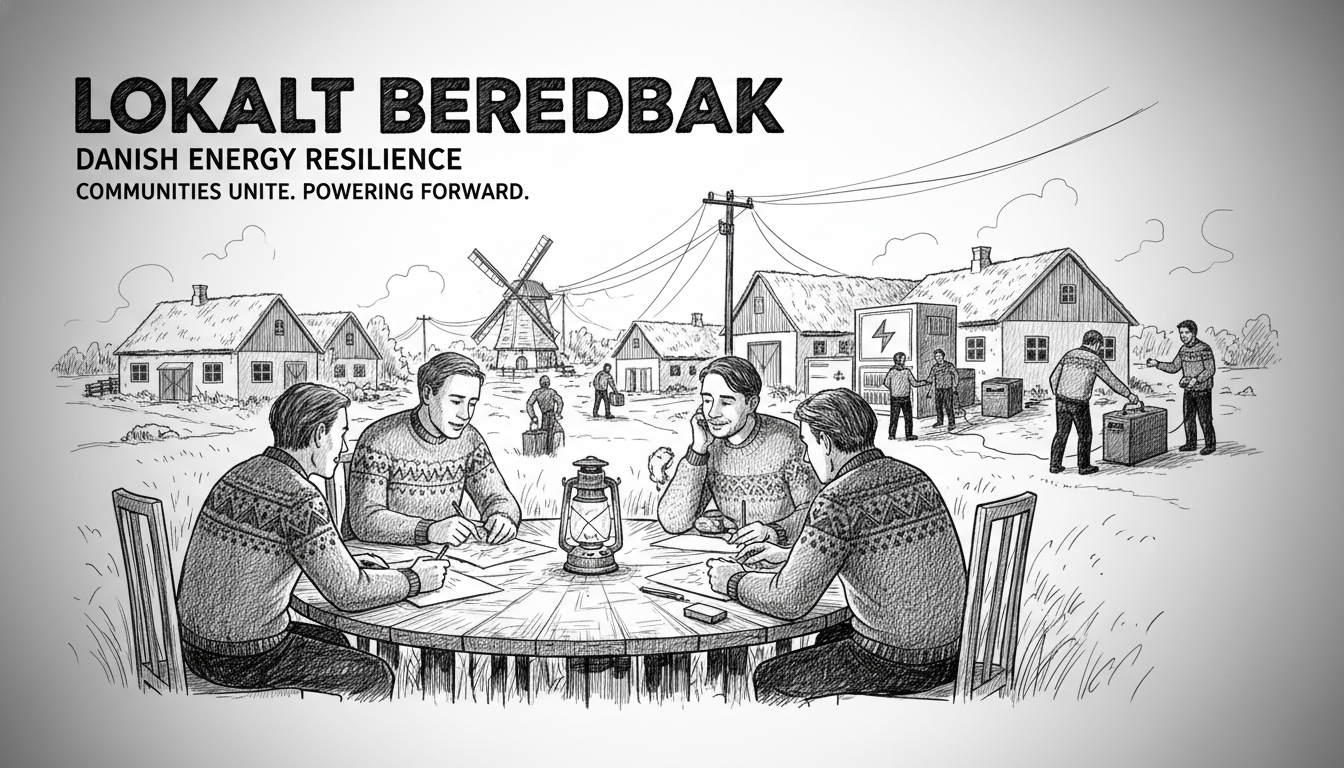
Danish villages are creating local emergency response networks as energy security concerns prompt community-driven solutions. The village of Rudme on Midtfyn has developed a comprehensive preparedness plan that brings together residents, businesses, and local institutions.
Tyge Mortensen, a member of Rudme's local council, observed growing unease among citizens about potential infrastructure failures. He initiated the community response plan after recognizing individual household preparations were insufficient. The plan coordinates resources across the village of approximately 400 residents.
Local businesses are playing crucial roles in the emergency network. Foderstoffen, the community's cultural center, will transform into a warming shelter during crises. The facility maintains generator capacity to provide electricity when grid power fails.
Microgreens, a local agricultural company, offers its container-sized freezer for community food storage. Managing Director Alex Pichardt confirmed the unit can accommodate frozen supplies for all village residents. The company views this as part of its community responsibility.
Energy independence forms a core component of Rudme's strategy. The village is developing a solar energy collective to provide backup power. Additional diesel reserves at local horticultural operations can maintain critical freezer operations during extended outages.
Similar initiatives are emerging across Denmark. The village of Falsled has begun creating its own local preparedness system. Community leaders emphasize shared responsibility as fundamental to effective crisis response.
Torsten Schack Pedersen, Minister for Social Security and Emergency Management, praised the grassroots initiatives. He described them as excellent examples of community engagement that deserve recognition. The minister encouraged other municipalities to develop similar resource-based plans rather than comprehensive documentation.
This movement reflects broader Danish values of collective responsibility and practical problem-solving. Denmark's decentralized approach to emergency management allows local adaptations to national guidelines. The country's experience with renewable energy transitions informs these community energy resilience efforts.
Business implications are emerging from these developments. Danish companies increasingly consider community partnerships as part of corporate social responsibility strategies. The renewable energy sector sees opportunities in microgrid development for rural communities.
Copenhagen-based energy firms monitor these local initiatives for insights into distributed energy systems. Denmark's leadership in wind power and solar energy creates natural synergies with community resilience planning. The Øresund region's technology companies could develop solutions supporting these local networks.
These community efforts demonstrate practical applications of Denmark's social cohesion principles. They represent bottom-up approaches to national security concerns while maintaining local autonomy. The model could influence emergency preparedness strategies across Nordic countries.
What does this mean for Denmark's business environment? Companies operating in rural areas may need to consider their role in local resilience networks. Energy sector investments could increasingly focus on decentralized systems. Community partnerships may become competitive advantages for businesses seeking local acceptance.
The Danish approach contrasts with more centralized emergency response models elsewhere. It leverages the country's strong social trust and community engagement traditions. This could position Denmark as an innovator in community-led resilience planning.