
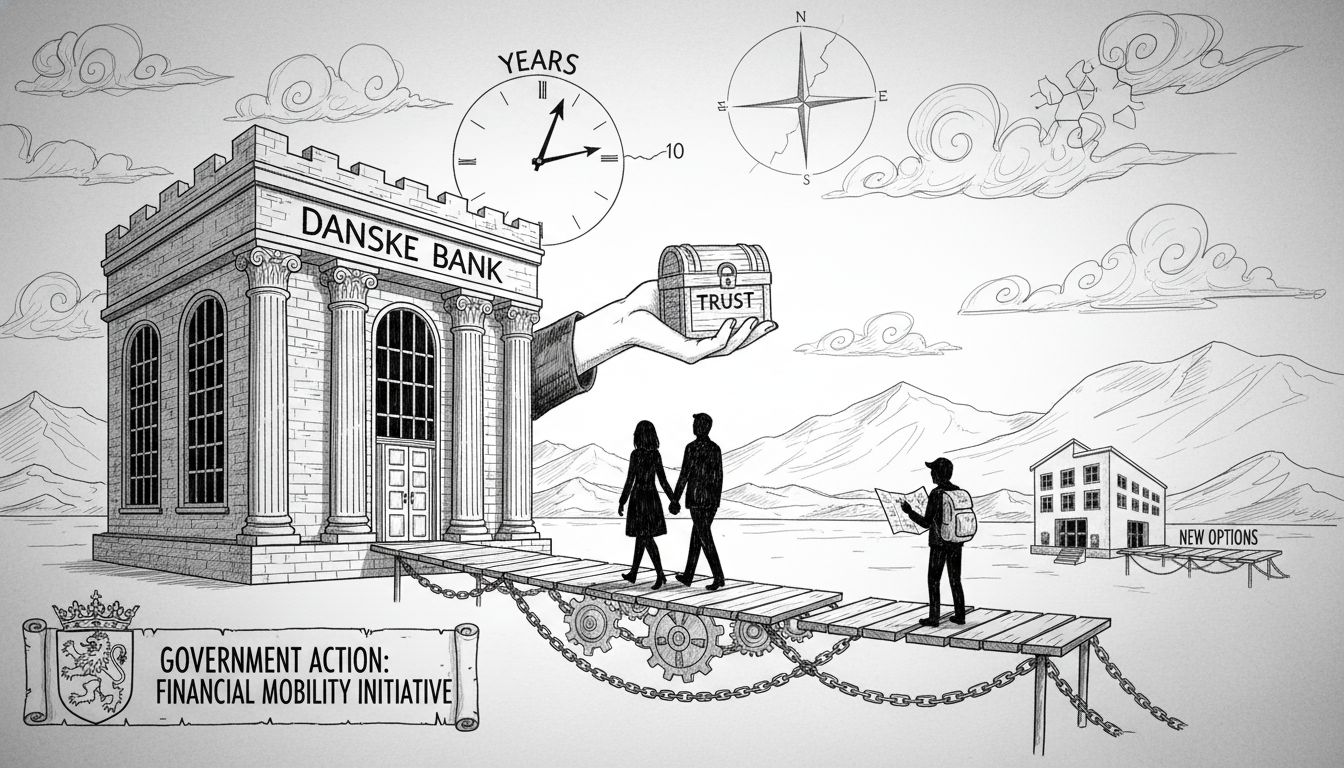
Danish consumers maintain their banking relationships for longer periods than their romantic partnerships. This surprising comparison frames a new government push to increase competition in the financial sector. Business Minister Morten Bødskov issued a stark warning to banks at a major financial industry meeting. He stated that far too few Danes switch banks, a situation the government now considers intervening to change. This move signals a potential shift in Denmark's approach to consumer finance and market regulation.
The Danish welfare model traditionally emphasizes stability and trust in institutions, including banks. This cultural context helps explain the high customer loyalty. Many Danes open their first bank account as children with their local branch. They often keep that account through adulthood, even as they change jobs, homes, and partners. The system is deeply integrated with the national digital ID, NemID, and later MitID, making everyday payments and official communications seamless. This convenience creates a high barrier to switching, despite potential financial benefits.
From my perspective covering integration and social policy, this issue touches on core aspects of Danish society. Trust in public and private institutions is a cornerstone of the social contract here. The government's concern suggests that trust might be preventing healthy market competition. Officials argue that low switching rates allow banks to offer less competitive terms on loans and savings. They point to other European markets where consumers change providers more frequently to secure better deals. The Danish Financial Supervisory Authority has noted the trend for several years.
What does this mean for international residents and new citizens? For those navigating the Danish welfare system and integration process, banking is a fundamental first step. Newcomers often face complex choices when selecting a bank for salary payments, housing deposits, and connecting to the public digital infrastructure. Community centers in Copenhagen and other municipalities frequently offer guidance on this process. The potential government intervention could simplify choices and increase transparency for everyone, especially those less familiar with the Danish financial landscape.
What might government action look like? Policy experts suggest several options. One is a centralized switching service managed by a public authority to reduce administrative hassle. Another is stricter requirements for banks to clearly display key pricing information, making comparisons easier. Some propose mandatory annual reminders to customers about their current rates versus the market average. The debate centers on balancing consumer protection with personal responsibility, a classic tension in Danish social policy.
The business minister's statement is a clear signal to the banking industry. It indicates that the government views consumer inertia as a market failure requiring correction. This aligns with a broader Nordic trend of scrutinizing digital service markets where customer lock-in is common. The outcome could affect how Danes interact with all essential service providers, from utilities to telecommunications. The government's next steps will be closely watched by consumer advocates and the financial sector alike.
Honestly, the minister's partner analogy is catchy but oversimplifies a complex issue. Financial relationships involve practical ties like mortgage liens and automatic payments, not just sentiment. Changing banks in Denmark's fully digital system is genuinely cumbersome compared to many other countries. The government's challenge will be to create real incentives for switching without adding bureaucratic layers to a famously efficient system. They must also ensure that any new rules do not inadvertently harm the very trust that underpins Denmark's economic stability.