
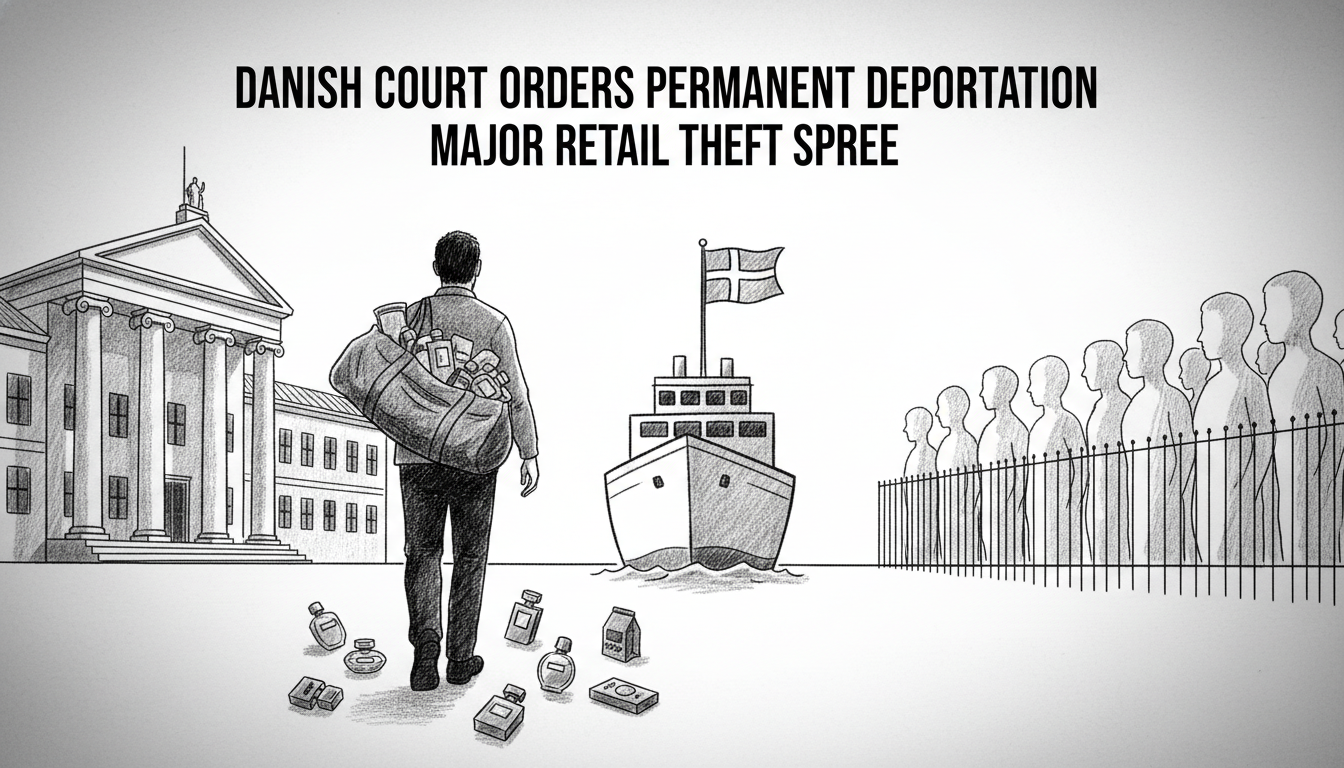
A Danish court has permanently expelled a 52-year-old Romanian man from the country following a conviction for a major organized theft operation. The man received a prison sentence of one year and ten months and a lifetime entry ban into Denmark. His crimes involved stealing perfume worth 270,000 kroner, coffee valued at 48,000 kroner, and other food items. The thefts occurred across multiple regions, including Zealand, Jutland, Funen, Lolland, and Falster, over a three-month period this year.
Police investigators described the case as involving extensive and organized thefts from grocery stores. The prosecutor noted the court followed the prosecution's request for both imprisonment and permanent deportation. This case highlights a persistent challenge within Danish integration and social policy frameworks. It sits at the complex intersection of crime, migration, and the welfare state's capacity for rehabilitation.
Denmark maintains some of Europe's strictest immigration and deportation policies. Courts can and do order expulsion for foreign nationals convicted of serious crimes. This legal tool is a cornerstone of the nation's approach to maintaining public order. The permanent ban reflects the severity with which the justice system views organized, high-value theft targeting retail chains.
From a social policy perspective, cases like this test the limits of integration models. They raise difficult questions about the pathways for individuals who become involved in criminality shortly after arrival. Danish municipalities and social centers often work on prevention, but their reach has clear limits. The outcome here suggests the judicial system prioritized deterrence and public security over potential rehabilitation within Denmark.
Statistics on integration show varied outcomes, with employment being a key indicator of success. Education and language acquisition programs are central pillars. Yet, instances of serious criminal activity by a small minority can disproportionately impact public discourse and policy. This verdict will likely be cited by proponents of tough immigration controls. It also underscores the operational challenges for police units specializing in foreign national crime.
Community leaders in areas like Copenhagen often stress the need for balanced responses. They advocate for robust legal consequences while also funding early intervention programs. The reality is that deportation is a definitive solution for the Danish state but does not address root causes that may span borders. This case is a stark example of the system functioning as designed, removing an individual deemed a threat to societal order. The broader conversation about effective, humane integration continues, even as the court's gavel falls.