
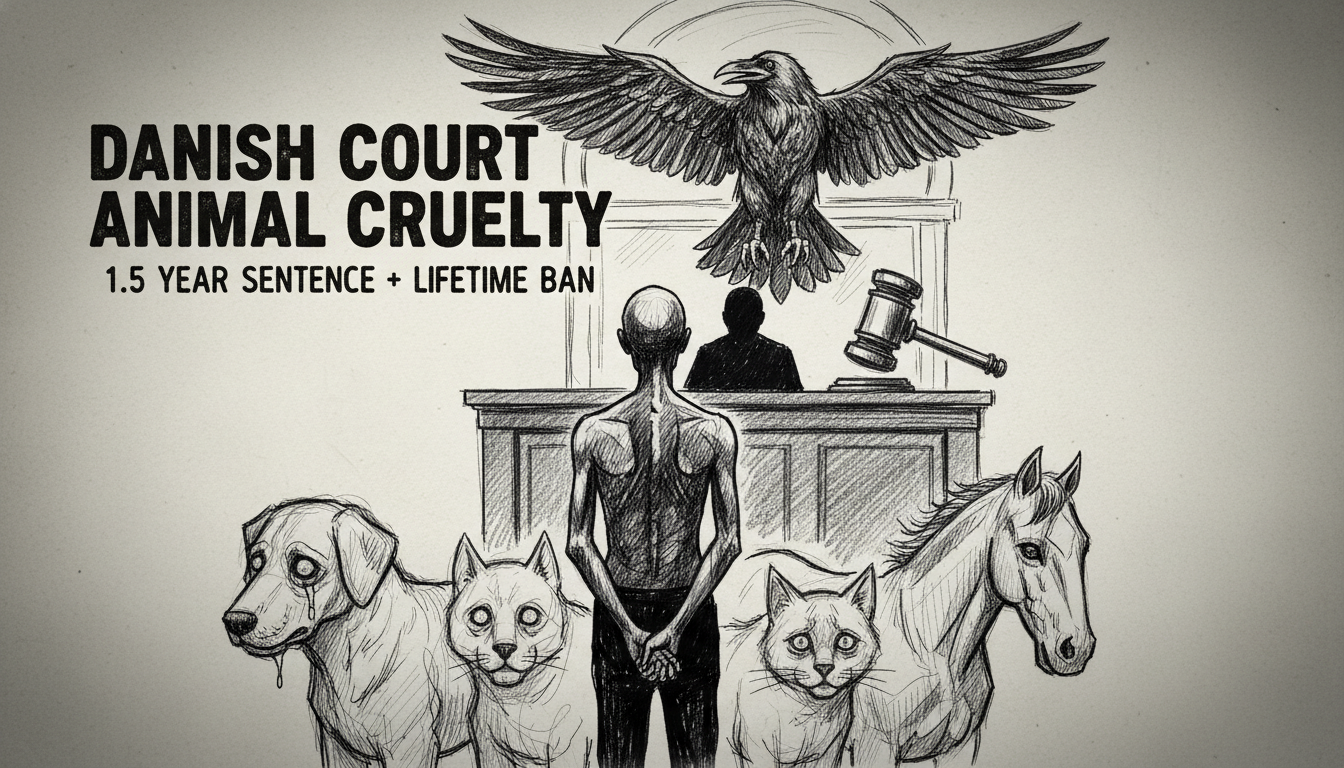
A Danish court has delivered a landmark sentence for animal cruelty, sparking conversations about legal standards and societal values. A 37-year-old man received a prison sentence of one and a half years for severe and prolonged animal abuse. The sentence is notably higher than punishments given in similar past cases, signaling a potential shift in judicial attitudes.
The Eastern High Court upheld a prior ruling from the Holbæk District Court. The abuse occurred over a five-year period and involved violent sexual assaults and other forms of torture, which in some instances led to the animals' deaths. The man admitted to the crimes and had filmed his actions. The video evidence was reportedly so graphic that psychologists were involved in the case proceedings.
Beyond the prison term, the court permanently revoked the man's right to own, use, care for, slaughter, or have any personal involvement with animals. Legal observers note the court emphasized the case's extreme brutality, the perpetrator's personal circumstances, and the need for consistency in legal application. The maximum penalty for grossly negligent treatment and abuse of animals is two years imprisonment.
The prosecution had sought an even harsher three-year sentence under a special paragraph for cases with particularly aggravating circumstances. Both the district court and the high court, however, declined to apply this heightened charge. The lead prosecutor acknowledged the case's unusual nature, stating she had been unable to find any comparable precedents due to its brutality, scale, and character.
This case raises broader questions about Denmark's legal framework for animal welfare and societal integration of ethical norms. While Denmark maintains a robust welfare system and clear social policies, cases of extreme cruelty test the boundaries of its justice system. The sentence reflects a growing societal intolerance for such acts, potentially influencing future rulings and legislative reviews.
For international observers, this underscores how Danish society balances individual accountability with systemic legal principles. The court's dual focus on punishment and permanent prohibition highlights a preventive approach, aiming to protect future victims. This legal outcome may resonate within ongoing debates about integration, social responsibility, and the values upheld by the Danish welfare state.