
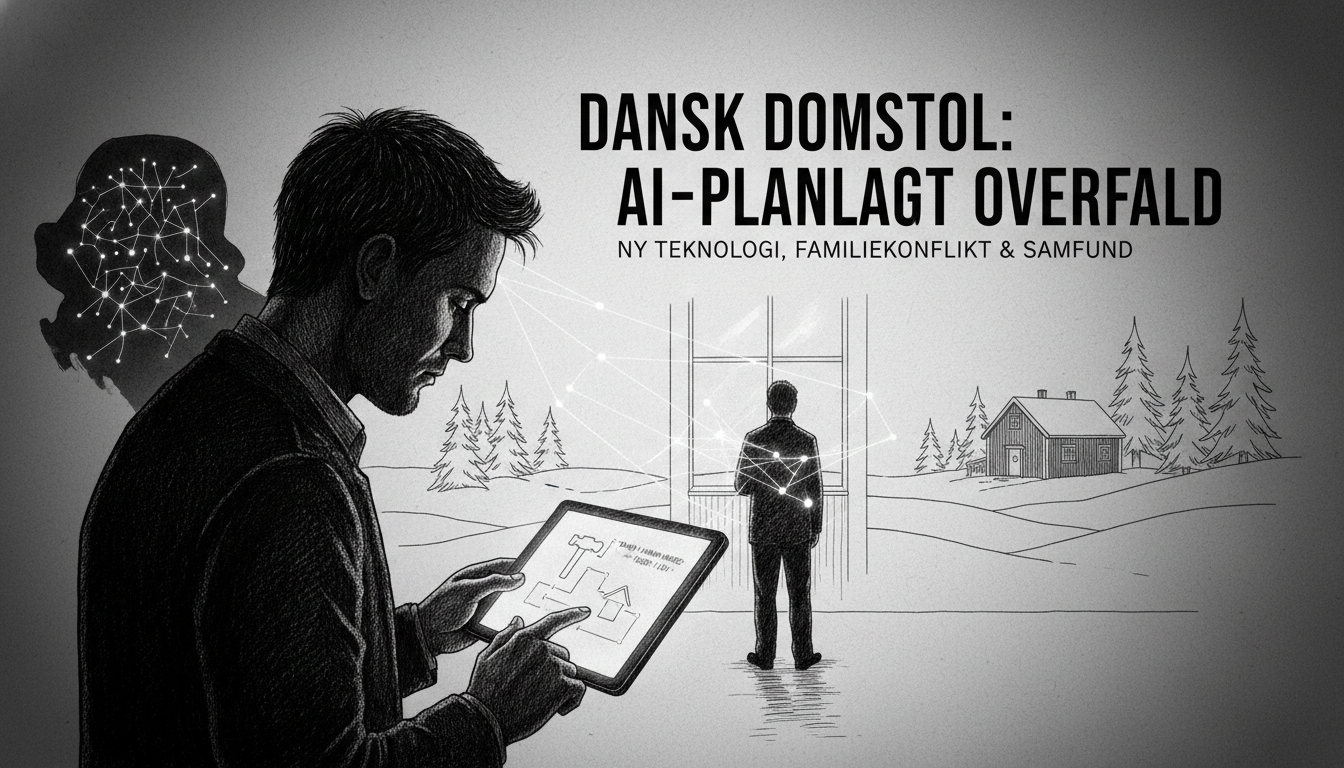
A Danish court has sentenced a 22-year-old man to ten months in prison for a disturbing crime that highlights new challenges in the digital age. The man used artificial intelligence to plan an assault on his former father-in-law with a rubber hammer. The attack occurred on a parking lot in Ringsted, a town in central Zealand. He struck the 56-year-old victim twice in the head. The case raises profound questions about technology, family conflict, and the limits of the Danish welfare system's ability to address complex social problems.
The prosecutor described the case as particularly alarming. The defendant researched how to inflict maximum harm without causing death. He reportedly bypassed standard AI safety blocks by claiming he was gathering information for a book project. This detail reveals a troubling gap in digital safeguards. It shows how malicious intent can exploit tools designed for creativity and knowledge. The court rejected the man's claim of self-defense. Police cited a troubled relationship with the victim's daughter, the man's former partner, as the primary motive.
This incident is not just a crime report. It is a lens into deeper tensions within Danish society. Denmark prides itself on a robust social safety net and low crime rates. Yet cases like this expose fractures in family structures and the integration of young adults. The defendant received additional convictions for vandalism, suggesting a pattern of antisocial behavior. The court in Roskilde delivered its verdict, reflecting the local judicial system's response to this novel use of technology in premeditated violence.
From a social policy perspective, this case intersects with ongoing debates about youth support and mental health services. How does a young man reach a point where he turns to AI for violent planning? The Danish integration model and municipal social centers aim to provide guidance and support. This case suggests those systems may sometimes fail to identify or intervene in escalating personal crises before they turn criminal. It underscores a need for proactive community outreach, especially for individuals struggling with family breakdowns.
The legal outcome sets a precedent. It demonstrates that Danish courts will treat the misuse of AI in planning crimes with full seriousness. The ten-month sentence for gross violence sends a clear message. However, the punishment alone does not address the root causes. Community leaders in Copenhagen and other municipalities often stress the importance of early intervention. They advocate for stronger social networks to prevent isolation and radicalization, whether ideological or personal.
This story matters for international readers observing Nordic social models. Denmark is often seen as a harmonious society with a functioning welfare state. This case is a reminder that no system is immune to human conflict and the dark potential of new technology. It highlights the constant need to adapt social policies and legal frameworks. The goal is to protect citizens while addressing the complex reasons behind such acts. The hope is that this verdict contributes to a broader discussion on responsibility, both personal and technological, in modern Denmark.