
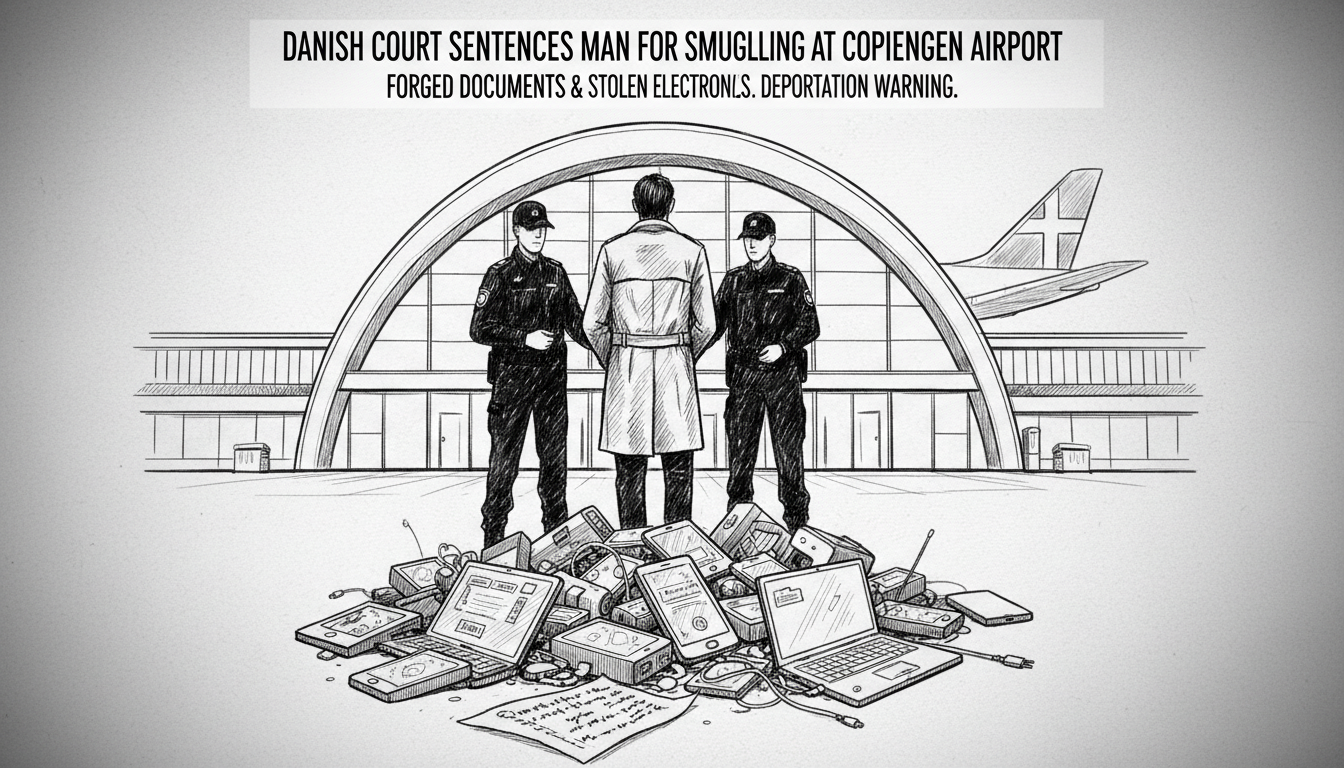
A 32-year-old man received a one-year prison sentence for attempting to smuggle a suitcase full of stolen electronics from Copenhagen Airport. The Odense District Court convicted the man on charges of receiving stolen goods and document forgery. His luggage contained mobile phones, laptops, and iPads destined for France. Authorities intercepted him during the summer. The court also confiscated approximately 37,000 Danish kroner and the seized devices. The man, who is not a Danish citizen, received a formal warning about potential deportation.
This case highlights a persistent challenge for Danish trade and border security. Copenhagen Airport is a major hub for Scandinavia's legitimate exports. It handles billions of kroner in goods annually. Criminal activity here threatens the integrity of Denmark's trade reputation. The Øresund region depends on secure, efficient logistics. Disruptions from smuggling can impact legitimate businesses and supply chains.
Danish authorities linked the electronics to fraudulent credit purchases from telecommunications companies. The purchases were never intended to be paid for, constituting fraud. The prosecution focused on the act of profiting from these criminal proceeds. This legal approach is common in Danish courts for such financial crimes. It aims to dismantle the economic incentive for smuggling networks.
The defendant faced additional charges for a similar incident at Billund Airport. That episode occurred in the autumn of the previous year. He was also charged with selling or attempting to sell various other electronic items. These repeated attempts suggest an organized operation, not an isolated event. Such schemes can distort local markets for consumer electronics. They also represent lost tax revenue and undermine legitimate retailers in Copenhagen and beyond.
For international businesses, this sentencing sends a clear message. Denmark maintains strict enforcement of its customs and fraud laws. The Copenhagen business community relies on this security. Major Danish companies like Novo Nordisk, Maersk, and Vestas export high-value goods globally. A secure logistical framework is critical for their operations. Incidents like this, while small in scale, test the system's resilience.
What does this mean for the average consumer or business? Stolen electronics often enter secondary markets. They can be sold online or in unofficial shops. Buyers may face issues with device blacklisting or lack of warranty. This case is a reminder to verify the provenance of high-value goods. The Danish Consumer Council frequently advises caution with deals that seem too good to be true.
The court's decision to combine prison time with asset confiscation is standard. Danish law seeks to remove the financial benefit from crime. The deportation warning underscores the serious view taken of non-citizens exploiting Danish infrastructure. This policy aims to protect the country's economic interests. It is a straightforward application of the law with clear economic motives behind it.
Looking ahead, Danish customs and police will likely continue their vigilance. Airports in Copenhagen and Billund are key points of control. The collaboration between telecom companies and authorities appears effective in tracing stolen devices. This case, while concluded, is part of an ongoing effort to secure Denmark's ports and maintain trust in its commercial corridors.