
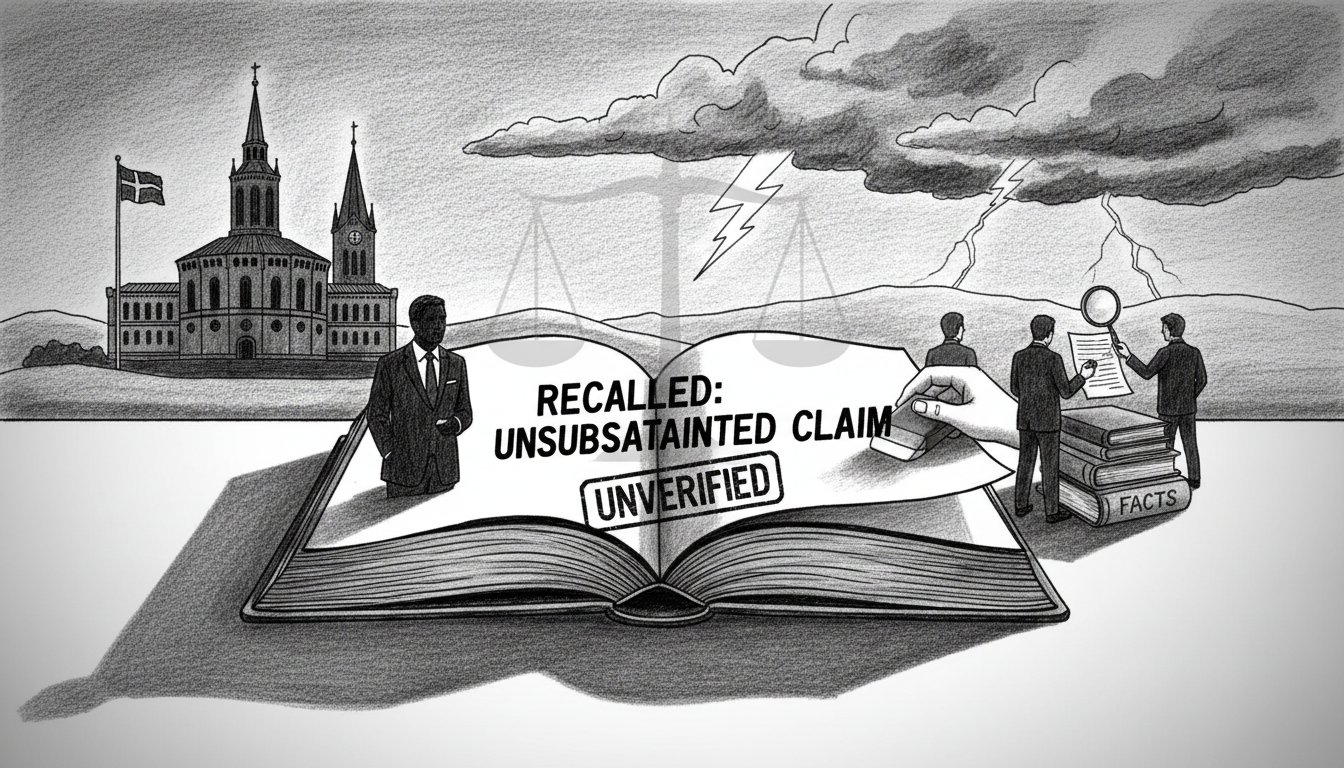
A new book about Danish criminal history has been pulled from shelves and corrected. The book contained a serious unsubstantiated claim in its ninth chapter. The claim involved a person who later became a member of parliament. The publishers and authors have issued a formal apology for the error. This incident raises questions about fact-checking standards in non-fiction publishing. It also touches on the sensitive relationship between media, crime narratives, and political figures in Denmark.
The book featured firsthand accounts from nine police officers. They described what they called the worst moments in recent Danish criminal history. The work was promoted as an authentic look at law enforcement experiences. The flawed chapter presented a serious allegation without providing documented evidence. It stated that a future parliamentarian had assaulted a police trainee. Such a claim, if false, could damage reputations and public trust. The quick correction shows the publishers recognized the gravity of the mistake.
This situation is not just about a publishing error. It reflects broader themes in Danish society regarding accountability and narrative. Denmark maintains a high level of trust in its public institutions and media. An unverified claim about a sitting politician challenges that trust. It also intersects with ongoing public debates about integrity and transparency. For international readers, this shows how seriously Denmark treats factual accuracy in public discourse. The swift response aims to contain potential damage to all parties involved.
From my perspective covering integration and social policy, this story has deeper implications. Trust is the cornerstone of the Danish welfare system and social cohesion. When narratives about crime or authority figures are questioned, it can ripple through public confidence. This is especially true in communities where trust in institutions is still being built. The incident serves as a reminder that rigorous verification matters in all storytelling, particularly when it involves public officials and criminal allegations. The publishers' apology is a necessary first step, but the conversation about media responsibility continues.
What happens next for the book and its subjects? The corrected version will likely be reissued. The politicians mentioned may seek further clarification or legal recourse. This event will probably lead to stricter editorial reviews at the publishing house. For readers and observers, it underscores the importance of critical engagement with all media, even from trusted sources. In a digital age, the line between fact, memory, and narrative can sometimes blur, even in carefully curated works.