
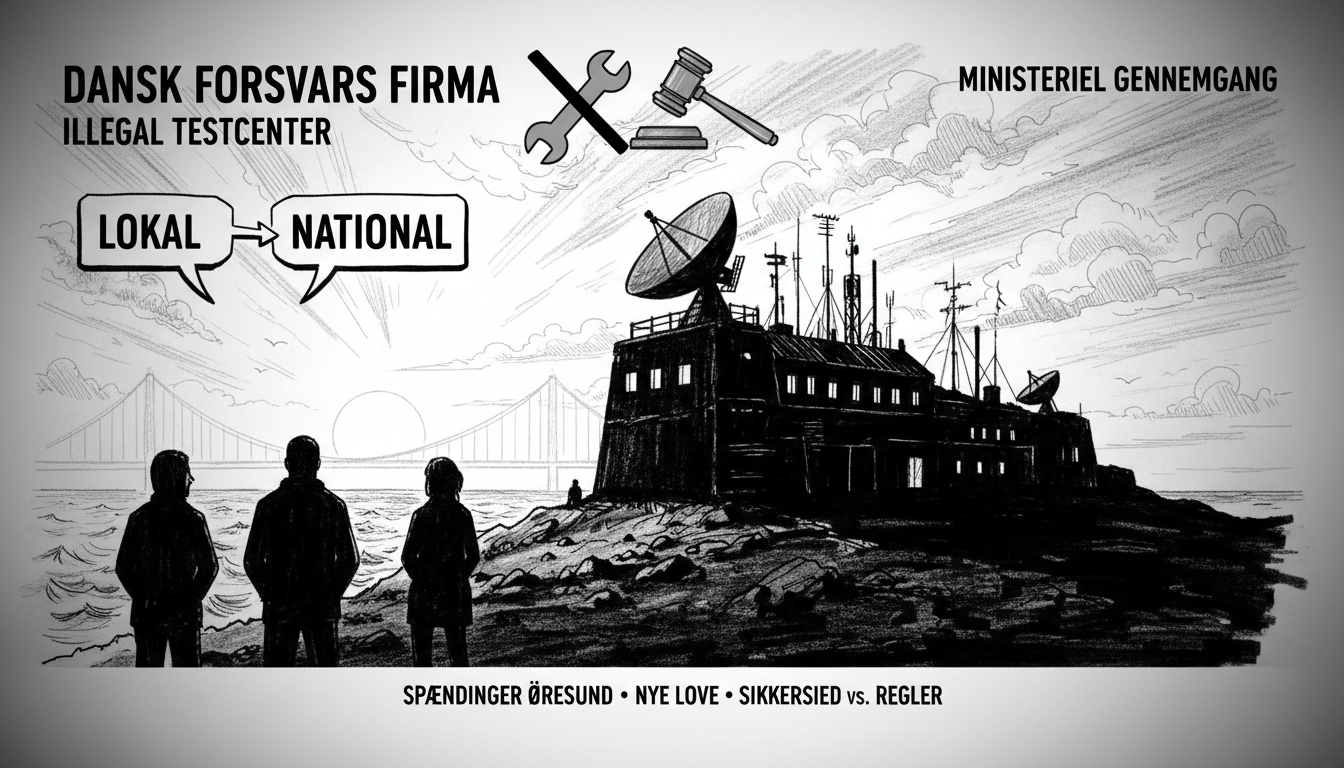
Defense Minister Troels Lund Poulsen is now involved in a high-stakes zoning dispute with Danish radar company Weibel. The firm's test center in North Zealand was declared illegal by Hørsholm Municipality, creating a clash between local planning rules and national security needs. This case tests Denmark's new special defense law, which allows the government to bypass environmental and planning regulations for critical security projects. The outcome could set a precedent for how Denmark balances industrial growth, community relations, and defense preparedness in the Øresund region.
Weibel specializes in radar systems, particularly for drone detection. Their technology was deployed temporarily at Copenhagen Airport following a drone incident. The company argues it acted in good faith based on 1990s guidance from former county authorities. They never obtained proper "land zone" permits for expanding their test facilities with buildings and structures. Now they seek ministerial intervention to legalize their operations and expand with two new test areas.
Minister Poulsen acknowledged the difficult security situation but declined to comment on specific actions. "We are in a difficult national security policy situation, and we will of course take stock of and relate to questions about Weibel," the minister stated. The company has formally requested help from the Defense Ministry.
This controversy highlights tensions in Copenhagen's business districts and surrounding areas where tech firms need space to develop sensitive technologies. Weibel represents Denmark's growing defense technology sector, which contributes to both exports and national security. Their radar systems have commercial and military applications, making their testing capabilities economically valuable.
Political reactions reveal a classic Danish dilemma. Defense spokespeople from multiple parties recognize Weibel's importance. "Weibel is indispensable in Danish defense. Without Weibel it becomes difficult for us to protect against and detect drones," said one opposition defense spokesperson. He suggested the minister should use the special law's powers while giving Weibel "a strong recommendation not to do such a thing again."
Another politician called Weibel "a really, really important company" but hoped for balance with neighbor concerns. The Social Democratic defense spokesperson noted, "Denmark and Europe need to have large production capacity when it comes to defense. We must be able to produce weapons systems, but also radars like Weibel makes."
Not all politicians support using the special law retroactively. One noted the law was intended for new military facilities, not legalizing decades of violations. "It was not meant to be used to legalize illegalities that have been going on for decades," he said. He suggested finding a compromise location rather than forcing the existing site.
The case began when Hørsholm Municipality received a neighbor complaint. After investigation, they declared the test center illegal. Two neighbors expressed concern about potential expansion. One politician framed this as "a classic political dilemma: consideration for some citizens' legal certainty versus Denmark's defense security."
Denmark's special defense law contains a sunset clause and allows exemptions from environmental, planning, and nature protection laws. It also enables expropriation if necessary for defense projects. The law facilitates Ukrainian weapons manufacturers establishing factories in Denmark and simplifies barracks construction.
This situation reflects broader challenges for Danish tech companies operating in regulated spaces. As defense and security technology becomes more crucial, firms need testing facilities near urban centers where talent resides. Yet municipal planning rules often conflict with rapid technological development needs. The Weibel case may prompt discussions about creating designated innovation zones with streamlined permitting for strategic industries.
What happens next will signal how Denmark prioritizes security versus regulatory compliance. If the minister intervenes, it could accelerate other defense projects but worry municipalities about losing planning authority. If Weibel must relocate, it could delay critical technology development and increase costs. Either outcome affects Denmark's position in the competitive European defense technology market.
The business implications extend beyond Weibel. Danish companies in renewable energy, maritime technology, and life sciences also face complex permitting processes. A precedent favoring strategic industries could influence future investment decisions in the Copenhagen metropolitan area and throughout Denmark's regions.