
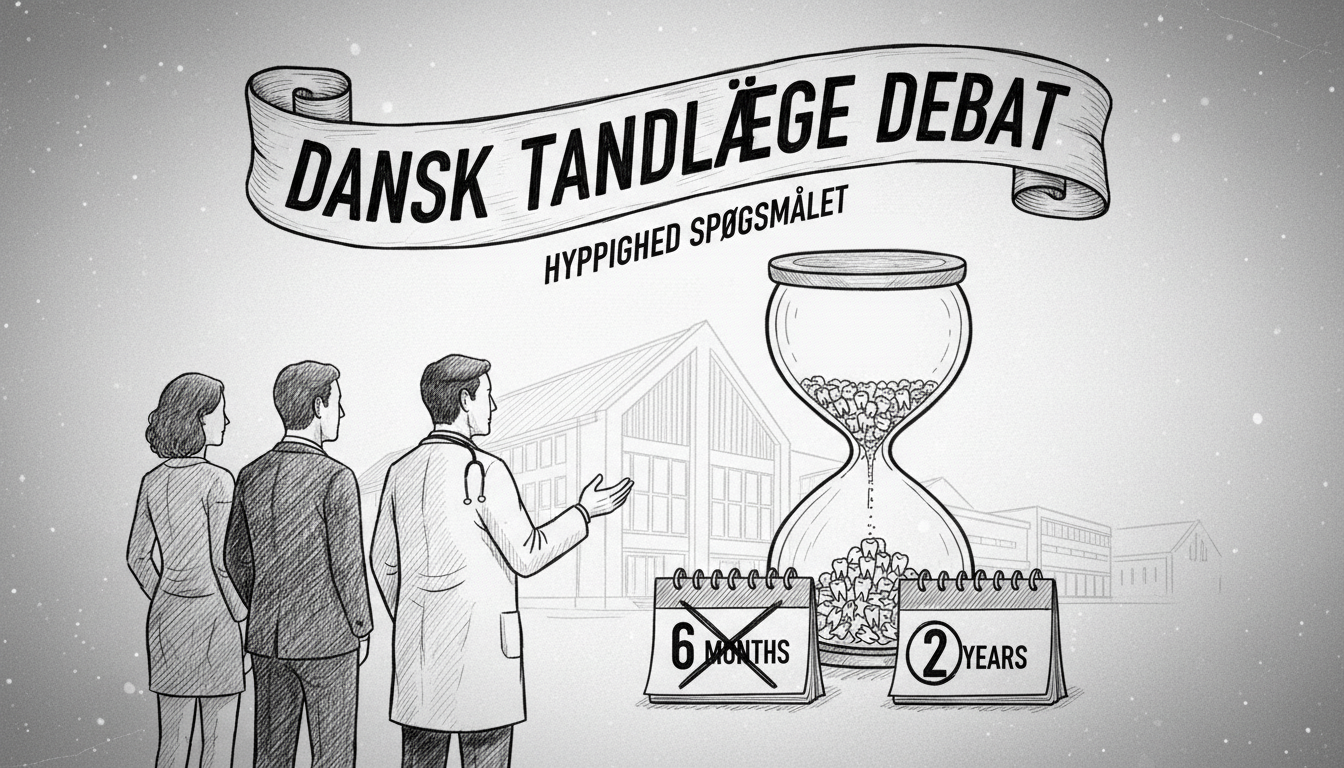
Danish healthcare experts are questioning the nation's dental checkup protocols as new data reveals most citizens receive examinations every six to twelve months. Research suggests this frequency may be excessive for healthy individuals and could lead to unnecessary treatments.
Recent statistics show 82 percent of Danes receive dental recalls every six to twelve months through the public healthcare system. Dental professionals now challenge this standard practice, arguing healthy patients might only need examinations every two years.
Elisabeth Gregersen, head of Danish Dental Hygienists Association, states regular checkups don't automatically create oral health. She emphasizes daily home care matters more than frequent clinic visits for most people. Many young and healthy individuals could safely extend intervals between professional examinations.
Copenhagen University dental researcher Esben Boeskov Øzhayat supports this position. He notes healthy patients gain no medical benefit from six-month checkups. The feeling of freshness after cleaning provides comfort rather than actual health improvement.
Denmark's current system uses a traffic light classification where patients receive green, yellow, or red categories based on oral health risk. Green category patients with healthy teeth and low disease risk should theoretically get checkups every one to two years. Yet evidence suggests too many Danes get classified into yellow category requiring more frequent visits.
International research supports less frequent examinations. A major Cochrane review combining multiple studies found no difference in dental problems between patients visiting every six months versus every two years. Similar conclusions emerged from British research examining patient outcomes.
The economic structure of Danish dental care may influence recall frequency. Clinics earn more from treatments than preventive guidance, creating potential financial incentives for more frequent visits. Some practitioners suggest this could lead to overtreatment of early cavities that might otherwise heal with proper home care.
Torben Schønwaldt, Danish Dental Association chairman, strongly disagrees with reducing checkup frequency. He warns this approach risks allowing oral diseases to accumulate undetected. His organization's data shows 38 percent of adult patients have active cavities, while one-third haven't visited dentists in two years.
The debate highlights tension between preventive healthcare and efficient resource allocation in Denmark's welfare system. As other Nordic countries monitor this discussion, the outcome could influence dental care protocols across Scandinavia. The Danish Health Authority previously identified implementation problems with the traffic light system in 2017, noting classification inconsistencies across practices.
For international observers, this Danish healthcare debate offers insights into balancing preventive care with evidence-based medicine. The discussion reflects broader global conversations about appropriate medical intervention frequency and healthcare economic models.