
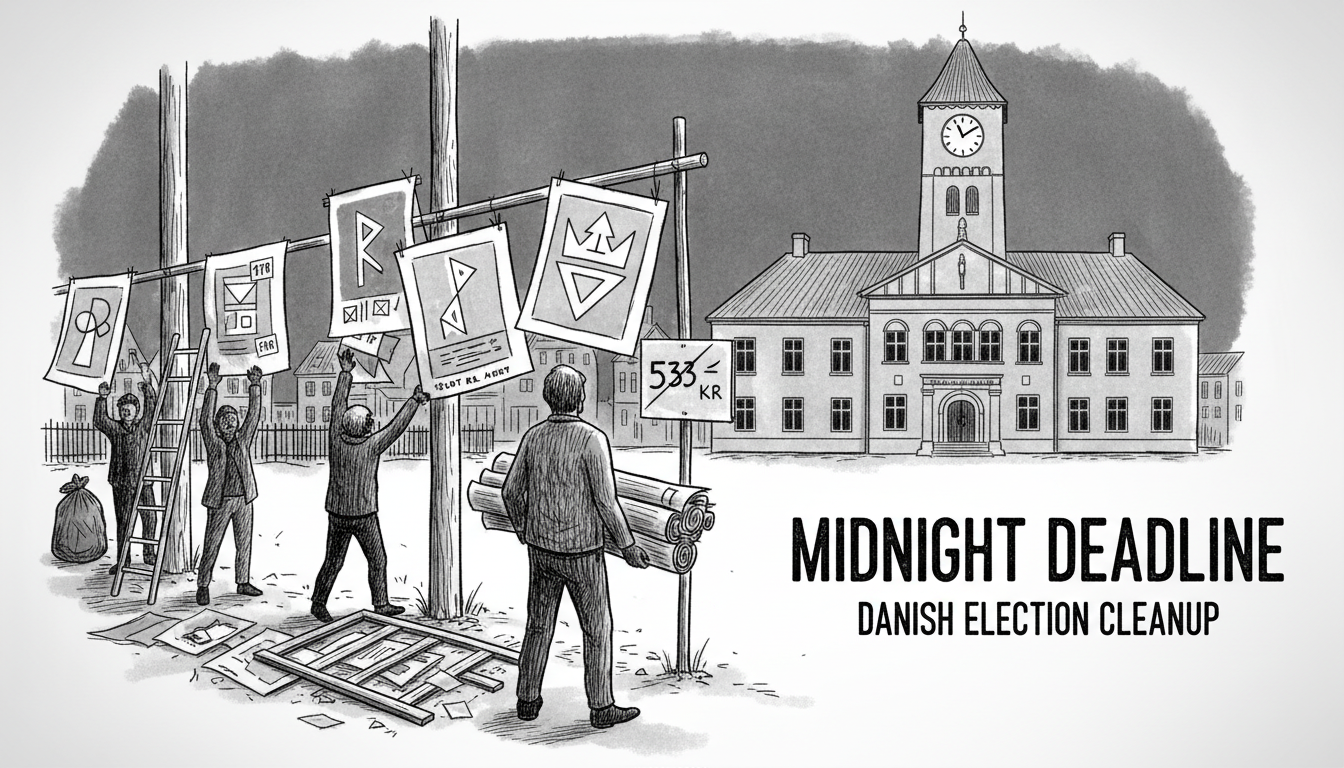
Copenhagen's streets are undergoing a quiet transformation this week as municipal election posters disappear from lampposts and buildings. All campaign materials must be removed by midnight Wednesday across Denmark's municipalities, including the capital. This systematic cleanup reflects Denmark's structured approach to public space management and political campaigning.
The removal deadline carries financial consequences for non-compliance. Candidates face fines of 533 kroner per poster if their campaign materials remain after the cutoff. The Road Directorate monitors state roads nationwide and handles enforcement. They emphasize that only candidates and their authorized teams may remove the posters, preventing unauthorized tampering with political materials.
On Bornholm, Radical Party candidate Søren Brenøe demonstrated personal responsibility by climbing lampposts over the weekend to remove his posters. Despite not winning a council seat, he committed to cleaning up his campaign materials. He told local media that while he aimed to remove all posters by weekend's end, he welcomed notifications about any remaining ones.
These poster regulations connect to broader Danish society news about political participation and public order. The Danish welfare system maintains clear rules about public space usage, balancing political expression with urban cleanliness. Copenhagen integration of political processes into daily life becomes visible through these regulated campaign periods.
Research reveals these posters serve important democratic functions. A recent study found half of voters say election posters increase awareness about ongoing elections. A political researcher noted that posters passively expose all citizens to electoral information regardless of their political interest level. This creates shared awareness about democratic processes across diverse communities.
Denmark immigration policy and social integration efforts benefit from this visibility. New residents encounter clear political messaging through these regulated public displays. The systematic posting and removal process demonstrates Denmark social policy in action, showing how rules apply equally to all participants in the democratic process.
Municipal social centers often serve as hubs for political information during election periods. They help ensure all residents, including newer community members, understand voting procedures and candidate platforms. This supports broader integration goals while maintaining the structured approach characteristic of Danish public administration.
The poster removal process highlights how Danish municipalities balance multiple priorities. They enable political expression during campaigns while ensuring prompt return to normal urban aesthetics. This practical approach to political campaigning reflects the pragmatic nature of Danish governance, where rules apply consistently and enforcement follows clear timelines.
As workers remove the final posters, the visual landscape returns to its regular state. The temporary political messaging gives way to everyday urban scenes until the next election cycle begins. This rhythmic pattern of political expression and cleanup forms part of Denmark's democratic traditions, connecting current events to longstanding practices of public engagement.