
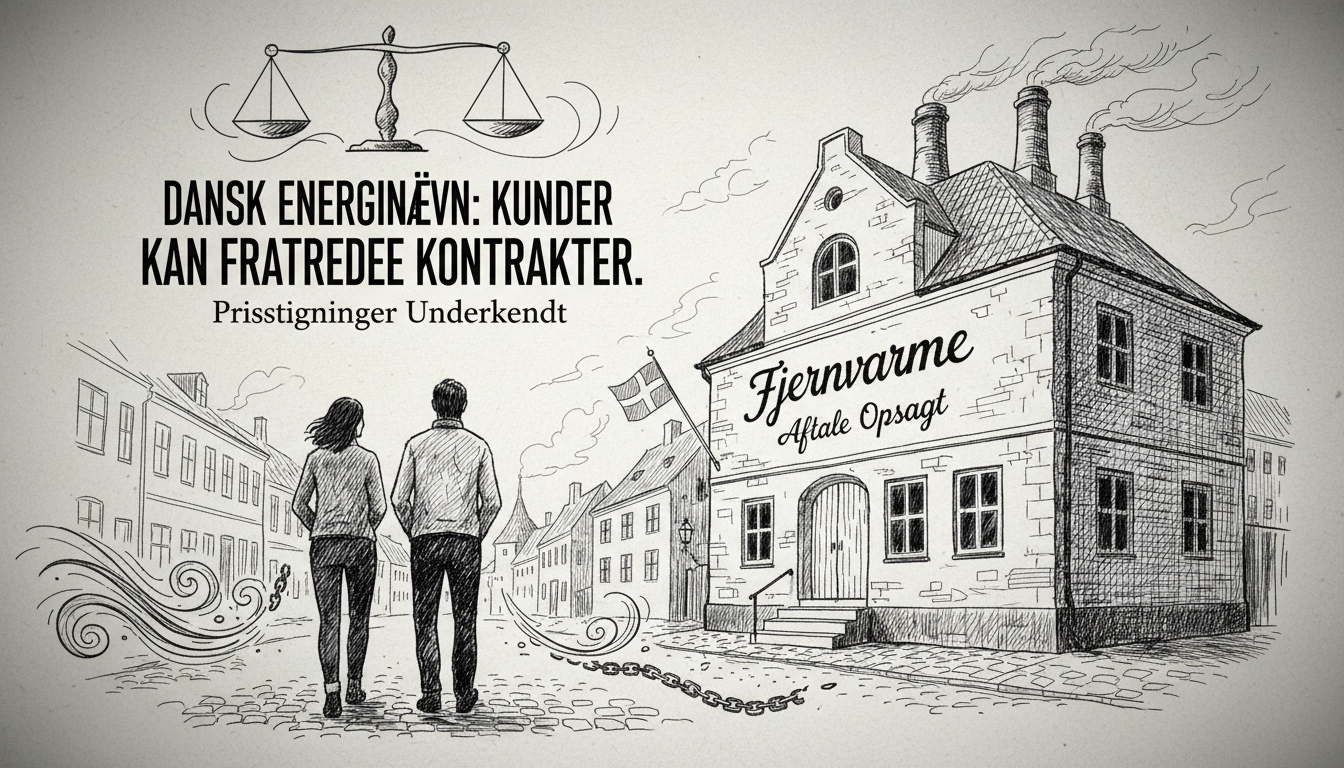
Two district heating customers in Odsherred municipality have won their case to exit contracts without paying substantial fees. The Danish Energy Complaints Board ruled the consumers should face no financial penalty for leaving agreements with Odsherred Varme A/S before their properties were physically connected to the heating network. Both customers had signed connection contracts but hadn't begun receiving district heating services when the company announced dramatic price increases between 68 and 76 percent.
The board determined the fundamental conditions of their agreements had collapsed. It found the exit terms were so substantial and burdensome they couldn't reasonably be enforced. This decision highlights ongoing tensions in Danish energy markets where consumers face complex long-term contracts. The case reflects broader challenges in Denmark's transition to green energy solutions while protecting consumer rights.
Three other cases were reviewed alongside these two successful complaints. In one instance, the board ruled Odsherred Varme was justified in demanding an exit fee because that property had been connected to the district heating network for an extended period. Two additional complaints were dismissed because they fell outside the board's jurisdiction.
The company had threatened exit fees reaching 368,400 Danish kroner based on a rate of 1,635.50 kroner per square meter. These substantial amounts demonstrate why consumer protection mechanisms matter in essential service markets. Odsherred Varme now has thirty days to decide whether to comply with the rulings or pursue further legal action.
This case reveals important aspects of Danish consumer protection systems. The Energy Complaints Board provides independent oversight when disputes arise between consumers and energy providers. Its decisions carry legal weight though companies can challenge them in court. The Danish welfare system traditionally emphasizes fair treatment in essential services like heating, electricity, and water.
District heating represents a crucial infrastructure across Denmark, particularly in smaller municipalities like Odsherred. Many Danish communities rely on centralized heating systems that provide efficient warmth during long Nordic winters. These systems typically involve long-term contracts that can create challenges when circumstances change dramatically.
What does this mean for international residents and expats in Denmark? The case demonstrates that consumer protection systems do function effectively. Foreign residents should understand their rights when signing essential service contracts. They should also know specialized complaint boards exist for various sectors including energy, telecommunications, and financial services.
The substantial price increases that triggered these cases reflect Europe's ongoing energy transition challenges. As countries move toward renewable energy sources, consumers sometimes face volatility during transition periods. Denmark has been a leader in green energy adoption, but cases like this show the human impact of these necessary transitions.
Municipal energy companies play vital roles throughout Danish society. They balance providing reliable services with maintaining affordable pricing structures. When dramatic price changes occur, the social contract between providers and consumers can become strained. Independent oversight bodies help maintain fairness in these essential relationships.