
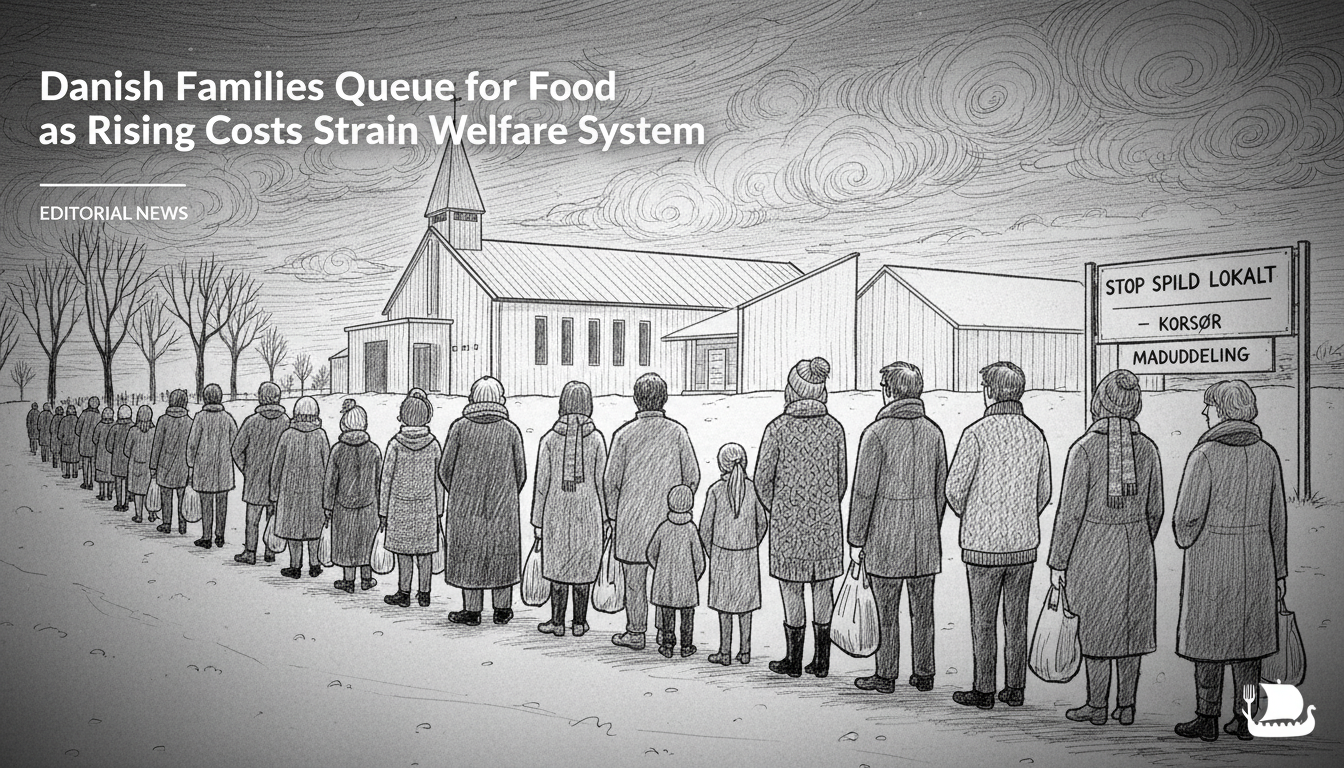
Bo Jensen stands in line for food parcels in Korsør, a scene repeating across Danish municipalities. He says his family once ate warm meals daily, but rising prices ended that. His story reflects a growing pressure point in the Danish social model, where even employed families now seek help. Food banks like Stop Spild Lokalt in Korsør report increased demand from working parents and pensioners. Founder Benjamin Erichsen meets families marked by hardship and empty refrigerators. He also observes how access to affordable food can create crucial breathing room in tight household budgets.
This trend challenges the perception of Denmark's comprehensive welfare safety net. The system, designed to prevent poverty, faces a stress test from persistent inflation and high living costs. Integration and social policy experts note that new arrivals and long-term residents feel the pinch equally. Community centers in Copenhagen and other cities now routinely host food distribution events. Local leaders report that the demographic seeking assistance has broadened significantly in recent quarters.
Official statistics on integration and household economics provide context. While employment rates remain high, disposable income for low and middle-income families has stagnated. Education levels do not fully shield households from budget shortfalls when essentials become more expensive. Municipal social services departments confirm a rise in applications for discretionary benefits. The situation reveals a gap between macroeconomic stability and individual financial security.
What does this mean for Denmark's social contract? The welfare system was built on principles of universalism and dignity. Reliance on charitable food distribution, while compassionate, signals a systemic strain. Policy analysts suggest that current inflation adjustments to benefits may be insufficient. The conversation in Danish society now includes how to preserve living standards without eroding the famed welfare model. Community organizers like Erichsen provide an immediate response, but they underscore a need for broader policy review. The long queues in Korsør are a tangible measure of economic pressure on ordinary Danish families.