
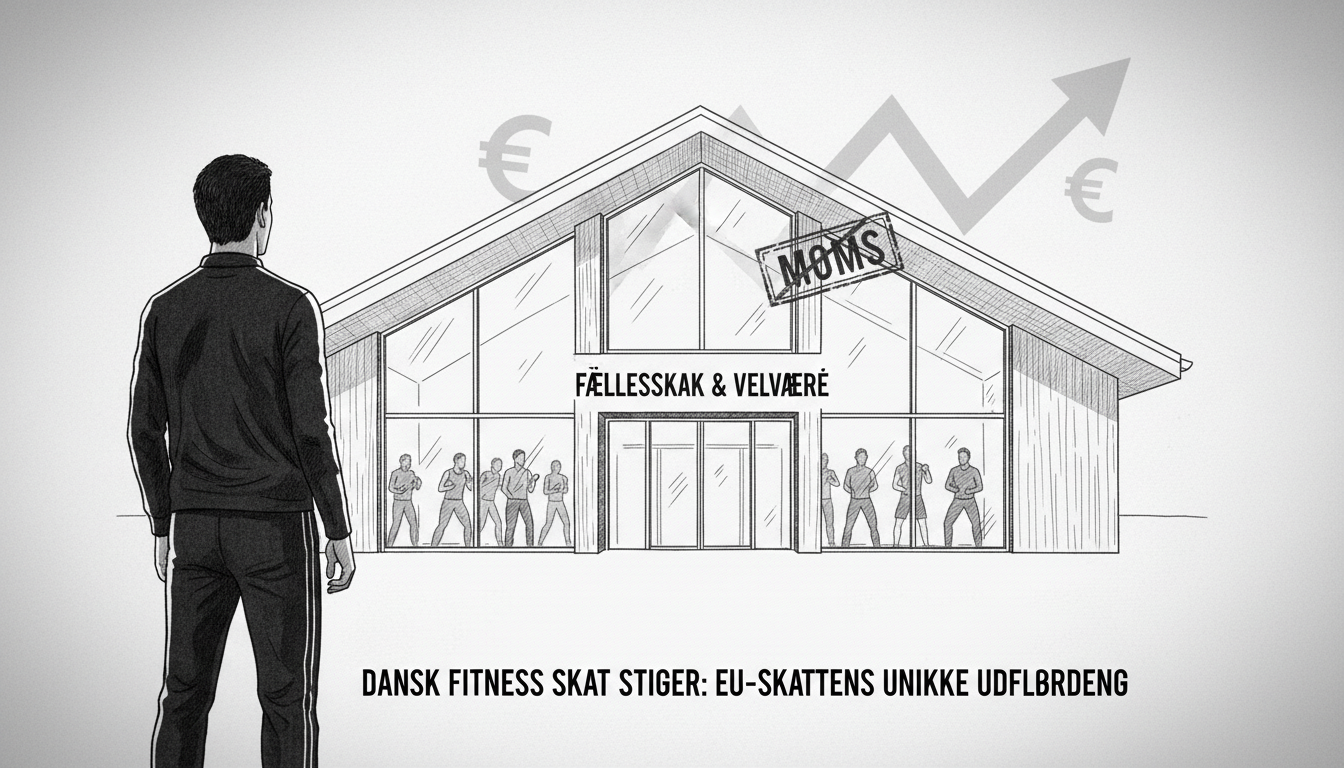
Hundreds of thousands of Danes who use fitness centers will soon face much higher prices. This change stems from European Union value-added tax rules. Out of the EU's 27 member states, 26 have the flexibility to apply different VAT rates to various goods and services. One country stands outside this framework. Denmark's unique position will have direct consequences for over 850,000 citizens who train in gyms across the nation. The new rules take effect at the start of a future year.
This situation reveals a core tension in Danish society news. Denmark maintains a uniform VAT system for simplicity and revenue. Most other EU nations use varied rates to support specific sectors, like culture or health. The coming price increase for fitness services puts a spotlight on Copenhagen integration and broader Danish social policy. Physical activity is often promoted as vital for public health and social cohesion. Making it more expensive seems to contradict those goals.
Community centers in municipalities like Aarhus and Odense often provide affordable fitness options. These spaces are crucial for Denmark immigration policy and social mixing. A local integration coordinator in Copenhagen Nordvest noted the potential impact. 'For many newcomers and lower-income residents, the municipal sports center is a key meeting point,' the coordinator said. 'Sharp price increases could isolate people and undermine community health efforts.'
The Danish welfare system traditionally supports preventative care. Higher gym costs work against that principle. Statistics on integration show that shared activities in neutral spaces are vital. They help build networks outside ethnic or social bubbles. Education and employment outcomes often improve with these social connections. So what does this mean for the average Dane? A typical gym membership could see a noticeable monthly increase. For families on tight budgets, this may force difficult choices between health and other essentials.
Officials have acknowledged the issue in recent statements. They point to Denmark's binding EU agreements and its commitment to a streamlined tax code. Some political voices argue the system needs modernizing. They say it fails to distinguish between luxury services and activities with clear public benefits. The debate touches on a fundamental question. Should the state use tax policy to nudge citizen behavior toward healthier lifestyles? Many other European countries answer yes. Denmark's approach, for now, remains different.
This is not just about gym fees. It is a window into how Denmark balances EU membership with domestic social priorities. The uniform VAT system generates reliable revenue for the welfare state. Yet it can also create unintended social costs. As prices rise, observers will watch participation rates in organized fitness. They will also monitor the strain on municipal sports facilities. The true test will be whether the Danish model can adapt to support both its treasury and its people's well-being.