
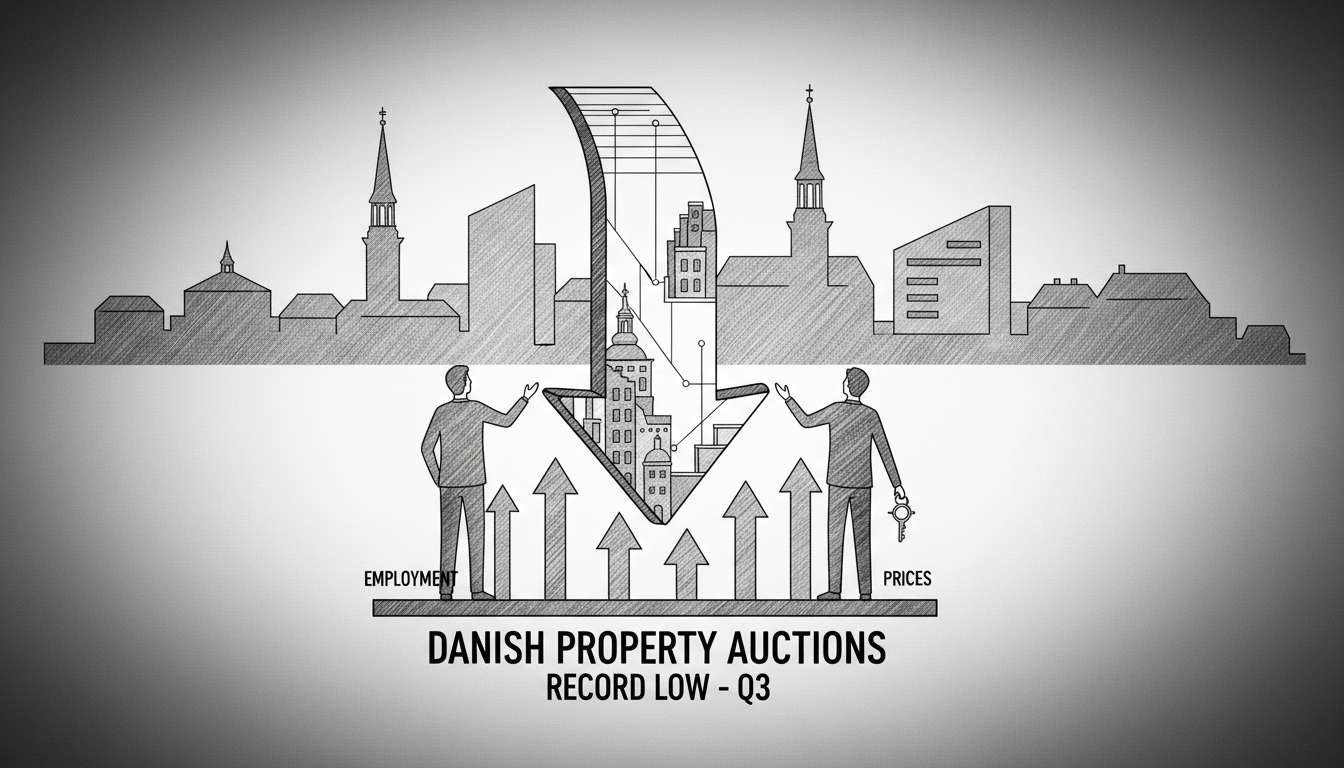
Danish homeowners and the property market are demonstrating remarkable strength. New data reveals forced property auctions have reached a record low. This trend signals deep stability in the nation's core economy.
Statistics Denmark published the latest figures on Thursday. Seasonally adjusted forced auctions numbered just 97 in November. The total for the year so far stands at 1,079. This is an extraordinarily low figure when examining statistics dating back to 1993.
Brian Friis Helmer, a private economist at Arbejdernes Landsbank, provided analysis. He stated the number is close to setting an all-time low record. If fewer than 152 auctions are announced in December, this year will become the lowest on record. The previous record was set in 2006 with 1,231 auctions.
"The very few forced auctions are a clear result of a housing market where transactions are flying off the shelf while prices are pointing nicely upward," Helmer said. "Furthermore, we have homeowners who are fundamentally robust and therefore have no problems paying their installments."
He also pointed to Denmark's strong employment situation. This helps ensure homeowners' finances remain solid. The so-called arrears percentage confirms this. It indicates the share of outstanding mortgage loans that become delinquent. It stood at just 0.12 percent in the second quarter, which is also historically low.
A property can be forced to auction when the owner fails to pay interest and principal as agreed. If a mortgage credit institution, a bank, or another lender sees no other way to recover their claim, they can request a forced sale. Not all properties requested for forced auction end up changing ownership. Sometimes creditors succeed in selling the home through ordinary channels or securing the missing funds another way.
This data has significant implications for Copenhagen's business districts and the wider Øresund region. A stable housing market underpins consumer confidence and spending. Major Danish companies like Ørsted, Novo Nordisk, and Vestas rely on a stable domestic economy for talent retention and operational planning. Low forced auctions suggest disposable income remains healthy, supporting retail and service sectors in areas like Indre By and Frederiksberg.
From a trade perspective, strong domestic consumption supports import figures. Denmark's export-driven economy, however, remains more dependent on global demand for pharmaceuticals, renewable energy technology, and agricultural products. The real impact here is on financial institutions like Nykredit and Realkredit Danmark. Their risk exposure from non-performing mortgages is minimal, which strengthens their balance sheets.
The situation presents a clear picture. Danish economic policy, combined with a tight labor market, has created a buffer for homeowners. Interest rate hikes by the central bank have not triggered a wave of defaults. This resilience is notable but also raises questions about market accessibility for first-time buyers in cities like Aarhus and Odense. Prices continue to rise in a low-supply environment. The record low auctions are a positive sign of stability, but they also reflect a market that is increasingly difficult to enter. The next test will be how the market absorbs any future economic cooling.