
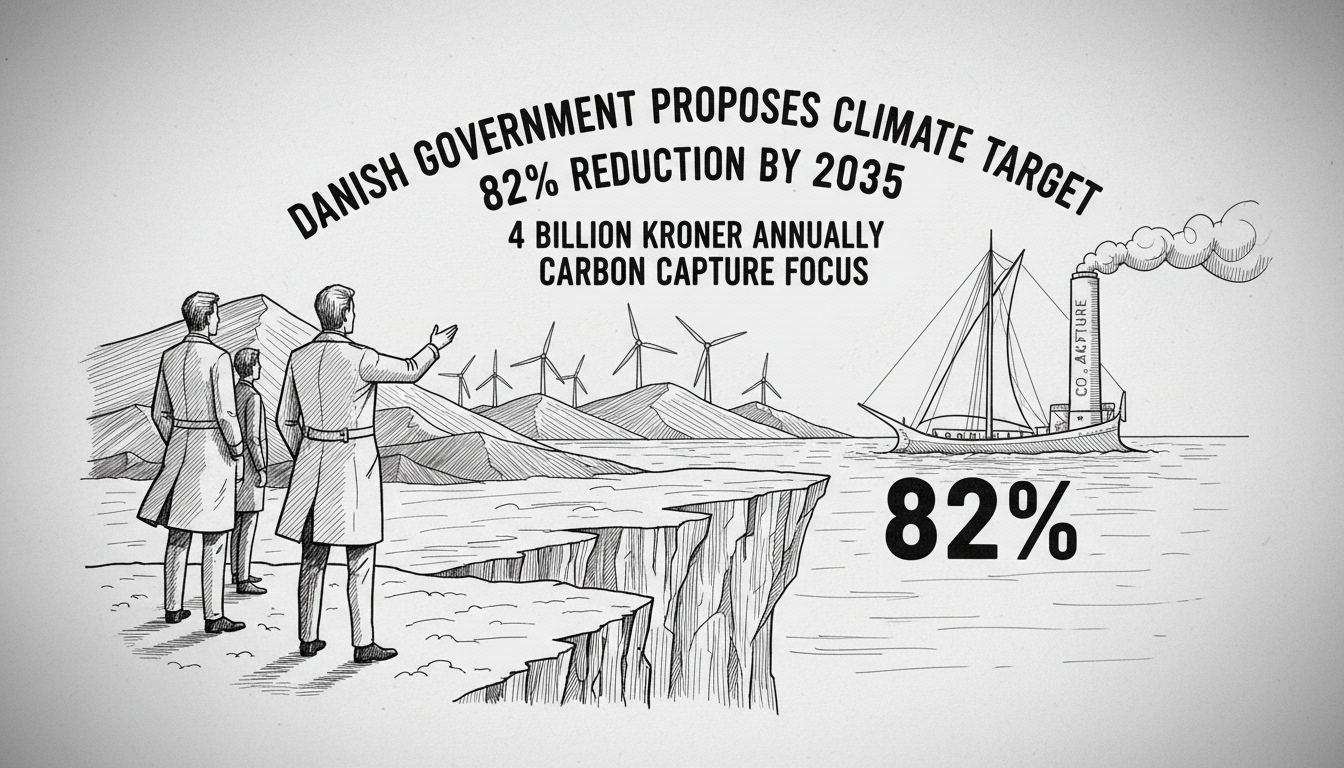
The Danish government has unveiled its proposal for the country's 2035 climate goal after extensive internal negotiations. Climate Minister Lars Aagaard announced the plan, which calls for Denmark to reduce greenhouse gas emissions by 82 percent compared to 1990 levels. The minister described this percentage as a starting point for negotiations with other political parties in parliament.
Aagaard indicated the government remains flexible during discussions with parliamentary parties. He suggested a potential compromise range between 82 and 85 percent reduction. The government plans to allocate four billion kroner annually to achieve this new climate target.
This 2035 goal represents an intermediate step toward Denmark's existing climate commitments. Parliament has already established a 70 percent reduction target for 2030 and complete carbon neutrality by 2050. The current government coalition has additionally committed to working toward climate neutrality by 2045 in its governing foundation.
The climate minister acknowledged several challenges in implementing the new target. Denmark's climate policies have already addressed emissions across all sectors comprehensively. The remaining emissions reductions needed by 2035 will prove complex and expensive to achieve.
Aagaard emphasized the government will not make life more expensive for Danish citizens. Instead, the administration plans to focus on carbon capture and storage from Danish factory emissions. The government stands ready to allocate additional funding for this technology.
The climate minister issued a warning to parliamentary parties seeking alternative approaches. Any party proposing different solutions must specify their funding sources and identify which sectors would bear additional reduction burdens.
While the government presents this as one of the world's most ambitious climate targets, analysis suggests a more modest adjustment. Independent think tank Concito evaluated Denmark's emission projections based on current policies. Their assessment indicates Denmark would reach 80 percent reduction by 2035 with existing measures alone. The government's proposal therefore represents just a two percentage point increase beyond current trajectory.
When questioned about this modest increase, Aagaard defended the ambition level. He explained that achieving those final percentage points requires substantial financial investment. The difficulty and cost of eliminating the last remaining emissions justifies calling the target ambitious.
Denmark's climate debate reflects broader Nordic environmental leadership traditions. The region has consistently pursued aggressive climate policies while balancing economic considerations. This proposal continues that pattern of incremental but costly progress toward carbon neutrality.
The government's approach demonstrates the practical challenges of deep emissions cuts. Initial reductions often come more easily than the final steps toward complete decarbonization. Denmark's experience may provide lessons for other nations facing similar climate policy implementation hurdles.