
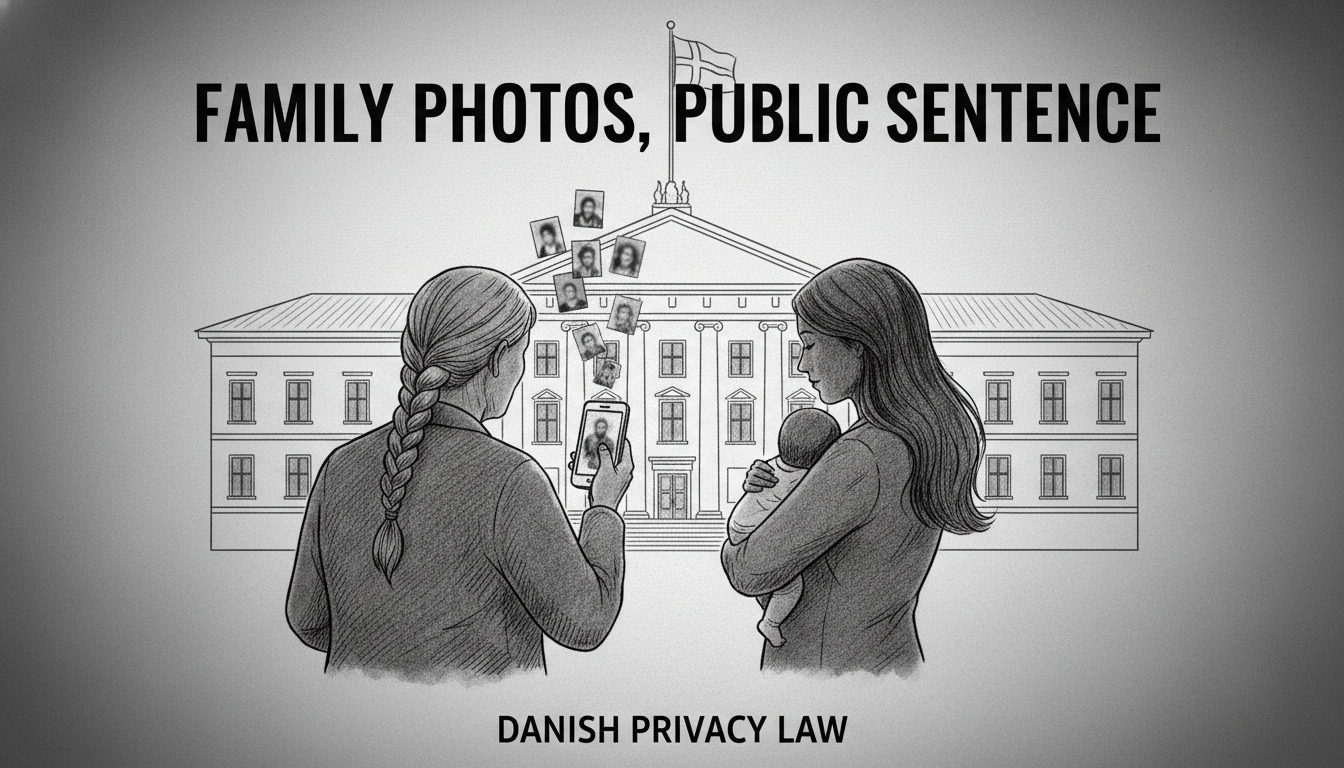
A Danish court has convicted a grandmother for sharing intimate photos of her daughter giving birth without consent. The unusual case from Odense highlights the strict boundaries of privacy in Denmark's digital age. It also raises complex questions about family dynamics and personal rights within the country's social framework.
The grandmother, a 50-year-old woman from the island of Funen, filmed and shared images of her daughter's exposed body during childbirth. She posted them on social media with the caption 'My first grandchild.' The daughter only discovered the images years later when her child had already started school. This discovery prompted her to report her own mother to the police.
Officials confirmed the legal stance clearly. 'It is a criminal act to photograph and share intimate images of others without their consent,' a police spokesperson said. 'This applies even when the images are of your own daughter giving birth to your first grandchild.' The court in Odense handed down a conditional sentence of 14 days in prison with a one-year probation period. The grandmother must also pay her daughter 10,000 Danish kroner in compensation for the violation.
This case sits at the intersection of Denmark's strong privacy laws and its evolving social norms. Danish society news often focuses on the balance between individual rights and community values. The Danish welfare system is built on trust and clear rules, which extends to digital conduct. The conviction shows the legal system does not make exceptions for family relations when core privacy is breached.
Integration and social policy experts note this is not just a family dispute. It reflects broader challenges in Copenhagen integration and Danish social policy regarding digital literacy and consent across generations. Many new citizens learn about these strict privacy norms through mandatory programs. This case serves as a stark example of the legal consequences for violations, regardless of intent.
The grandmother initially removed the photos after being confronted. She reposted them after learning the complaint would lead to a criminal trial. She then chose not to appear in court for the verdict. Community leaders in Danish municipalities often stress the importance of digital respect in family settings. Social centers provide guidance on these matters, but legal enforcement remains the final recourse.
Denmark immigration policy frequently educates newcomers on these cultural and legal standards. The right to bodily autonomy and image control is fundamental. This case demonstrates that the principle holds firm even within the family unit, a core institution in Danish life. The daughter's decision to pursue legal action, while difficult, underscores a societal shift toward asserting digital privacy rights.
What does this mean for families in Denmark? It establishes a clear precedent. Joyful family moments do not override an individual's right to control images of their own body. The law protects personal dignity above all. This ruling reinforces that consent cannot be assumed, even from a parent during a landmark life event. It is a sobering reminder in an era of instant sharing.