
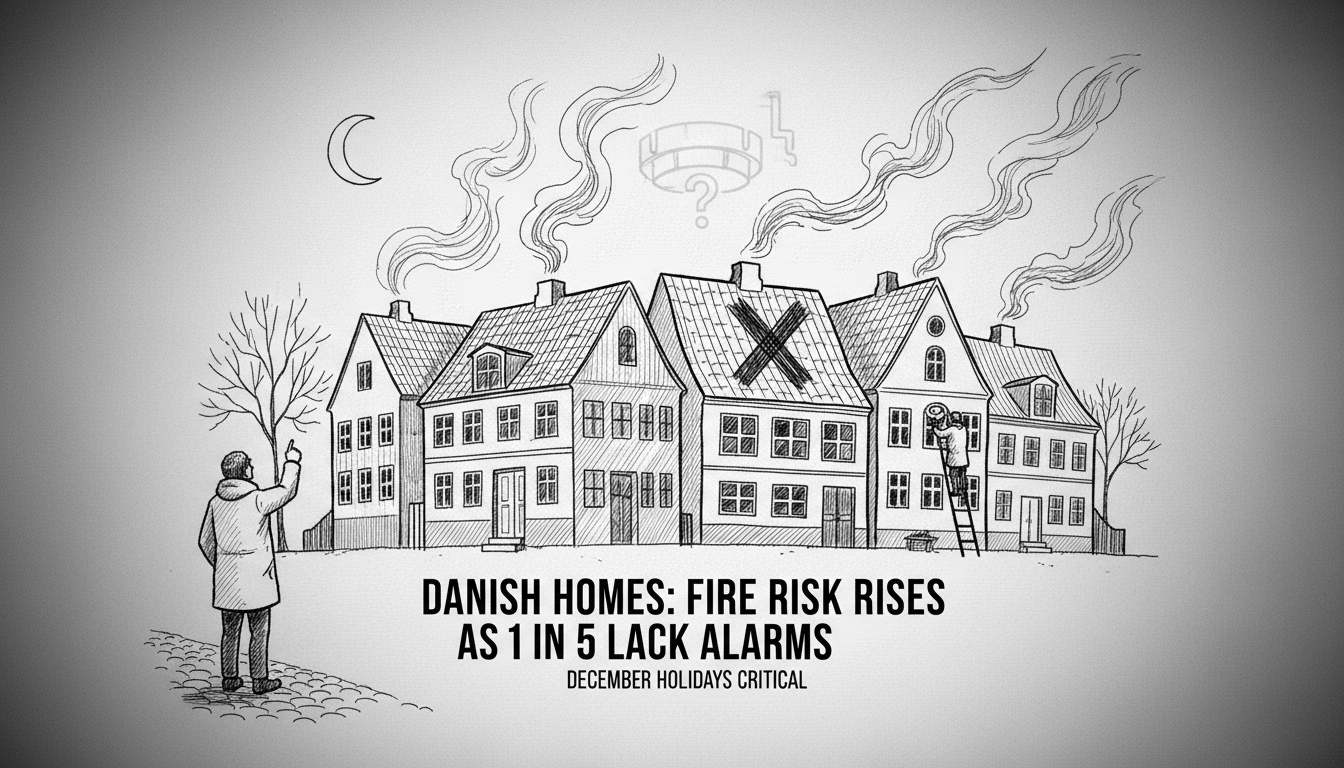
New research reveals concerning gaps in Danish household safety. One in five Danish homes operates without smoke alarms according to a comprehensive study conducted during October. The survey interviewed over 1,000 residents across Denmark, uncovering significant disparities in safety preparedness.
Rental properties show the most alarming statistics. Nearly one-quarter of rental units lack proper smoke detection systems. This creates substantial risk for tenants and property owners alike. Energy consultant Bo Halm Andersen emphasized the universal nature of fire danger. He noted that fire risks remain constant regardless of housing type or location.
Official statistics from Danish emergency services reveal the scale of the problem. Fire departments respond to approximately 2,750 residential fires annually. December consistently records the highest number of incidents. The increase correlates directly with holiday traditions involving candles and festive decorations.
Bjarne Nigaard of Danish Emergency Services provided sobering context. He confirmed that most December fires originate in living rooms or kitchens. Simple preventive measures could dramatically reduce these incidents. His advice focuses on maintaining safe distances between candles and flammable materials.
Fire prevention expert Mads Dalgaard offered practical guidance for households. He acknowledged the cultural importance of candlelight while stressing safety protocols. His recommendations include keeping water nearby and extinguishing candles when leaving rooms. These basic precautions could prevent numerous holiday tragedies.
The study highlights broader safety concerns in Danish housing markets. Insurance implications for unprotected properties remain substantial. Landlords face increased liability while tenants confront preventable risks. This situation demands attention from housing authorities and insurance providers alike.
Danish building regulations require smoke alarms in new constructions. Existing properties, particularly rental units, often fall through regulatory gaps. The research suggests mandatory retrofitting might become necessary. Such measures would align Denmark with safety standards in neighboring Nordic countries.
International residents should note these findings when considering Danish housing. The country's famous hygge culture carries inherent fire risks during dark winter months. Proper safety equipment becomes essential rather than optional. Both homeowners and renters share responsibility for maintaining safe living environments.