
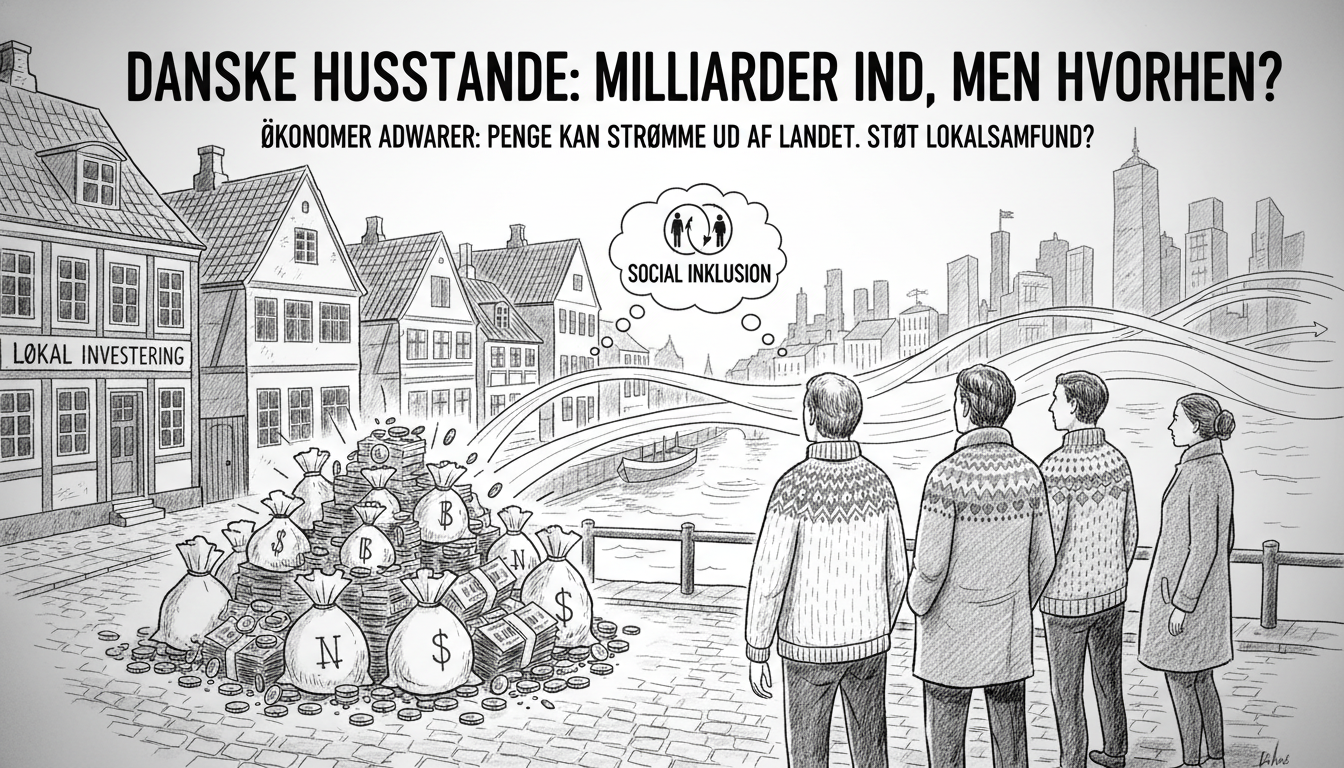
Danish families are set to have significantly more money in their hands in the coming years. This financial boost presents a complex scenario for the nation's economy and its social fabric. The extra funds could fuel domestic consumption, but analysts warn a substantial portion may be spent outside Denmark. This dynamic touches directly on core issues within Danish society news, from consumer habits to the strength of local communities.
For international observers, this situation offers a window into the Danish welfare system at a crossroads. The system is designed to redistribute wealth and provide security. A surge in disposable income tests its resilience. Will the money reinforce local businesses and services, or will it leak across borders? The answer matters for social cohesion and municipal budgets. Copenhagen integration efforts, for instance, often rely on vibrant local economies to create job opportunities and social mixing.
Community leaders in areas with diverse populations express cautious optimism. "Increased household wealth can be a powerful tool for inclusion," said a project manager at a Copenhagen social center. "It means more families can participate fully in cultural and educational activities. The challenge is ensuring the spending benefits the neighborhoods where people live." This sentiment echoes concerns in other Danish municipalities where local shops compete with online international retailers.
Denmark social policy has long focused on balancing individual prosperity with collective responsibility. The potential outflow of consumer spending raises questions about this balance. It highlights a tension between globalized markets and the localized support structures the welfare state depends on. Past economic surveys show that when Danes have extra kroner, a notable percentage is used for travel and cross-border e-commerce. This pattern could accelerate with the new financial inflow.
What does this mean for Denmark immigration policy and integration outcomes? Economic participation is a key metric. If new spending bypasses local communities, it could weaken the commercial infrastructure that supports new residents. Conversely, if families invest in local education and services, it could strengthen social bonds. The data on integration often links economic self-sufficiency with successful societal participation. The coming financial shift will be a real-time test of those links.
The direct impact is clear. More money in Danish pockets means more choices. The indirect effect on society is less certain. It depends on where those choices are made. The situation calls for a nuanced look at how national wealth translates into local well-being. It is a reminder that economic figures are not just statistics. They are signals of where a society's priorities and pressures truly lie.