
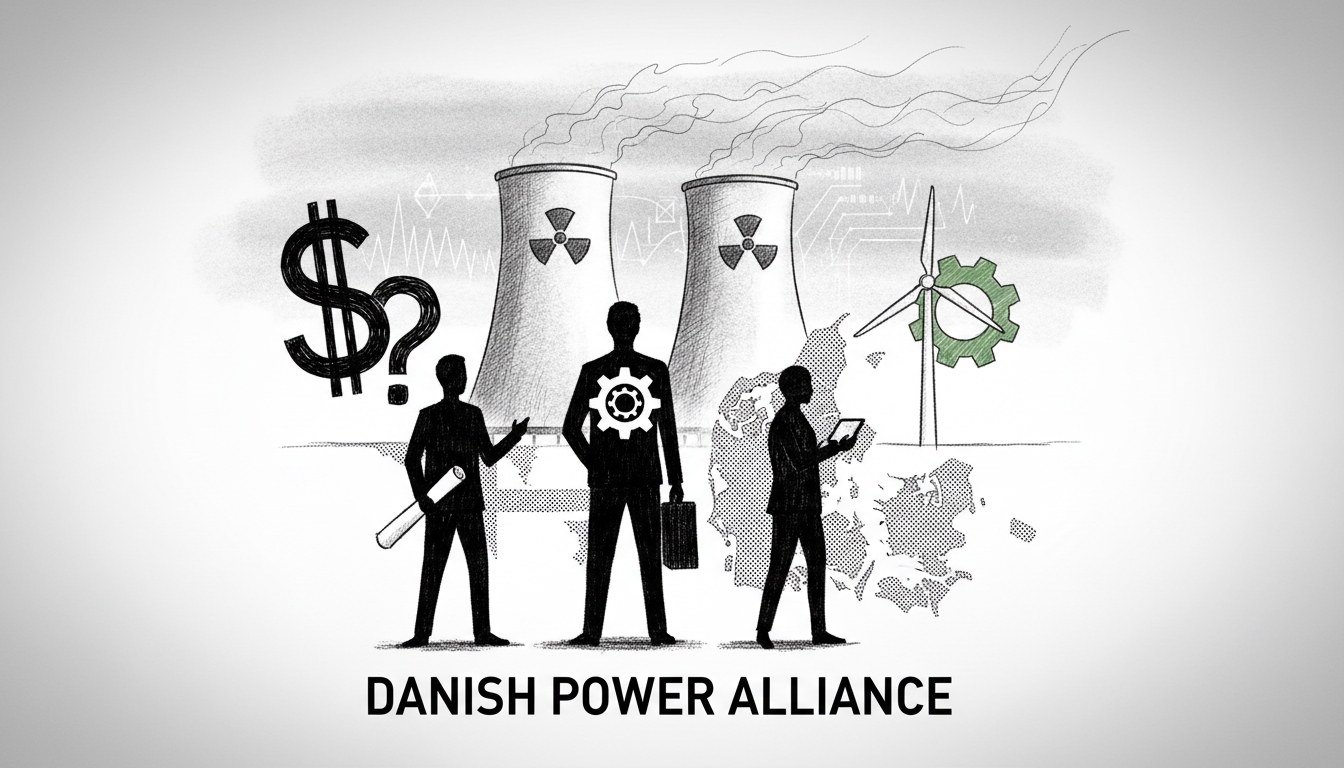
A powerful coalition of Danish industry leaders and foundations is challenging the nation's long-standing energy policy. The newly formed Nuclear Power Alliance includes heavyweights like the Confederation of Danish Industry (DI), the Danish Metalworkers' Union, and the Novo Nordisk Foundation. Their goal is direct investment in nuclear energy, marking a seismic shift in the country's green transition debate. This move directly impacts Denmark's industrial competitiveness and its quest for stable, affordable power for export-oriented sectors in Copenhagen and the Øresund region.
The alliance's formation follows political signals that Denmark's 1985 parliamentary ban on nuclear power in energy planning may be relaxed. Several center-right parties have advocated for legalization, and Prime Minister Mette Frederiksen recently stated openness to easing the prohibition. The debate now centers on economics and speed. Danish industry seeks a reliable baseload power source to complement its world-leading wind and solar capacity, especially for energy-intensive manufacturing and pharmaceutical production.
Troels Ranis, Deputy Director of the Confederation of Danish Industry, framed the economic argument. 'The great thing about nuclear power is that once we cover the capital costs, it becomes very cheap,' he said in a recent interview. 'That is what we are looking for in industry: access to competitive, stable, and secure energy.' This search is critical for companies in Copenhagen's business districts and beyond, where global competition hinges on energy costs.
However, significant opposition exists within the business community itself. Danish Chamber of Commerce Vice Director Ulrich Bang offered a stark counterpoint. 'Our assessment remains unchanged: nuclear power is neither competitive nor meaningful in a Danish context for the foreseeable future,' he stated in a written comment. He pointed to massive cost overruns and delays at projects like the Flamanville plant in France as a cautionary tale. Bang emphasized urgency, stating Danish businesses need 'secure, cheap, and green energy now,' not by 2040.
The core conflict is between long-term infrastructure planning and immediate decarbonization needs. Proponents argue nuclear provides the stable, carbon-free backbone required for a fully renewable grid and power-hungry sectors like data centers or green fuel production. Critics contend the staggering upfront costs and decade-long construction timelines are untenable. They argue capital is better spent accelerating proven, cheaper renewables and storage, a view backed by some Danish energy studies.
This industrial divide reflects a broader European recalibration. Neighbors like Sweden and Finland operate large nuclear fleets, while France is expanding its commitment. Denmark's debate is not about abandoning wind power but about diversifying its green portfolio. The outcome will influence billions in future energy investments, shape the Copenhagen stock exchange's clean energy sector, and determine Denmark's industrial strategy for decades. The alliance's next step will be to develop concrete investment proposals, forcing politicians to move from theoretical openness to practical decision-making.