
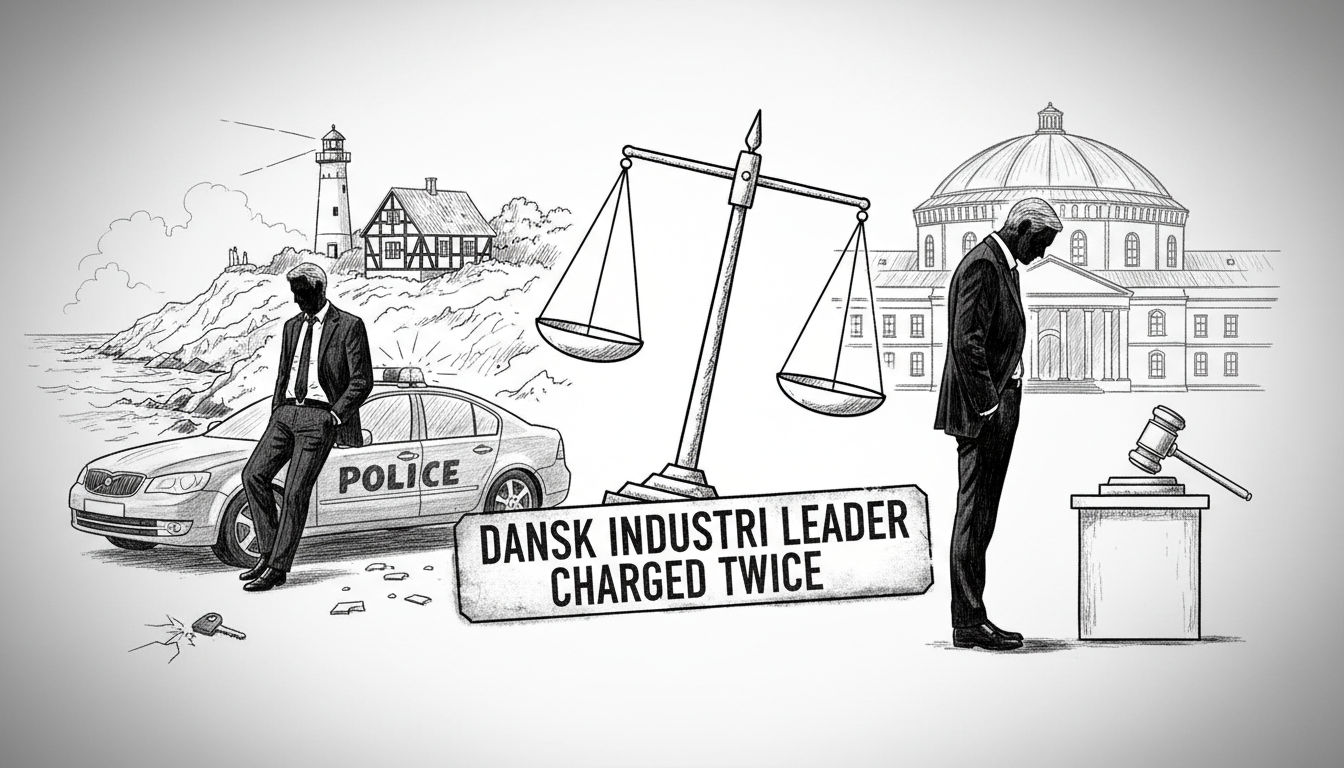
A senior executive at the Confederation of Danish Industry, Thomas Bustrup, faces charges for drunk driving on two separate occasions within a single day. The incident began on the island of Bornholm, where police first stopped his vehicle. The case raises immediate questions about accountability and the standards expected of leaders within Denmark's influential business community. For international observers, this story offers a window into how Danish society handles high-profile transgressions, balancing its renowned welfare principles with strict legal enforcement.
The Confederation of Danish Industry, known as Dansk Industri or DI, is a powerful lobby group representing thousands of Danish companies. A vice-managing director facing such charges is uncommon and carries reputational weight. The organization confirmed the charges in a statement, noting the legal process is underway. The sequence of events, where the car reportedly went missing after the initial stop, adds a layer of complexity to the police investigation. Danish drunk driving laws are stringent, with penalties that include license suspension, fines, and potential imprisonment for severe or repeat offenses.
This incident touches on broader themes within Danish society news, where trust in public figures and institutions is a cornerstone of the social contract. The Danish welfare system relies heavily on high levels of social trust and adherence to shared rules. When a leader in a prominent organization is accused of breaking those rules, it tests that trust. The case also intersects with discussions on Copenhagen integration and Denmark social policy, where the behavior of established figures is often contrasted with the integration demands placed on newcomers. Community leaders in social centers frequently emphasize that integration is a two-way street, requiring mutual respect for Danish law and norms.
What does this mean for Denmark immigration policy debates? Critics might argue that such incidents highlight a double standard, while supporters of current policy would stress that the law is applied equally. The reality is that Danish municipalities and legal authorities typically pursue such charges without regard to status, though public perception can differ. Statistics on integration often focus on employment and education metrics, but social cohesion also depends on visible fairness in justice. This case will be watched to see if the legal outcome aligns with the public expectation of equal treatment under the law.
The personal and professional consequences for the executive will be significant. Beyond the legal penalties, there is the court of public opinion within a society that values 'Janteloven'—the concept of not thinking you are better than others. The DI now must manage its internal response and external communications. This situation serves as a stark reminder that Denmark's social policy framework expects compliance from all residents, regardless of position. The coming weeks will show how one of Denmark's key business organizations navigates this challenge to its credibility and its role in shaping Danish society.