
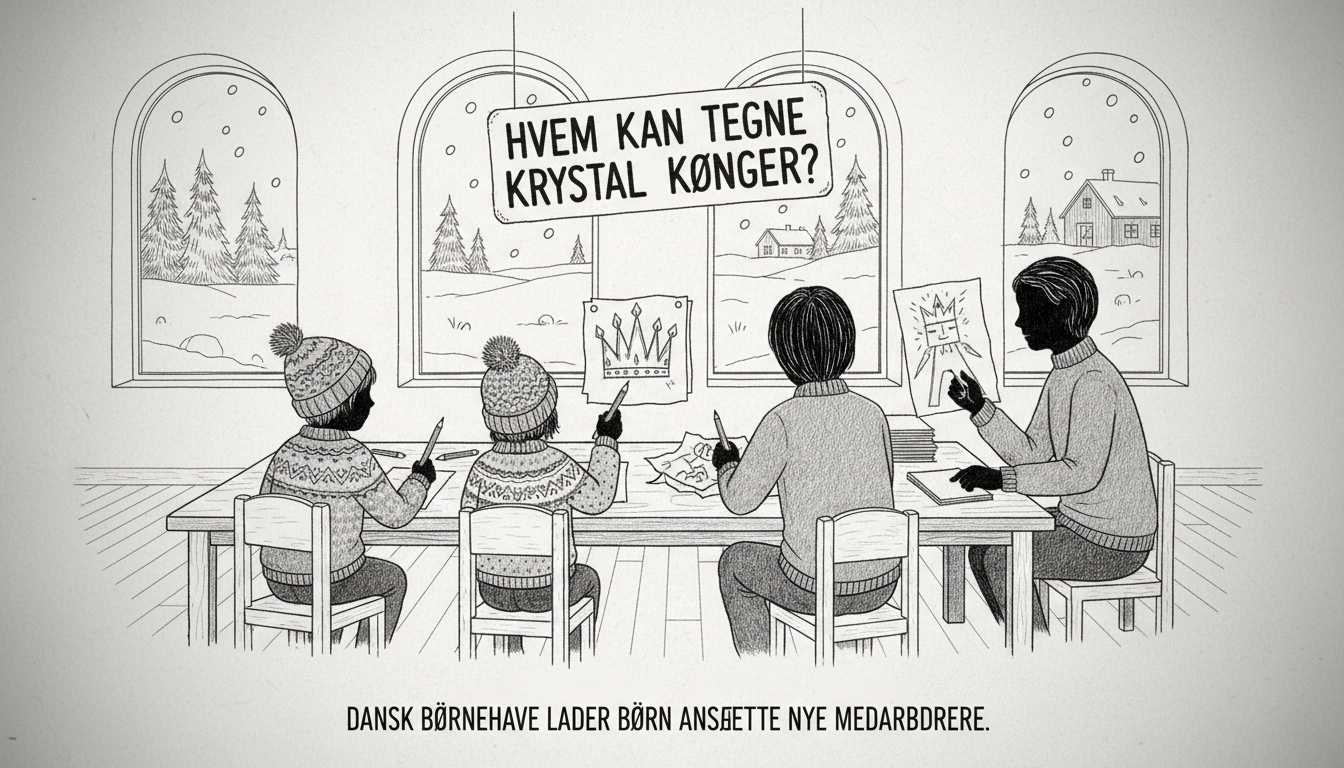
In a quiet neighborhood of Nørresundby, a Danish kindergarten is quietly rewriting the rules of early childhood education. The Østergade Kindergarten recently involved its youngest members in a very adult process. They let the children help write the job description for a new pedagogue. The children had clear requirements. They wanted a kind adult who could draw crystal kings and dig for gold and silver. This approach raises a fundamental question about modern Danish society. How do you teach community values in an increasingly individualistic age?
The experiment in Nørresundby is part of a broader national conversation. Danish municipalities are exploring new models for social cohesion. The traditional Danish welfare system relies on strong communal bonds. Yet global trends push toward individualism. This creates a tension that integration policies must address. Copenhagen integration efforts often focus on adult education and language. The Østergade model suggests change might start much younger. When children experience real influence, they learn democratic participation firsthand.
Local officials see this as more than a cute story. It is a practical test of child-centered pedagogy. 'Giving children a genuine voice in daily decisions builds responsibility,' said a community leader from the area. 'It shows them their perspective matters.' This philosophy aligns with Denmark's long tradition of participatory democracy. It extends that principle to citizens who cannot yet vote. The kindergarten's method involves children in tangible choices. This includes staff selection, activity planning, and rule creation.
Statistics on integration in Denmark often highlight challenges in schools. They show gaps in educational outcomes for children from immigrant backgrounds. Projects like Østergade's offer a different path. They build inclusive environments from the earliest years. Social centers across Denmark are watching this experiment. Many are considering similar approaches. The goal is to foster belonging before societal divisions can harden.
This story matters for Denmark's social policy future. The country faces an aging population and workforce needs. Successful integration of all children into the fabric of society is an economic imperative. It is also a moral one. The Østergade kindergarten provides a concrete example. It shows how small, daily acts of inclusion can shape a community's character. The children may not have found literal gold. They are discovering something more valuable. They are learning that their voices, and by extension all voices, have weight in the Danish welfare system.
The real test comes next. Can this model be scaled beyond a single kindergarten in North Jutland? Will other municipalities adopt similar practices? The answers will depend on political will and resource allocation. For now, the children of Østergade have drawn their crystal kings. They have stated their case for a certain kind of adult world. Danish society would do well to listen.