
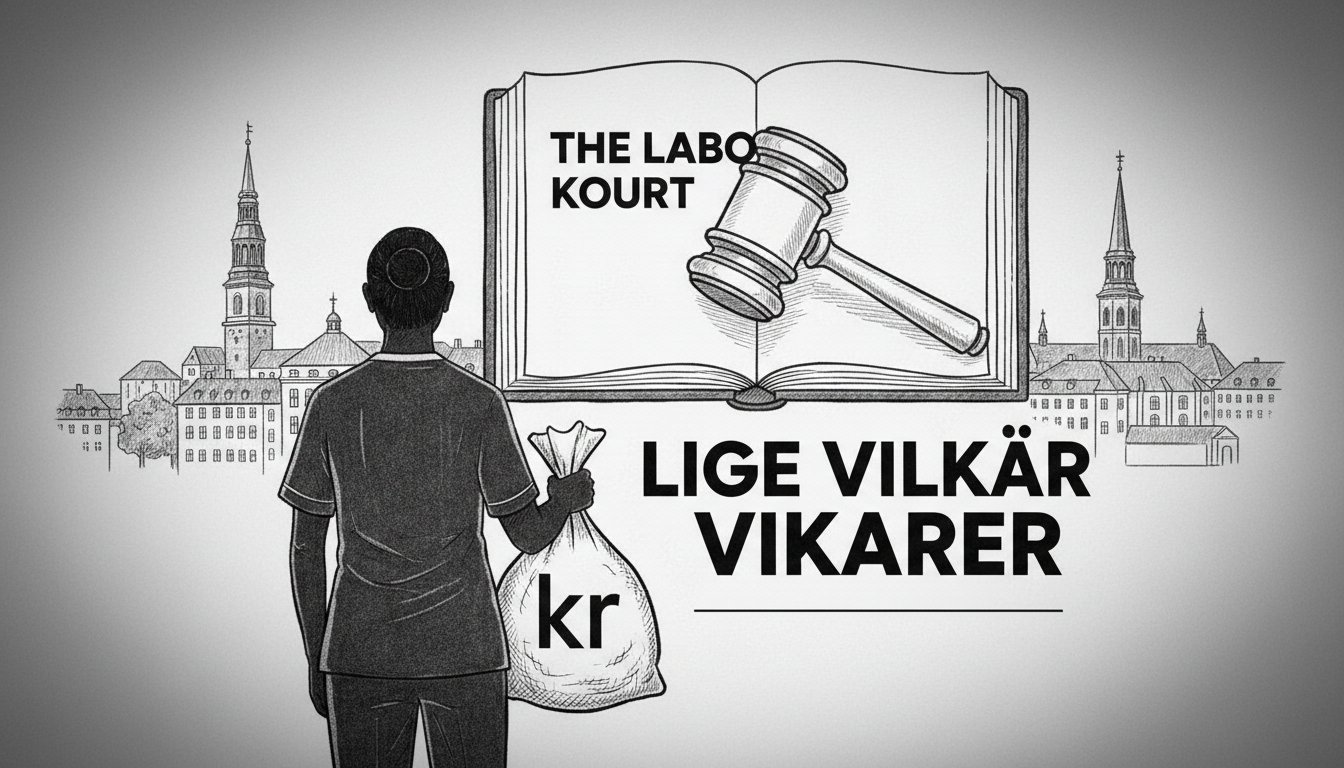
A landmark Danish Labor Court decision has established that temporary workers must receive equal pay and benefits compared to permanent staff. The ruling came after a hospital receptionist received substantial compensation for being paid less than her permanently employed colleagues.
Sofie Odgaard worked as a temporary receptionist at a local hospital through a staffing agency. She performed the same duties as permanent employees but discovered significant disparities in her compensation package. The permanent staff received higher wages, better pension contributions, more vacation time, and superior sick leave benefits.
The court awarded Odgaard 72,000 Danish kroner in compensation for the unequal treatment. This amounts to approximately $10,400 USD or €9,600. The case originated from her work placement that began in autumn 2022, with the pay discrepancy becoming apparent during spring 2023.
This ruling represents a major victory for Denmark's temporary workforce and sets an important precedent for labor rights. The decision reinforces the principle that equal work deserves equal compensation, regardless of employment status. Temporary agency workers across Denmark now have stronger legal backing to demand fair treatment.
Denmark's labor market has traditionally maintained flexibility through temporary staffing arrangements. This system allows companies to adjust workforce levels according to demand while providing workers with varied employment opportunities. The court's decision balances this flexibility with fundamental worker protections.
The case highlights ongoing tensions in Nordic labor markets between flexibility and worker security. Denmark's flexicurity model combines easy hiring and firing with strong social safety nets. This ruling strengthens the security aspect for temporary workers while maintaining labor market flexibility.
International workers in Denmark should pay close attention to this development. The decision clarifies that temporary contracts through staffing agencies do not justify unequal pay for identical work. Foreign temporary workers now have clearer rights to demand equal treatment in Danish workplaces.
The ruling may prompt more temporary workers to examine their compensation packages. Workers who suspect unequal treatment should document their concerns and consult with labor unions. Danish unions have historically played crucial roles in enforcing worker rights and could leverage this precedent in future negotiations.
This decision comes amid broader European discussions about temporary worker rights. The EU has been working to improve conditions for temporary and platform workers across member states. Denmark's court ruling aligns with this broader trend toward better protection for non-permanent employees.
What practical changes will this bring to Danish workplaces? Employers using temporary staff must now conduct thorough compensation reviews. Staffing agencies need to ensure their contracts provide equal benefits. The ruling creates immediate compliance requirements for companies relying on temporary labor.
The financial implications for businesses could be substantial. Companies facing similar claims may need to backpay temporary workers and adjust future compensation structures. This could increase labor costs for industries that heavily depend on temporary staffing arrangements.
Danish labor law continues to evolve through court decisions like this one. The ruling demonstrates how case law shapes workplace regulations in Denmark's dynamic labor market. Future disputes will likely reference this decision when addressing temporary worker compensation issues.