
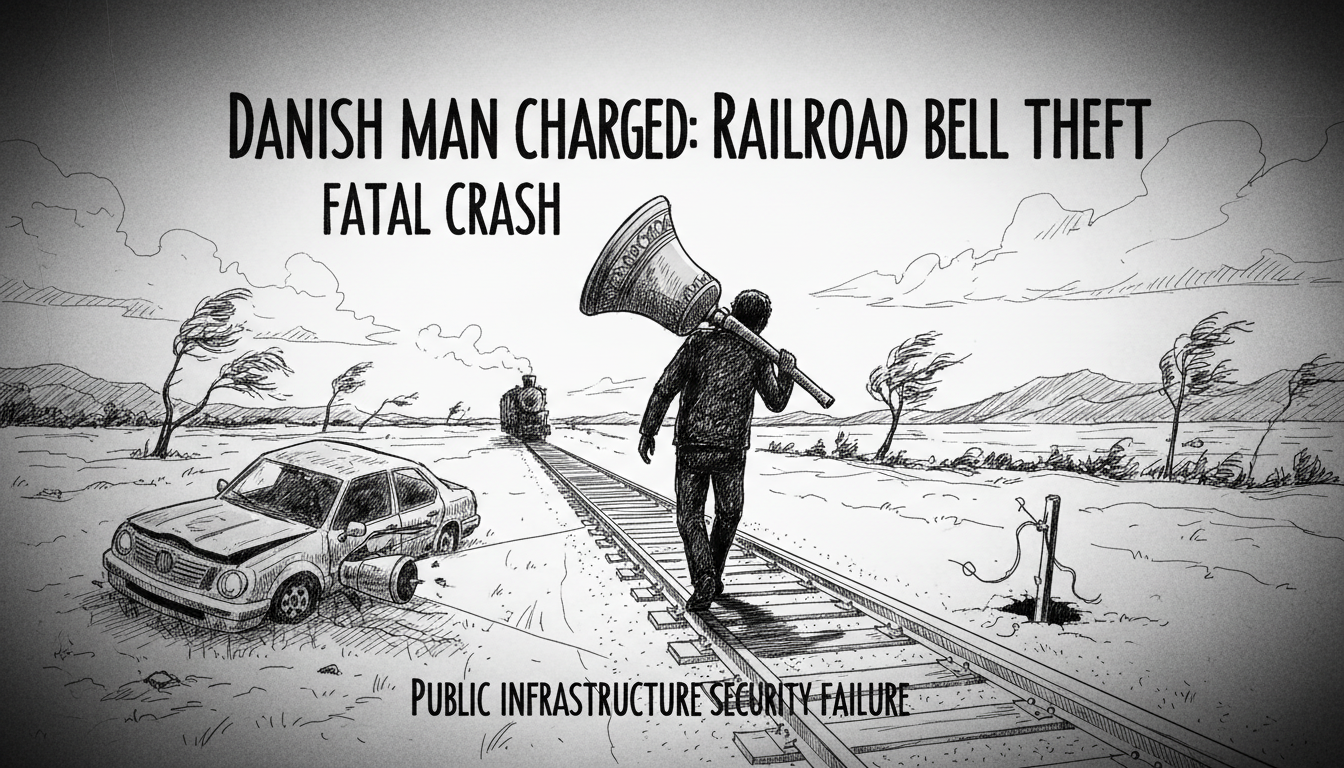
A quiet stretch of railway in South Jutland became the scene of a profound tragedy. A young man lost his life after his van collided with a train at an unmanned crossing. The critical warning bells had been stolen just days before. Now, a 51-year-old man faces charges of involuntary manslaughter for the thefts. This case exposes a chilling chain of negligence with fatal consequences. It also raises urgent questions about infrastructure security and public safety in Denmark's rural areas.
The police in Southern and South Jutland detailed the accusations. The man is charged with stealing railroad bell systems from two separate crossings. The first theft allegedly occurred on June 30. He took three warning systems from crossings at Kærvej, Visgårdvej, and Kådnervej along the Tinglev to Sønderborg line. The second theft happened on July 5 at the Kådnervej crossing again. Authorities state he acted 'for gain, out of gross recklessness, or in a similarly inconsiderate manner.' His actions created an immediate danger to life.
The result of the July 5 theft was catastrophic. With no bells to signal an approaching train, a young man drove his van onto the tracks at Kådnervej. He received no warning. The collision was immediate and fatal. The victim died from his injuries. This incident is a stark reminder of how seemingly minor crimes can have devastating outcomes. It challenges the perception of Denmark as a society where all systems function seamlessly for public protection.
This tragedy connects to broader discussions about Danish social policy and community safety. Denmark's welfare system relies on a high degree of social trust and functional public infrastructure. When that infrastructure is vandalized for petty theft, the social contract is broken. Municipalities and rail operators now face difficult questions. How can remote crossings be better secured? What is the balance between cost and the absolute necessity of safety mechanisms? Community leaders in areas like South Jutland often highlight the resource gap between urban and rural security.
Statistics on integration and social challenges sometimes overlook such raw incidents of crime and consequence. This case does not fit simple narratives but reveals complex social fractures. The accused and the victim were both part of the same local fabric. The motive appears to be basic material gain, not any organized crime. It is a blunt story of a theft that erased a life. Danish authorities must now prosecute this case with the full weight of the law. They must also review the vulnerability of similar remote infrastructure across the country. The price of failure, as seen here, is ultimately measured in human lives.