
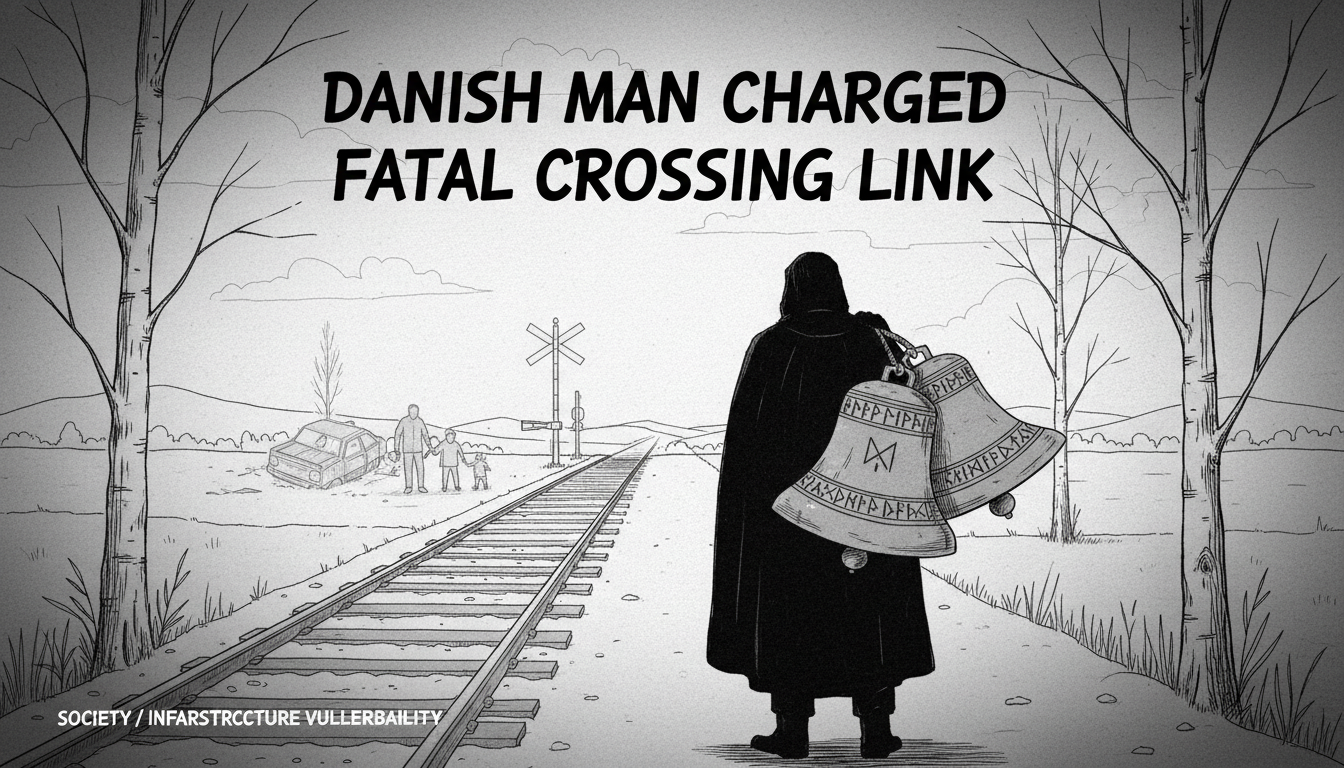
A 51-year-old man from the Aabenraa municipality in Southern Denmark now faces charges of negligent manslaughter. The charges stem from the theft of critical railway warning bells. These bells were stolen from a level crossing near Kliplev. Their absence is considered a contributing factor in a fatal accident last summer. A 24-year-old man lost his life when his van was struck by a train at that crossing. Police believe the missing bells failed to provide the necessary auditory warning of the approaching train.
The suspect is formally charged with stealing three bell systems from railway crossing warning installations on July 5. These crossings are located along the railway line stretching from Tinglev to Sønderborg. He also faces separate charges for stealing railway bells in another incident on June 30. The prosecutor confirmed the charges but could not provide a motive for the thefts. Officials stated the investigation into the precise circumstances is ongoing.
This tragic incident casts a stark light on the vital importance of public infrastructure integrity within the Danish welfare system. Denmark's social fabric relies heavily on a high degree of public trust and the flawless operation of shared systems, from transportation to social services. The theft of safety equipment, seemingly for scrap metal or components, represents a profound breach of that social contract. It transforms a petty crime into a matter of public safety with devastating consequences.
The case also raises questions about the security of remote public assets. Level crossings in rural areas, like those near Kliplev, may be more vulnerable. Municipalities and state rail operators constantly balance maintenance costs with security measures. This event will likely prompt reviews of protection protocols for essential safety hardware. It underscores how a single act of vandalism or theft can undermine the collective security the Danish social model strives to guarantee.
For the local community and the nation, the human cost is irreparable. A young man's life was cut short. His family and friends are left grappling with a loss that appears senseless and preventable. The judicial process will determine legal responsibility, but the broader societal lesson is clear. The functionality of Denmark's integrated systems depends on collective responsibility. When individuals compromise that infrastructure for personal gain, the potential ripple effects can be fatal, testing the resilience of the very social trust that holds the system together.