
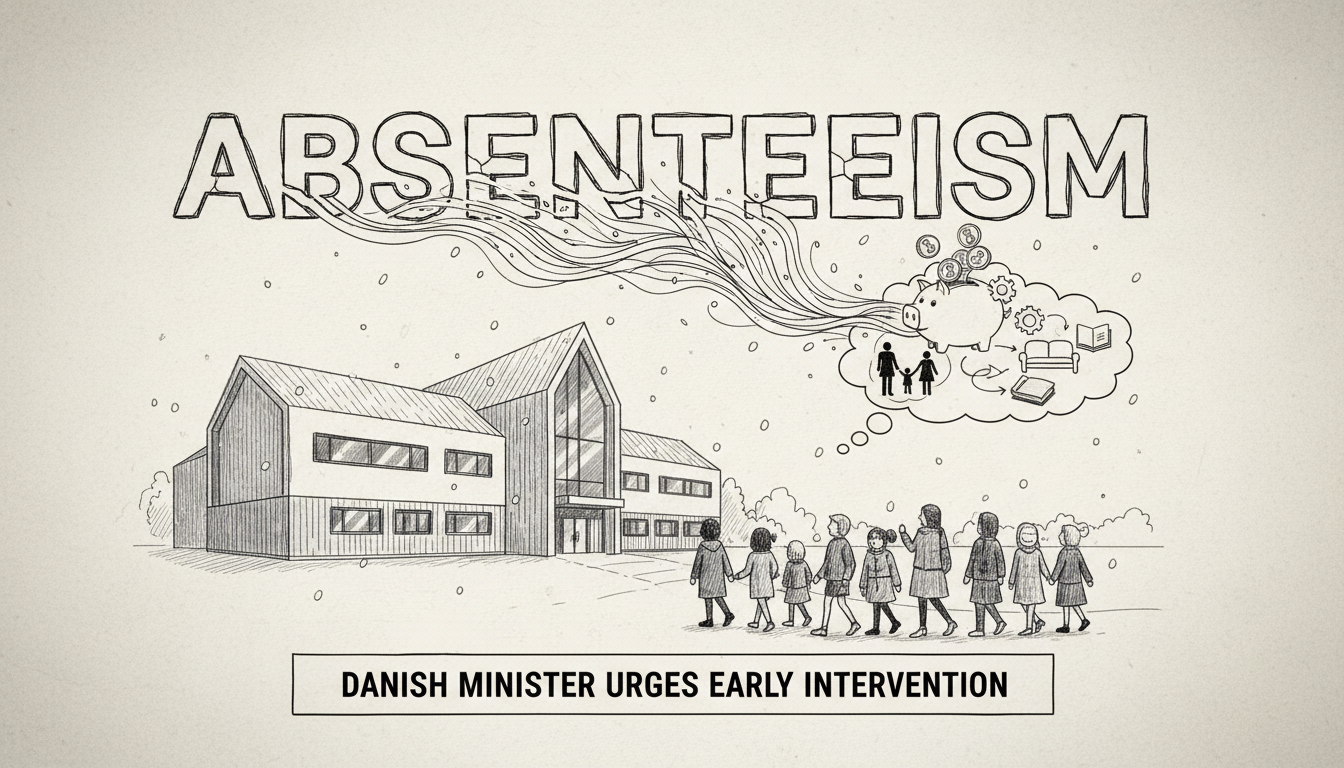
Danish integration minister Mattias Tesfaye wants to shift educational funding from psychological assessments to early interventions. This comes as school absenteeism reaches alarming levels across Denmark. Nearly 25,000 children missed at least 40 school days last academic year. One in five students was absent for more than 20 days total. The numbers reveal a deepening crisis in Danish education that demands immediate attention.
Tesfaye's proposal would redirect resources toward identifying at-risk students sooner. Current systems often wait until absence patterns become severe before acting. Then they typically require psychological evaluations. The minister argues this approach comes too late for many vulnerable children. His plan would fund earlier support mechanisms instead.
Copenhagen integration specialists see clear connections between absenteeism and social challenges. Many affected students come from immigrant backgrounds or disadvantaged neighborhoods. They often face language barriers and cultural adaptation difficulties. Early intervention could help address these underlying issues before academic problems escalate.
Danish welfare system professionals note the financial wisdom of this approach. Preventing school dropout saves substantial public resources long-term. Every early school leaver costs Danish society approximately 2 million kroner in lost taxes and increased benefits. Investing in prevention makes economic sense alongside the human benefits.
Municipal social centers across Denmark report increasing numbers of disengaged youth. Community leaders describe teenagers who feel disconnected from their schools. They mention students struggling with mental health issues and family problems. These young people often slip through existing support networks until their situations become critical.
Education experts point to successful pilot programs in Aarhus and Odense. Those municipalities implemented early warning systems for attendance issues. They paired struggling students with mentors and provided family support. Results showed improved attendance and better academic outcomes within two school terms.
The Danish social policy shift reflects broader Nordic concerns about educational equity. Sweden and Norway face similar challenges with student engagement. All three countries pride themselves on comprehensive welfare systems. Yet they struggle to reach every child equally despite substantial public investment.
International readers might wonder how such issues emerge in famously progressive Denmark. The answer lies in the complex reality behind the Nordic model's reputation. Even well-funded systems face implementation challenges. They must adapt to changing demographics and new social dynamics.
What happens next depends on political negotiations currently underway. The minister needs parliamentary support for his funding reallocation proposal. Opposition parties have expressed cautious interest but want more details. Municipal authorities await clarity about potential implementation timelines.
The stakes extend beyond educational outcomes to Denmark's future social cohesion. Students who disconnect from school often struggle to integrate into workforce and community life later. Addressing absenteeism effectively supports both individual potential and societal stability.