
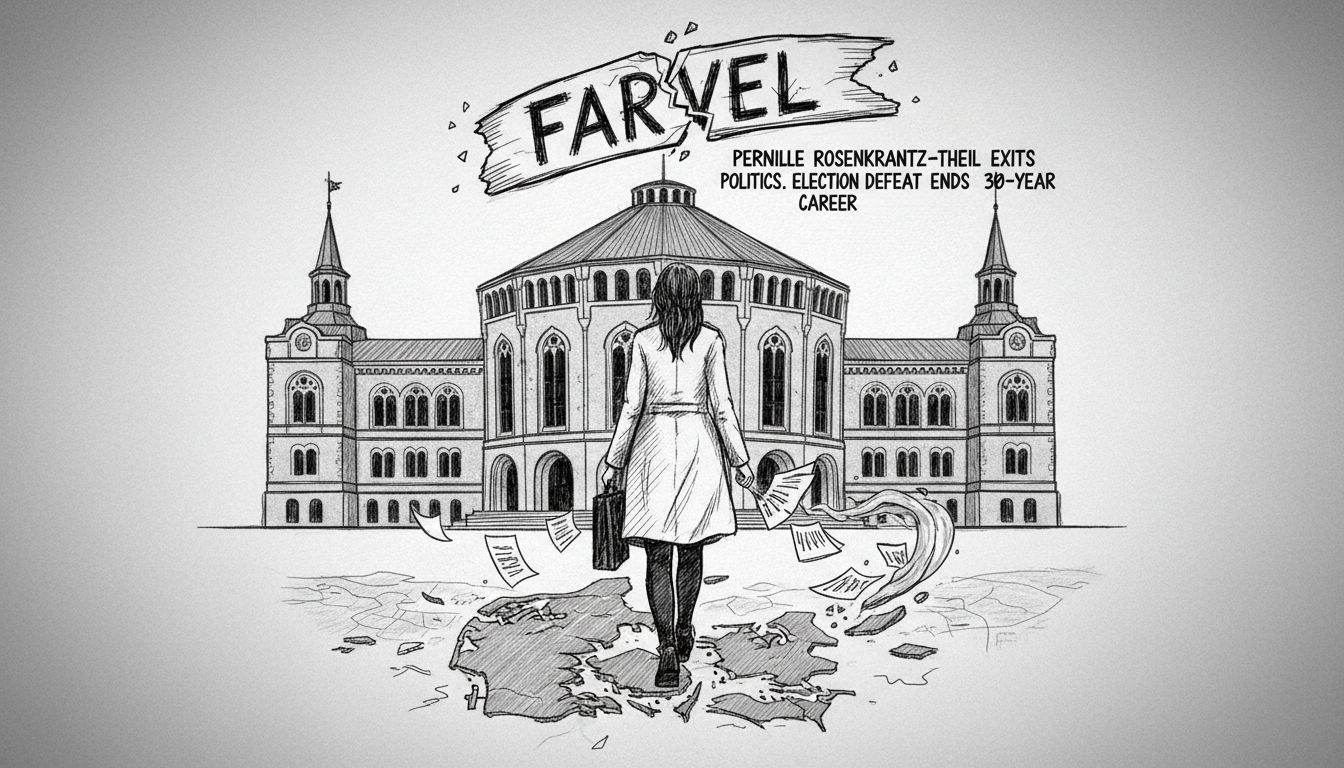
Prominent Danish politician Pernille Rosenkrantz-Theil has announced her complete withdrawal from politics following the Social Democratic Party's devastating defeat in Copenhagen's municipal elections. The former minister confirmed her decision just four days after voters delivered their verdict at the ballot box.
Rosenkrantz-Theil stated she will not run in the upcoming parliamentary election and is ending her political career entirely. This represents a dramatic reversal from her post-election morning promise to remain active in Copenhagen politics. Her announcement marks the culmination of a 30-year political journey that spanned multiple parties and ministerial positions.
The Copenhagen election results proved catastrophic for the Social Democrats. The party received only 12.7 percent of the vote in the capital city, falling below even their poor 2021 performance. Rosenkrantz-Theil personally gathered nearly 12,000 votes but trailed significantly behind her left-wing rivals Sisse Marie Welling from the Socialist People's Party and Line Barfod from the Red-Green Alliance.
On election night, the Social Democratic candidate for lord mayor watched as competing parties formed a governing coalition that excluded her party and the Free Greens. This development ended the Social Democrats' 113-year hold on Copenhagen's lord mayor position. Rosenkrantz-Theil had been slated to become Copenhagen's new business, employment, and integration mayor before the coalition agreement excluded her party.
The veteran politician acknowledged her personal role in the election outcome. She stated the campaign focused heavily on her leadership, which she believed would hinder future Social Democratic achievements at city hall. Rosenkrantz-Theil explained she wants to clear the path for her party's recovery by removing herself from the political scene.
Rosenkrantz-Theil's political career began in the Red-Green Alliance before she joined the Social Democrats in 2009. She served in parliament from 2011 until last year when she left to pursue the Copenhagen lord mayor position. Her ministerial experience includes two separate appointments as children and education minister followed by social and housing minister.
The Copenhagen election defeat reflects broader challenges facing center-left parties across Nordic capitals. Urban voters increasingly favor green and progressive alternatives to traditional social democratic platforms. This trend has manifested in Stockholm, Oslo, and Helsinki as well as Copenhagen.
Rosenkrantz-Theil's departure creates a significant void in Danish Social Democratic leadership. The party must now rebuild its Copenhagen organization without one of its most recognizable figures. At 49 years old, Rosenkrantz-Theil says she doesn't know what comes next but emphasizes she's starting a new life outside politics.
Political analysts note this exit represents more than just one politician's career change. It signals potential realignment in Danish urban politics as traditional working-class parties struggle to maintain relevance in increasingly diverse, educated cities. The Copenhagen result suggests Social Democrats must reconsider their approach to urban policy and candidate selection.
The timing proves particularly challenging with national elections approaching. Losing an experienced campaigner and former minister weakens the party's bench strength. Rosenkrantz-Theil's personal vote-gathering ability had previously provided crucial margins in tight races.
Her decision to leave politics completely rather than seeking alternative positions demonstrates the depth of the Copenhagen defeat's impact. Most Danish politicians facing similar setbacks typically return to parliament or find other public roles. This clean break suggests fundamental reassessment of political priorities and possibilities.