
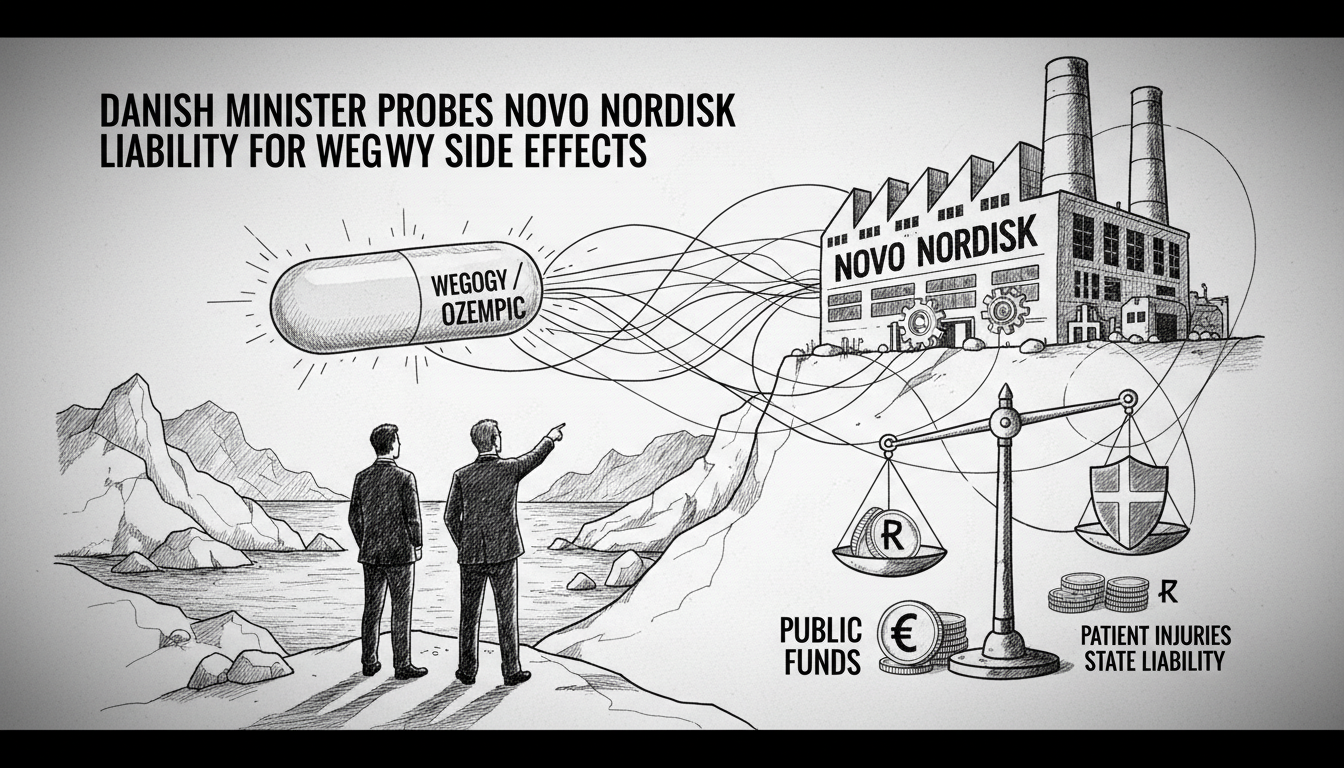
Danish Health Minister Sophie Løhde is investigating whether Novo Nordisk should reimburse the state for compensation paid to patients suffering severe vision damage linked to its Wegovy and Ozempic drugs. The move challenges a long-standing legal framework where the Danish state, not pharmaceutical companies, covers patient injury claims. This probe directly impacts one of Denmark's most valuable companies and its flagship export sector.
The Danish Patient Compensation Board has ruled that the drugs were the probable cause of serious visual impairment in at least four patients. These initial cases cost the public treasury 800,000 kroner. A total of 58 Danes have filed claims. The minister has now referred the matter to the government's legal advisor, the Kammeradvokaten, to assess if liability can be transferred to the drugmaker.
One compensated patient, Claus Heine, received nearly 200,000 kroner. He calls the vision loss devastating, costing him his job as an IT manager. He argues the public should not bear the cost. When the state pays instead of Novo Nordisk, they evade their responsibility, he said. Everyone else ends up paying for their product's side effects.
Novo Nordisk maintains there is no proven causal link between its semaglutide-based treatments and the eye condition NAION. The company declined to comment on the minister's action. Serious visual disturbances were added to the drugs' side effect profiles in the autumn following Danish studies suggesting a possible connection.
Legal experts note such state recovery attempts are rare. A similar 2011 case against French firm Servier over heart valve damage from the diet pill Isomeride failed in the Supreme Court. The court found other potential causes for the injury. Lecturer in health law Kent Kristensen suggests Novo may avoid liability by arguing these were unforeseeable development risks not detectable when the drug launched.
The case's timing is critical. The minister must determine when Novo first became aware of a potential link. This could indicate if the side effects were truly unpredictable. The outcome carries significant financial implications. Over 260,000 Danes have redeemed Wegovy prescriptions since its launch three years ago, with 135,000 using Ozempic.
This investigation strikes at the heart of Denmark's pharmaceutical trade model. Novo Nordisk is a pillar of the Copenhagen Stock Exchange and a key exporter. Any shift in liability could affect investor confidence and the broader life sciences cluster in the Øresund region. The government walks a tightrope between protecting public funds and maintaining a favorable environment for a national champion that generates massive tax revenue and export figures.
The probe reflects growing scrutiny of the social cost of blockbuster drugs. As patient numbers grow, so does potential public liability. The minister's decision will set a precedent for future cases involving high-revenue medications with emerging side effect profiles. It is a clear signal that the state is examining who ultimately bears the financial risk in Denmark's successful but costly healthcare model.