
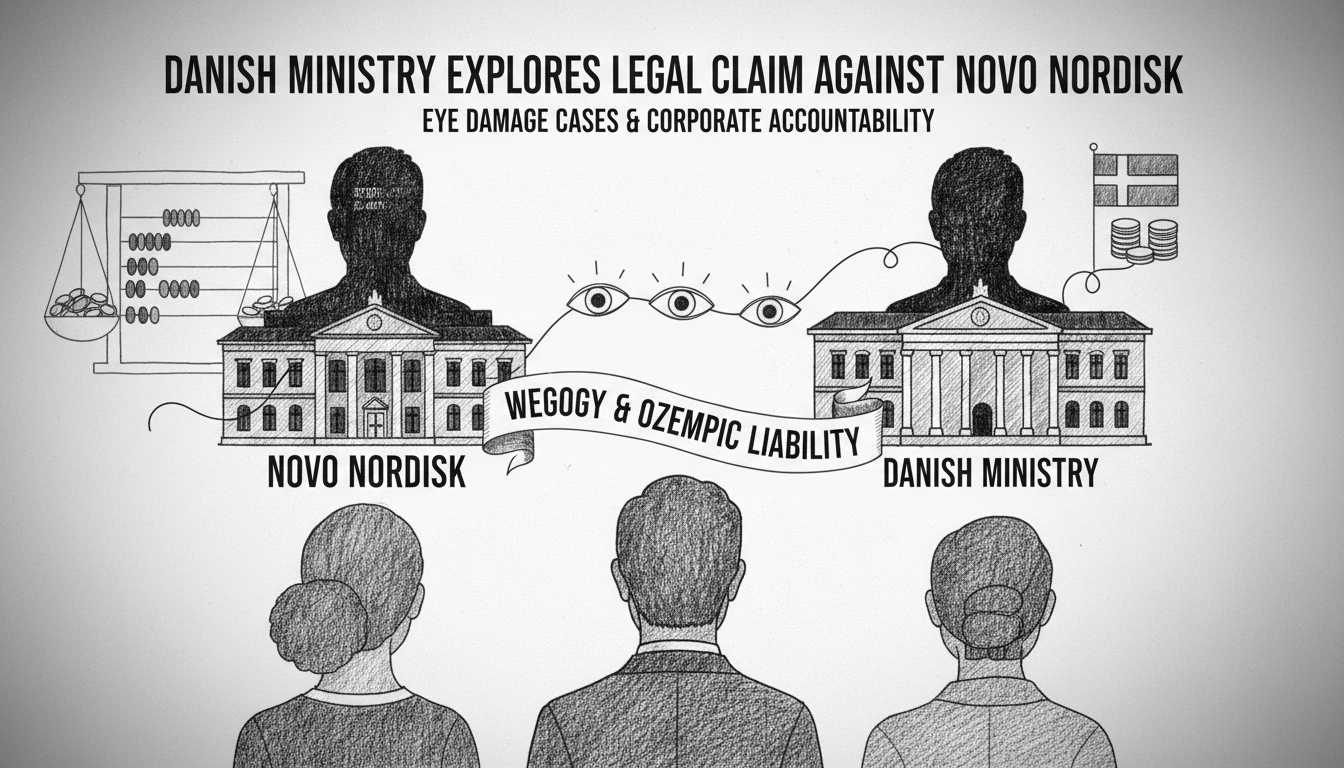
The Danish government is considering a legal move to recover compensation costs from pharmaceutical giant Novo Nordisk. This follows a series of patient injury cases linked to the company's popular weight loss and diabetes drugs. The Danish Patient Compensation Board has recommended the Ministry of the Interior and Health investigate a potential claim. The ministry is now seeking specialized legal counsel on product liability law. This situation highlights the complex intersection of public welfare, corporate responsibility, and healthcare in Denmark's social policy framework.
Four patients have so far received compensation totaling 800,000 Danish kroner for a serious eye condition. The condition, known as Naion, is linked to their use of Novo Nordisk's Wegovy or Ozempic medications. These drugs contain the active ingredient semaglutid. The compensation amount could increase if the condition is found to have caused lost earning capacity. A total of 58 people have applied for compensation for eye issues after using these drugs. Five cases have been approved, one rejected, and 52 remain pending.
Under Danish law, the ministry, not the drug manufacturer, initially pays compensation to patients. The legal review will determine if the state can then reclaim these funds from Novo Nordisk. This process, known as regres, is a standard legal recourse in product liability cases. It reflects the Danish welfare system's structure, where the state acts as a first-line guarantor for citizens. The system then seeks accountability from responsible private entities where applicable. This protects individuals from lengthy legal battles while upholding corporate accountability principles.
Novo Nordisk maintains its position on the safety of its products. The company stated it takes all reports of side effects very seriously. It concluded the benefit-risk profile for semaglutid remains positive based on all available data. Company officials said there is no proven causal link between the treatment and the development of Naion. The European Medicines Agency announced it would review two studies pointing to a possible connection. The eye condition affects the front part of the optic nerve and can cause vision loss. Statistically, it impacts fewer than 1 in 10,000 patients using the relevant Novo Nordisk medications.
This case presents a significant test for Denmark's integration of global corporate giants within its national social contract. Novo Nordisk is a cornerstone of the Danish economy and a source of immense national pride. Simultaneously, the Danish welfare model is built on a foundation of patient protection and state responsibility. The ministry's exploration of a claim demonstrates a commitment to this model, even when it involves a national champion. It shows the system's mechanisms are designed to function independently of corporate stature. The outcome will be closely watched for its implications on pharmaceutical liability and public health policy far beyond Denmark's borders. For international observers, it offers a clear case study in how a Nordic welfare state navigates the tension between economic interests and citizen protection.