
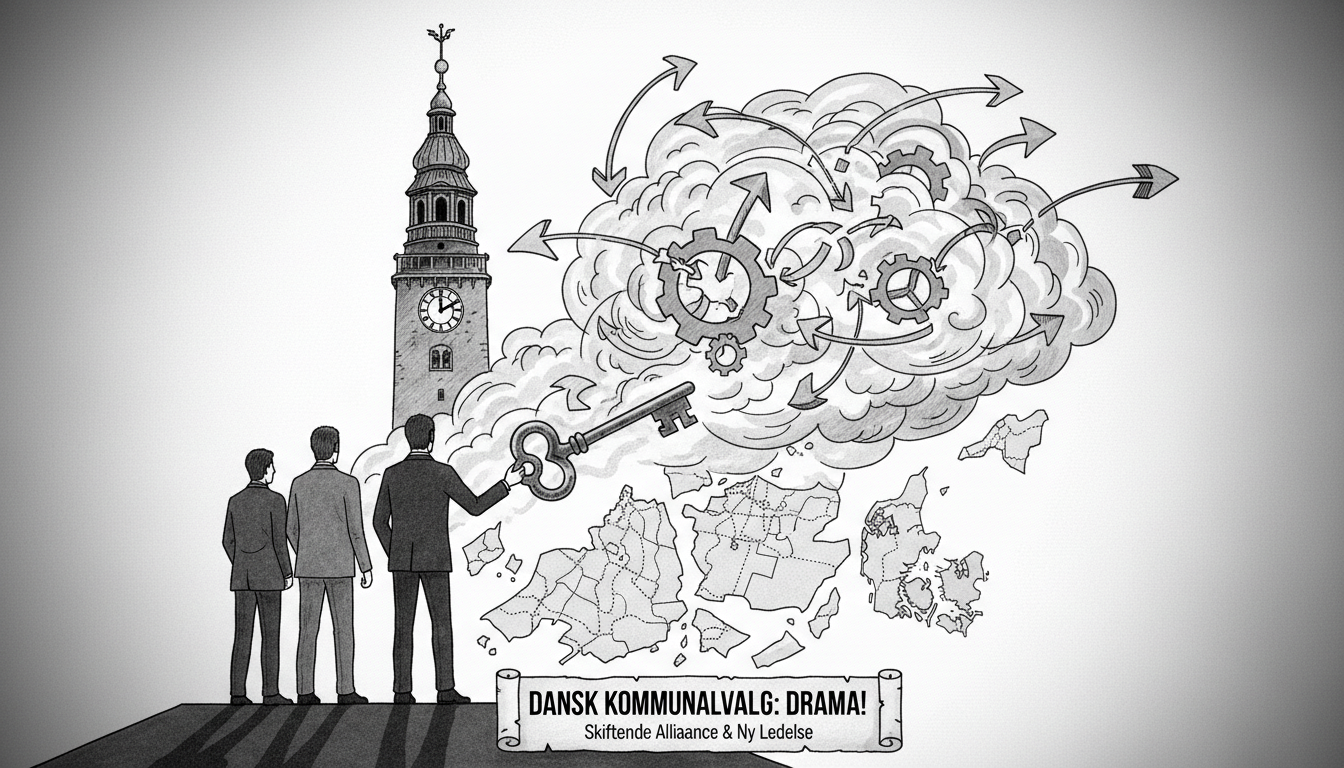
Six days after local elections concluded, Denmark finally has its complete roster of mayors across all ninety-eight municipalities. The process revealed intense political maneuvering that tested alliances and reshaped local leadership. These developments offer crucial insights into Danish society news and the evolving nature of Copenhagen integration dynamics as political shifts influence social services.
In Aalborg, a dramatic power struggle unfolded when the Radical Party's Jes Lunde attempted to oust Social Democrat Lasse Frimand Jensen. The coup appeared successful until Conservative Vibeke Gamst withdrew support, upending the entire scheme. This pattern repeated nationwide, demonstrating how fragile political majorities have become in Denmark's municipal governments.
Slagelse remained the final municipality without leadership until Friday's resolution. A planned press conference about the Social Liberal Party withdrawing support from Venstre's Knud Vincents was canceled when the Danish People's Party withdrew at the last moment. Instead, Vincents handed the mayor position to Henrik Brodersen, who acknowledged the universal political ambition by noting all politicians carry a little mayor inside them.
Denmark Democrats celebrated their first mayoral position in Ringkøbing-Skjern Municipality, where Mads Fuglede was initially appointed. By Friday, support shifted as the Social Liberal Party and Conservatives backed Conservative Lennart Qvist instead. Fuglede admitted needing time to adjust to this sudden change in political fortunes.
Helsingør witnessed election drama worthy of its famous Kronborg Castle. Social Democrat Thomas Horn initially secured a majority by razor-thin margins until officials discovered one hundred votes mistakenly marked Social Democrat actually belonged to Conservatives. A full recount confirmed Helsingør would remain under Conservative leadership, highlighting how narrow margins shape Denmark social policy implementation.
Lolland's political negotiations stretched until Friday despite Social Democrats being halved by voters while Denmark Democrats gained substantial ground. Local list Din Stemme ultimately abandoned negotiations with Denmark Democrats to form a coalition with Conservatives, Social Liberals, Social Democrats, and Venstre. New mayor Marie-Louise Brehm Nielsen openly described the difficult formation process.
Middelfart produced the election's most surprising development when Ulla Sørensen switched from Social Democrats to Venstre just one day after election. Her move shifted the balance to conservative parties and made Venstre's Anders Møllegård mayor. Former mayoral candidate Johannes Lundsfryd called the party change the worst behavior he had witnessed in politics. Reports later revealed Sørensen faced severe harassment, including being spat on following her decision.
These political dramas reflect broader tensions within the Danish welfare system as local governments determine how integration programs and social services will operate. The final mayor and deputy mayor selections will be formally confirmed during municipal council meetings between December's first and fifteenth days. Further political surprises might still emerge as these confirmations proceed.
Danish immigration policy often sees significant variation between municipalities based on local leadership. The current political instability across multiple communities suggests potential changes in how integration programs are administered. International observers should watch how these new mayoral alliances affect services for both longtime residents and newcomers to Denmark.