
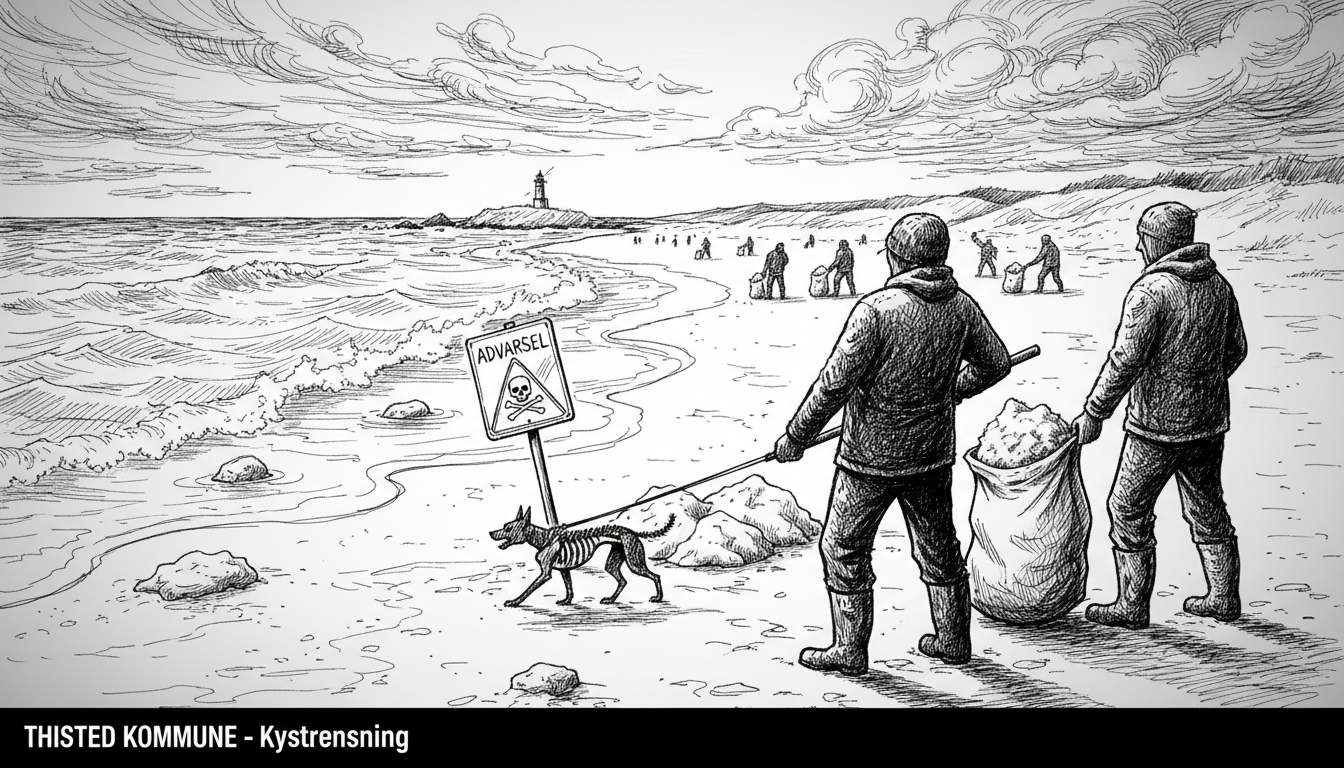
A Danish municipality has launched a beach cleanup operation after paraffin wax washed ashore along a stretch of the North Sea coast. The material drifted from Hanstholm Harbor to Agger Tange, a narrow peninsula known for its dunes and wildlife. Local authorities are now using specialized equipment and manual labor to remove the substance, which poses a risk to pets and the local environment.
Thisted Municipality confirmed the cleanup in a public statement. Officials described using a surf rake towed by a tractor to comb the beach. Workers are also collecting paraffin by hand where necessary. The operation faces challenges because wind and weather move the wax around. Some areas have large clumps while others have fine, crumbled pieces. The exact volume of contaminant remains unknown, but crews are working across the affected area.
A municipal spokesperson outlined the situation. They noted a period of calm weather should help contain the wax. The duration of the cleanup is still uncertain. The work will continue until the job is done. The spokesperson also issued a specific warning to residents walking dogs on the beach. There are reports of dogs trying to taste or eat the paraffin. This is not good for their stomachs, so owners must keep a close watch.
This incident highlights the everyday responsibilities of Danish municipalities in managing public welfare and environmental protection. The Danish welfare system relies heavily on local governance to handle such practical issues. Thisted's response demonstrates this decentralized model in action. It also touches on broader themes of public safety and civic duty common in Danish society news.
From an integration and social policy perspective, this is a small but telling example of how Danish systems function. The immediate, coordinated municipal response reflects a society built on trust in public institutions. It shows how social policy extends beyond human services to include environmental stewardship. Community well-being here depends on both official action and responsible citizen behavior, like supervising pets.
Similar environmental incidents have occurred along Denmark's coasts in the past. They often test municipal readiness and inter-agency cooperation. The public warning about dogs is a direct form of community communication. It aims to prevent harm through shared responsibility. This aligns with the Danish approach to social policy, which frequently combines state action with clear public guidance.
The cleanup has implications for local residents and visitors. Beaches are central to Danish leisure culture, especially in summer. Contamination affects recreation and local tourism. For international readers and expats, this story offers a window into local governance. It shows how even a small, regional issue triggers a structured public response. This is a core feature of the Danish welfare model in practice.
What happens next depends on the cleanup's progress and weather conditions. Some paraffin may remain in hard-to-reach spots. The municipality will likely monitor the area. This event serves as a reminder of the constant balance between industrial activity, like that in Hanstholm Harbor, and preserving Denmark's natural coastline. It is a routine challenge managed within a well-established framework of municipal duty and public information.