
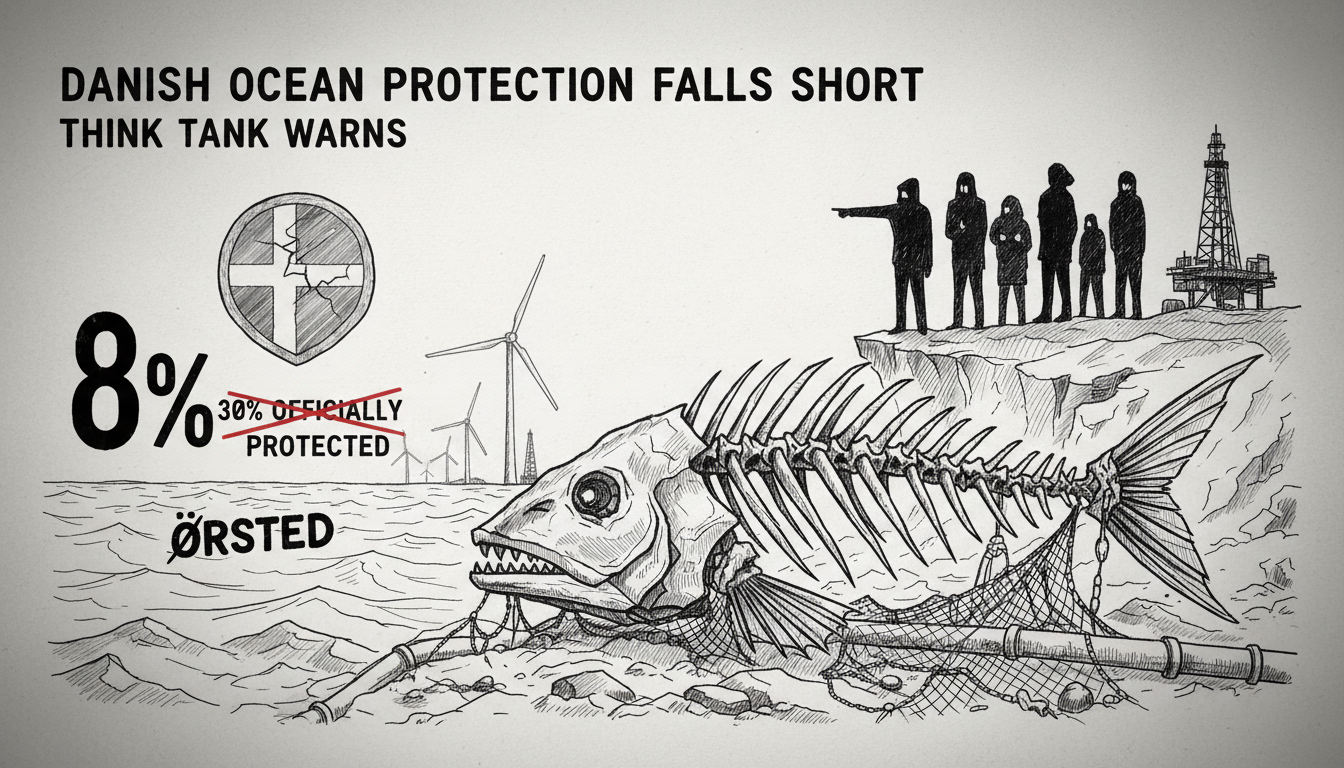
A new report reveals a stark gap between official designations and real protection for Denmark's marine areas. The Ocean Think Tank analysis states only 8.3 percent of Danish sea territory is effectively shielded from damaging activities. This figure stands in sharp contrast to the 31.7 percent officially designated as protected under national plans. The findings raise questions about the integrity of Denmark's environmental commitments and the future health of its commercial fishing grounds.
The analysis examined activities permitted within protected zones. It found three-quarters of these areas still allow or plan for bottom trawling, resource extraction, dumping of dredged port material, and offshore wind farm construction. Liselotte Hohwy Stokholm, managing director of the Ocean Think Tank, said real protection leads to more and larger fish and higher biodiversity. She argued for genuine conservation, not just map markings. The think tank calls this situation incompatible with true nature protection.
The report arrives as Denmark positions itself as a green energy leader. Major Danish companies like Ørsted, a global offshore wind developer, are members of the think tank and support its ten new recommendations. The Danish Fishermen's Association and Green Power Denmark also back the plan. This corporate backing signals a shift where business interests align with stricter environmental standards, likely due to long-term resource security and brand reputation.
For the Danish economy, healthy oceans are not just an ecological issue. The fishing industry and the growing blue bioeconomy depend on sustainable marine management. Effective protection can secure fish stocks and support coastal communities. The current model, which allows dumping and trawling in protected areas, undermines these economic foundations. It represents a short-term cost-saving approach with long-term financial risks.
The think tank proposes a clear standard for protected areas. This standard would ban dumping, new infrastructure, resource extraction, and bottom trawling. With planned future bans on bottom trawling, real protection could rise to 15.3 percent. The think tank's ultimate goal is 30 percent real protection by 2030, with 10 percent strictly protected. This target aligns with international biodiversity frameworks that Denmark has endorsed.
The core issue is political follow-through. Denmark has a history of ambitious environmental targets that later face implementation challenges. The gap between paper promises and on-the-water enforcement is a recurring theme in Nordic environmental policy. This report forces a public accounting. It asks if Denmark will enforce the rules needed to maintain the marine ecosystems its key industries and global green reputation rely upon. The coming political response will be a major test.