
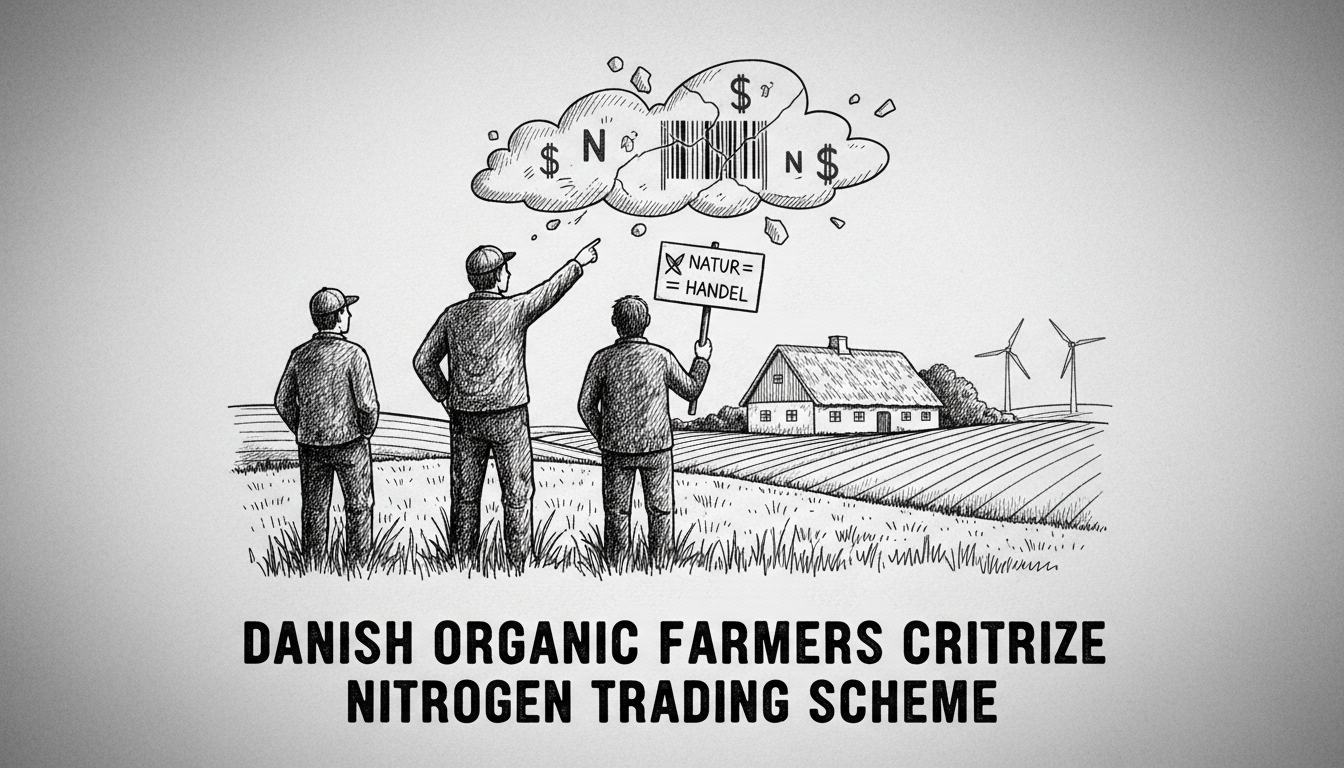
A new political agreement on nitrogen pollution in Denmark is creating a significant rift within the agricultural sector. The deal, backed by a broad parliamentary majority, introduces a national nitrogen quota trading system. This system allows farmers who pollute less to sell their unused nitrogen quotas to conventional farms that exceed their limits. The government argues this creates a strong financial incentive to convert to organic farming. Many organic farmers see it as a betrayal of their core principles.
Minister for Green Transition Jeppe Bruus presented the agreement. He stated the system will make converting to organic production a good business decision. Farmers who reduce their nitrogen emissions will gain a sellable asset. The deal aims for an annual reduction of roughly 9,600 tons of nitrogen from agriculture. An additional 500-ton reduction is expected from improved wastewater treatment. This meets two-thirds of the EU Water Framework Directive targets Denmark must achieve. The deadline for compliance has been pushed to 2030.
The economic model is clear. Organic farms, with lower nitrogen leaching, receive quotas they can sell on a new market. Conventional farms can purchase these rights to offset their own higher pollution levels. The government and supporting parties believe this direct monetary reward will boost organic conversions. Funds from the EU's Common Agricultural Policy will compensate farmers for converting productive land into wetlands and natural areas.
Reaction from the organic community has been sharply critical. Mikkel Juhl Nielsen, an organic dairy farmer in Rønde with 180 cows, expressed deep unease. He said the idea of profiting from allowing more pollution elsewhere feels fundamentally wrong. He believes all farmers share a collective responsibility to pollute as little as possible. The scheme, he argues, undermines the broader environmental benefits of organic farming, including animal welfare and biodiversity.
Industry leaders echo this concern. Rasmus Prehn, Managing Director of the Organic Farmers' Association, said the arrangement makes it easier to remain a conventional farmer. You can simply buy quotas from your organic neighbors. He fears a future where land is certified organic but used minimally, primarily to generate and sell pollution credits. This could reduce actual organic food production despite more land being under organic management.
Political support for the deal is not unanimous. Zenia Stampe, agricultural spokesperson for the Social Liberal Party, criticized the quota-trading element. She argued it turns environmental protection into a commodity. When consumers pay more for organic food, they believe they are paying to protect groundwater and aquatic environments. This system commercializes that saved pollution, potentially damaging the organic sector's contract with consumers.
The government remains confident in its economic calculus. Minister Bruus maintains that reducing emissions will become a core part of farm profitability. He has met with numerous organic farmers to address their concerns but acknowledges he has not fully reassured them. An analysis of the entire incentive structure for organic farming will be completed to see if further subsidy adjustments are needed.
For farmers like Mikkel Juhl Nielsen, the final decision may come down to simple economics. He finds the concept distasteful but admits financial necessity could force his hand. The success of this policy now hinges on whether the promised financial gains can outweigh deep-seated ethical objections within the very community it aims to expand.