
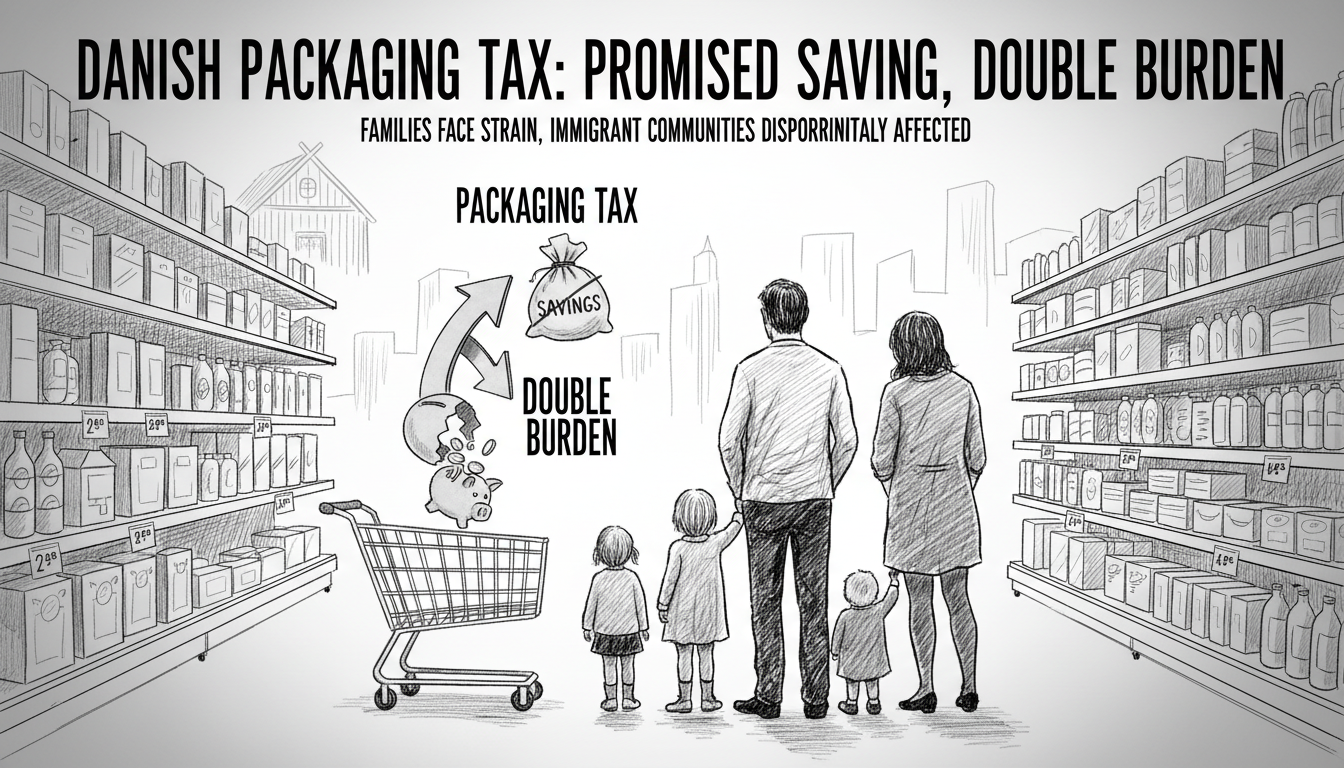
Danish families face mounting financial pressure as a controversial packaging tax increases grocery costs without delivering promised savings elsewhere. The government initially claimed this environmental levy would be offset by reductions in other areas. Many Copenhagen residents now question whether those compensatory measures will materialize at all.
Integration experts note this policy disproportionately affects immigrant communities and low-income households. These groups typically spend larger portions of their income on basic necessities. Community center directors in Copenhagen's diverse neighborhoods report growing anxiety among families already struggling with Denmark's high cost of living.
Denmark's welfare system traditionally cushions citizens from economic shocks through comprehensive social safety nets. This packaging tax situation tests that system's resilience. Municipal social services departments anticipate increased demand for assistance if grocery prices continue rising without corresponding relief.
Local community leader Amina Hassan shared concerns from her work with immigrant families. "When basic food costs rise this dramatically, families must choose between nutrition and other essentials," she explained. "The promised savings have not reached our community centers."
Government officials maintain the packaging tax serves important environmental goals. They point to reduced plastic waste and increased recycling rates as measurable successes. Yet they acknowledge the economic impact requires ongoing assessment and potential adjustment.
Danish social policy often balances environmental ambitions with economic realities. This situation highlights the challenge of maintaining that balance. The integration ministry tracks how such policies affect different demographic groups, particularly newcomers adapting to Danish society.
Education statistics reveal immigrant families already face economic disadvantages. Their children participate in after-school programs and meal assistance at higher rates. Additional grocery cost increases could widen these existing gaps in social equality.
What happens next depends on government response to these emerging challenges. Will officials modify the policy or strengthen compensatory measures? Copenhagen's social centers monitor the situation closely as they assist vulnerable residents navigating these economic pressures.
The broader question remains whether environmental taxes should bear so heavily on household budgets. Denmark's famous welfare model faces scrutiny as citizens experience this double financial impact. The coming months will reveal whether promised savings materialize or whether families must absorb yet another cost increase.