
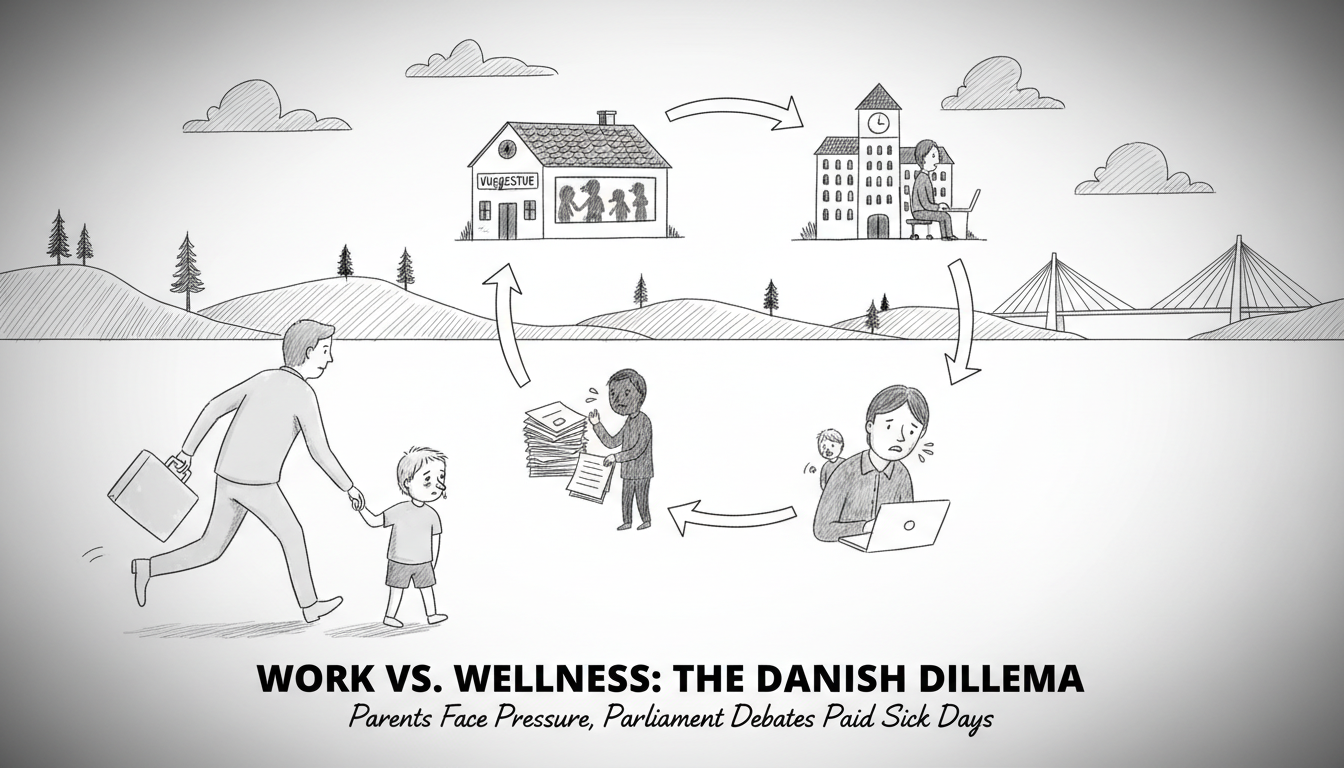
A troubling trend is emerging across Danish daycare centers as working parents face impossible choices. Many now send visibly ill children to institutions because they lack viable alternatives. This situation reflects deeper pressures within Denmark's celebrated welfare system.
Recent survey data reveals four out of ten parents have sent sick children to daycare within the past year. These children often arrive with fever-reducing medication but remain genuinely unwell. Bodil Thye, director of Børnehuset Fladhøj in Rødekro, observes this pattern regularly in her facility.
She notes children frequently return on their second or third sick day, only to develop fevers again by midday. The current system provides limited sick days for parents caring for ill children. Many exhaust their allocated time quickly, then face difficult decisions about work attendance and child welfare.
Parliament is now considering a citizen proposal that would grant parents unlimited paid sick days for child care. This measure would cover up to eighty percent of salary during these absences. The policy change could address what Thye identifies as a major societal problem.
Parent Bastian Raschat recognizes the pressure firsthand. He explains finding care for sick children often requires taking time off work or arranging alternative solutions. The challenge becomes particularly acute when children remain ill beyond a couple of days.
Nanna Warming, another parent at the same facility, faces similar dilemmas with four children at home. She believes additional sick days would provide much-needed stability for families. The current situation often creates negative cycles where insufficient recovery time leads to repeated illnesses.
Thye suggests unlimited sick days could yield long-term benefits for Danish society. She predicts employee absenteeism would actually decrease with this policy change. Healthier children mean fewer workplace disruptions over time.
This issue touches core aspects of Copenhagen integration and broader Danish social policy. The welfare system faces balancing acts between workplace demands and family needs. International observers often look to Denmark for progressive social models, yet these practical challenges reveal systemic gaps.
Municipal social centers across Denmark grapple with similar situations daily. The tension between labor market participation and child wellbeing creates genuine strain for many families. Even within Scandinavia's most comprehensive welfare state, parents sometimes lack adequate support during children's illnesses.
What appears as individual parenting decisions actually reflects structural limitations within Danish immigration policy and social services. The solution may require rethinking how societies support working parents during inevitable family health challenges.