
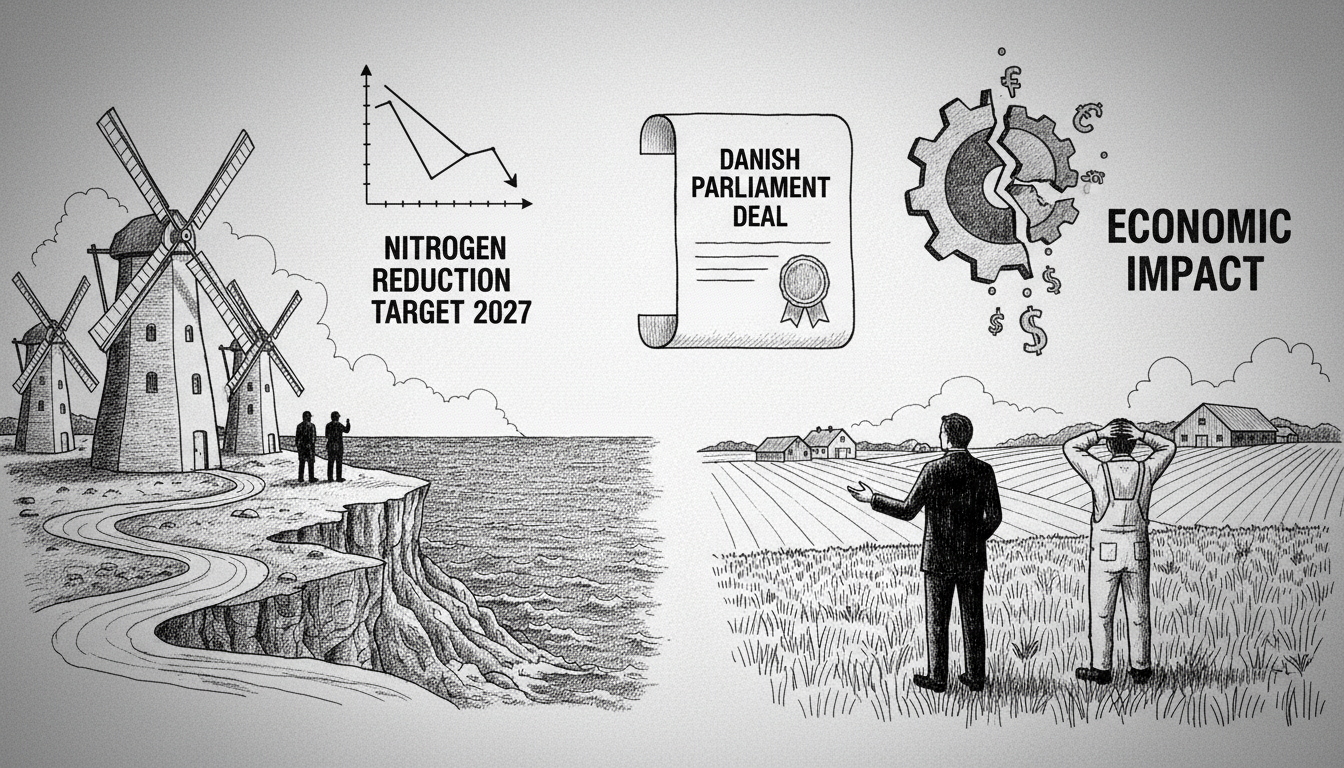
The Danish parliament has reached a broad agreement on a major nitrogen reduction plan for the agricultural sector. The deal mandates farmers to cut nitrogen emissions by 9,600 tons annually starting in 2027. This move aims to address severe environmental damage in Denmark's coastal waters and fjords.
Maria Reumert Gjerding, president of the Danish Society for Nature Conservation, called the deal a vital step. She said it is crucial for restoring life to marine ecosystems plagued by oxygen depletion and algal blooms. The political majority now imposes significantly stricter requirements on emissions, she noted in a statement.
Farmers will receive compensation through the EU's Common Agricultural Policy. However, a cap on this compensation will be introduced in 2032 and gradually lowered toward 2035. Gjerding expressed satisfaction with this cap, which is tied to the sector's contribution to converting farmland to forest, nature, or wetland areas.
The agreement builds upon the earlier Green Tripartite Agreement involving the government and several political parties. It represents a tightening of environmental regulations for one of Denmark's core economic sectors.
The agricultural industry's main organization, Landbrug & Fødevarer, views the deal with deep concern. Chairman Søren Søndergaard stated the chosen model will hit agriculture, the food sector, and related businesses hard. He argued the agreement imposes far stricter restrictions than anticipated in the original tripartite deal and a subsequent political agreement from late last year, calling the move unnecessary and incomprehensible.
This policy shift has direct business implications. Denmark's agricultural export sector, a cornerstone of the economy, faces new operational constraints. Companies in the Copenhagen business districts and across the Øresund region that supply technology, feed, and logistics to farms must now adapt. The deal could accelerate investment in precision farming and green technology from firms like DLG and Arla Foods, but it also increases production costs.
The political consensus behind this deal is notable. It shows environmental policy gaining sustained traction, even with potential economic trade-offs. The compensation structure, linked to EU funds, reveals a continued reliance on European frameworks to manage domestic transitions. For international observers, this highlights Denmark's complex role as both a major agricultural exporter and a green policy frontrunner.
The real test will be implementation. Can Danish agriculture maintain its competitive export revenue while meeting these targets? The coming years will measure the balance between ecological goals and economic reality in the Danish countryside.